House of Nobility
The House of Nobility, known in Finnish as Ritarihuone, reflects an important period in Finland’s political and social history. Completed in 1862, it was built as the meeting place of the noble estate, one of the four groups represented in Finland’s historic Diet. The other estates represented the clergy, the townspeople, and the landowning peasants.
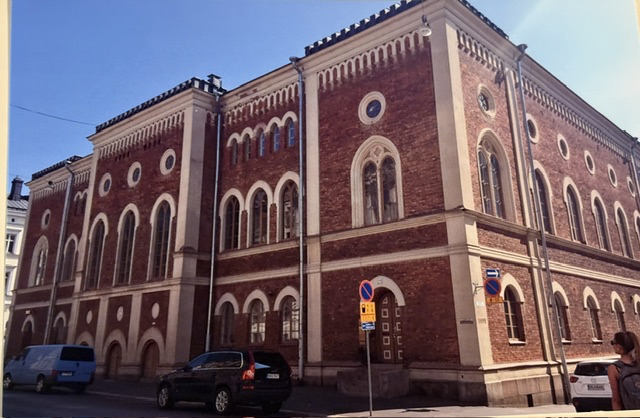
When the Diet assembled in Helsinki in 1863, all four estates used the building for their meetings. This made the House of Nobility Finland’s first parliamentary building. At the time, Finland was a largely self-governing grand duchy within the Russian Empire, and the Diet offered the country a limited but important form of political representation.
The nobility continued to meet here until Finland replaced the four-estate system with a modern, single-chamber Parliament in 1906. The building then remained the home of the Finnish House of Nobility, an organization that preserves the genealogical records, archives, and heraldic traditions of the country’s noble families. Its assembly hall contains hundreds of colorful coats of arms representing those families. The building preserves the memory of an earlier political system and the gradual development of parliamentary government in Finland.
Read More From Nancy
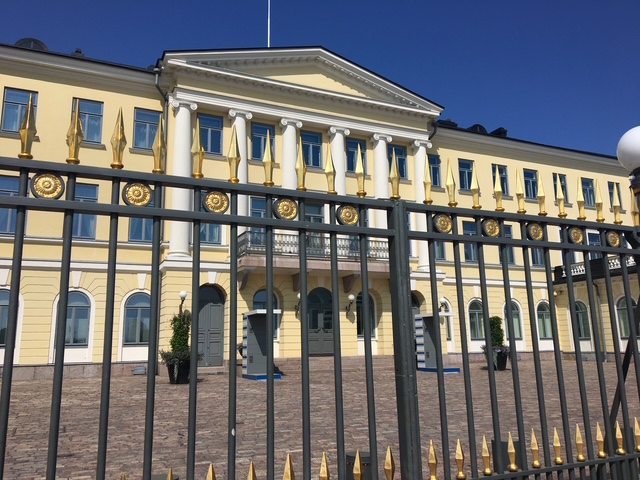
Government Palace
On our walking tour through Helsinki, we passed this stately yellow facade of the Government Palace. This building has been at the center of Finnish government for over two centuries. Designed in the early 1800s, the building was originally constructed when Finland was under Russian rule. It was first used by the Imperial Senate of Finland, making it one […]
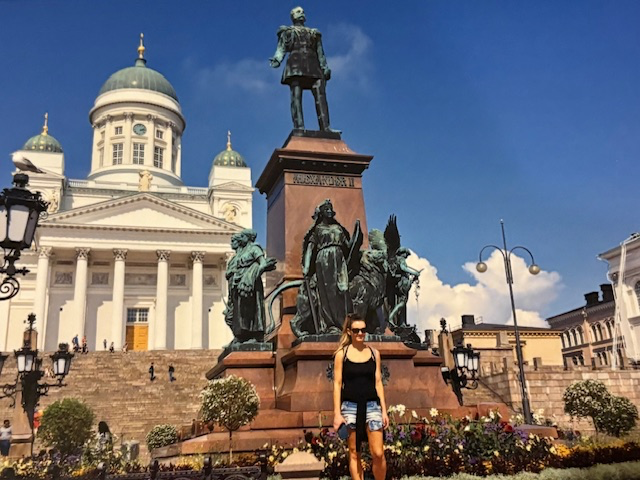
Alexander II Monument
Standing in front of the Alexander II Monument in Helsinki’s Senate Square is my daughter, Emily. During our visit to Finland, we found ourselves drawn to this impressive monument, not only because of its commanding presence in the center of the square but also because of the unexpected story it tells. At first glance, it […]
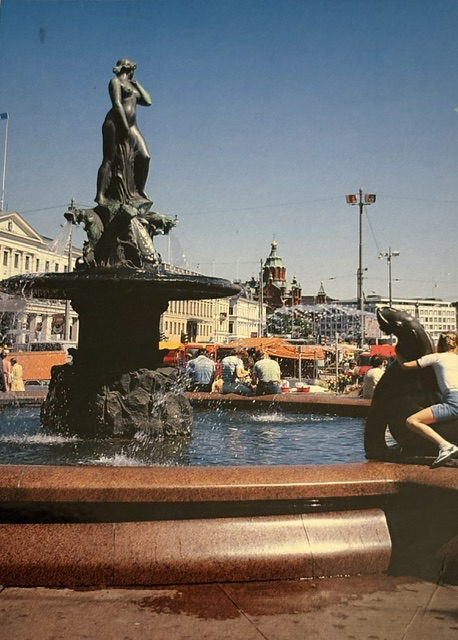
Havis Amanda Fountain
Upon arriving in Helsinki, Finland with Emmy, we hired a local guide to introduce us to the city and its history. One of our stops was the Havis Amanda Fountain, one of Helsinki’s beloved landmarks. Unveiled in 1908 and created by sculptor Ville Vallgren, the bronze figure rising from the sea symbolizes the birth of Helsinki and its close relationship […]

