Japanese-Canadian Fishermen’s Memorial
Seated beneath the trees in Steveston, a fisherman bends over the net gathered across his knees. He is not shown at sea or returning triumphantly with his catch. Instead, the memorial captures one of the quiet tasks that made a fisherman’s life possible: the patient work of repairing the nets before returning to the water.
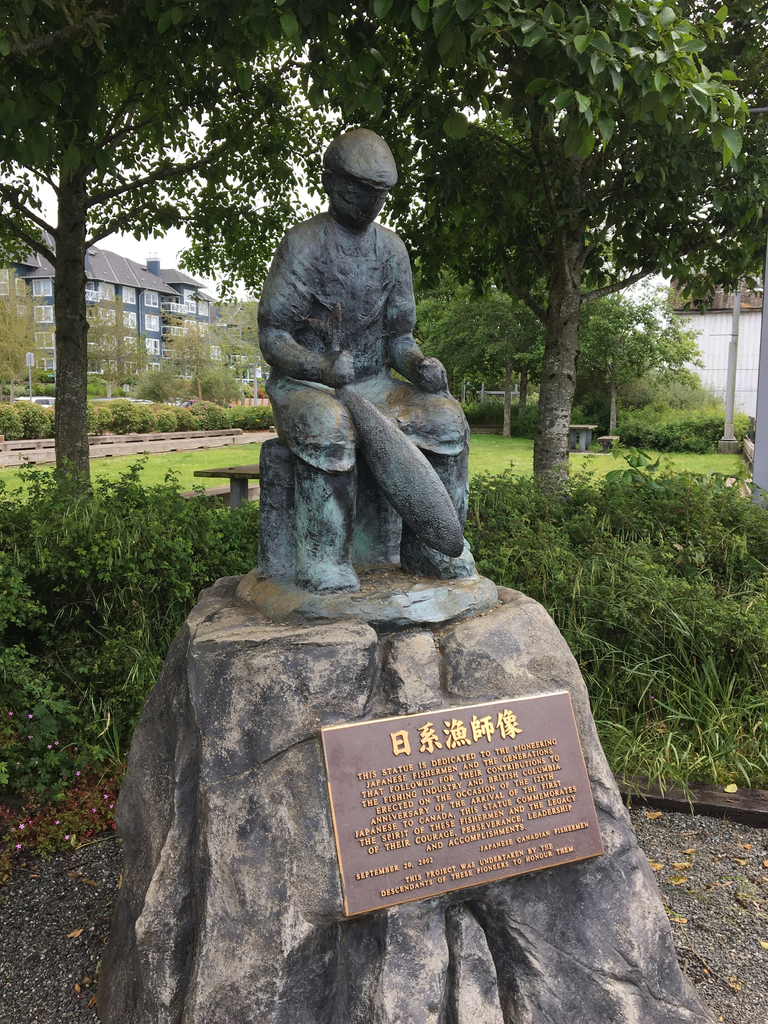
Their success was achieved despite persistent discrimination. Japanese Canadian fishermen faced restrictions on fishing licenses, organized opposition from white fishermen, and laws that denied them many of the rights enjoyed by other Canadians. Nevertheless, they continued to fish, operate boats, work in the canneries, and contribute to the growth of Steveston.
Their lives were abruptly shattered during the Second World War. In 1942, the Canadian government forcibly removed people of Japanese ancestry from the Pacific Coast. Fishing boats were confiscated and sold, while families lost their homes, businesses, and possessions. Steveston’s once-thriving Japanese Canadian community was dispersed to internment camps and settlements farther inland. Even after the war ended, Japanese Canadians were prohibited from returning to the West Coast until 1949. Some eventually came back and rebuilt their lives, while many others never returned.
The memorial was dedicated on September 20, 2002, marking the 125th anniversary of the arrival of the first Japanese immigrant to Canada. Created as a project of the descendants of the early fishermen, it honors not only their contribution to the fishing industry but also what the plaque describes as their courage, perseverance, leadership, and accomplishments.
This statue preserves the memory of the Japanese Canadian fishermen who helped shape Steveston, endured the loss of nearly everything they had created, and left a legacy strong enough for their descendants to reclaim and honor.
Read More
Read More From Nancy
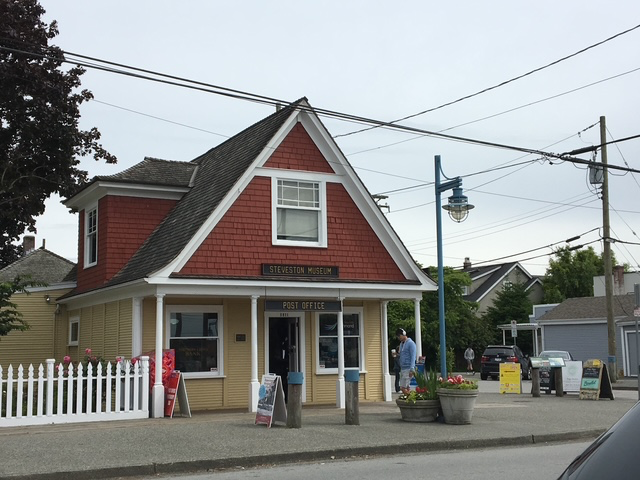
Steveston Museum and Post Office
During our time in British Columbia, we visited the Steveston Museum and Post Office in the historic fishing village of Steveston. Its modest size and welcoming appearance reflect the type of community museum that preserves the stories of everyday life. The building was constructed in 1905 as Steveston’s first bank. Originally occupied by the Northern […]
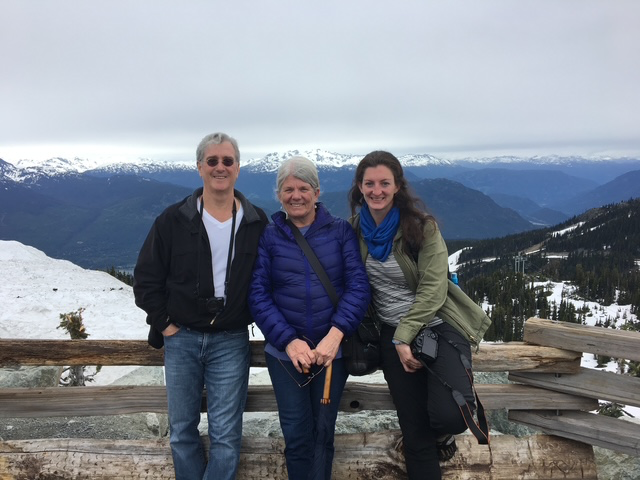
Whistler Blackcomb
A seminar in Vancouver led to a journey north to Whistler Blackcomb, and into one of the most beautiful landscapes in British Columbia. Exploring this area means moving between two worlds. At the base, the village is alive with activity, but as you rise into the mountains, that changes. The environment opens, and the scale […]
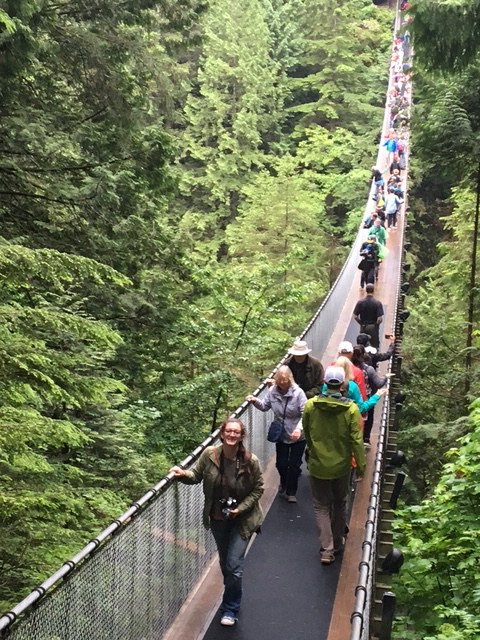
Capilano Suspension Bridge
Teaching in Vancouver, we try to carve out a little extra time to explore the area whenever possible. One of the things we love about teaching around the world is the opportunity to experience the local history, culture and natural beauty beyond the seminar itself. During this trip, we decided to visit one of the region’s attractions: The Capilano Suspension […]

