The Benjamin Nye Homestead
While exploring East Sandwich, I stopped at the Benjamin Nye Homestead. From the outside it looks like the kind of weathered, shingled house that seems completely at home on Cape Cod. What I didn’t initially appreciate was just how old it is. The earliest portion of this house was built in 1678, making it one of the surviving houses from the first generations of English settlement on Cape Cod.
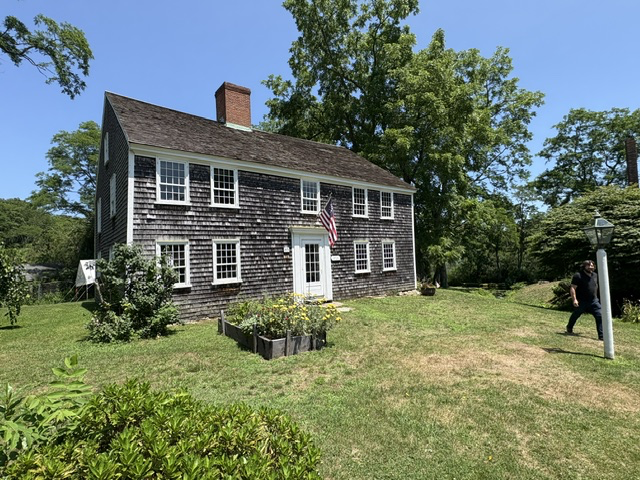
Benjamin Nye had arrived in Massachusetts from England aboard the Abigail in 1635. Two years later, he joined the families establishing the English settlement of Sandwich. In 1640 he married Katherine Tupper, and together they raised eight children. Their first Sandwich home was at Spring Hill
Benjamin was not simply a farmer. Water power was essential to a seventeenth-century community, and in 1669 he established a water-powered gristmill in East Sandwich. Local farmers could bring their grain there to be ground into flour and meal. He later received permission to establish a fulling mill for processing homespun woolen cloth.
In 1678 Benjamin and Katherine moved from Spring Hill to this second house, built beside the mills and pond. The original house was a much smaller saltbox-style dwelling than the building we see today.
That is one of the most interesting things about the house. It wasn’t frozen in 1678. Successive generations altered it as their lives and needs changed. In 1816, Deacon Silvanus Nye substantially rebuilt the saltbox, raising the rear roof and transforming it into the more imposing two-story colonial house we recognize today. Later, part of the family’s old carding mill was moved and attached to the house as a kitchen ell and woodshed.
The Nye family’s relationship with the property continued for an extraordinary length of time. Seven generations lived in the homestead until 1910, while six generations of Nyes operated the family’s milling business before the old gristmill was taken down in 1867.
The house itself nearly disappeared. In the twentieth century the property passed to the Commonwealth of Massachusetts and was associated with the state’s fish and wildlife operations. By the late 1950s, there was concern that the vacant homestead might be demolished or removed. Descendants of the Nye family revived their family association specifically to save it. The Commonwealth ultimately transferred the house to the Nye Family of America Association, and restoration began in the 1960s. It opened to the public as a museum in 1972.
The house survived because one family remained connected to this piece of Cape Cod for generation after generation. That continuity—from Benjamin and Katherine Nye in 1678 to descendants preserving their home nearly three centuries later—is what makes the Benjamin Nye Homestead especially worth remembering.
Read More From Nancy
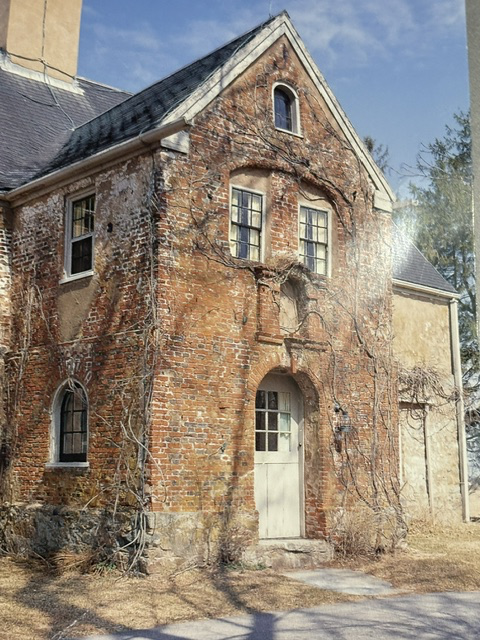
Spencer-Peirce-Little Farm
There are some historic homes that stand apart from all the others, and the Spencer-Peirce-Little Farm in Newbury, Massachusetts, is certainly one of them. The moment I saw its weathered brick walls and centuries-old architecture, I realized this was not the typical colonial farmhouse. It possesses a quiet strength that reflects more than three hundred […]

Rebecca Nurse Home
I am grateful that so many historic houses are still open to the public to explore and to remind us of the lives lived within them. One such home is that of Rebecca Nurse, a respected, elderly woman of Salem Village who became one of the most tragic figures of the Salem Witch Trials in […]
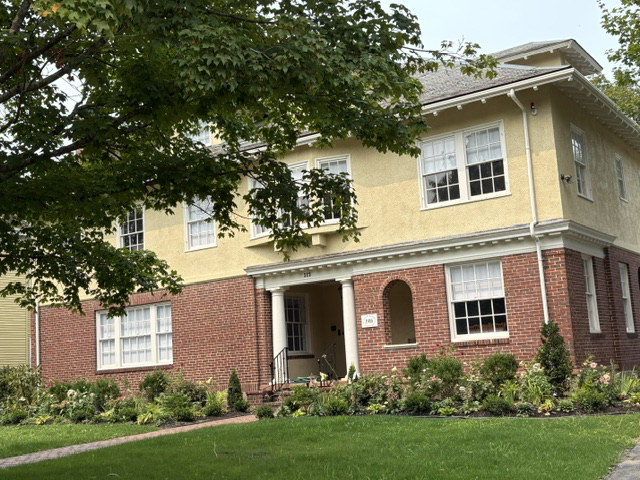
The Stanwood House
Standing at 323 Washington Street in Wellesley Hills, the Stanwood House has been part of this neighborhood for more than a century. Today it is the home of the Wellesley Historical Society and the Wellesley History & Exhibit Center, but the building began as both the family home and medical office of one of Wellesley’s longtime physicians. […]

