First Church of Christ
Standing prominently in the center of Sandwich is the First Church of Christ, its tall white steeple visible above the surrounding village. The building I photographed dates to 1848, but the Congregational tradition it represents reaches much further back into the earliest history of Sandwich.
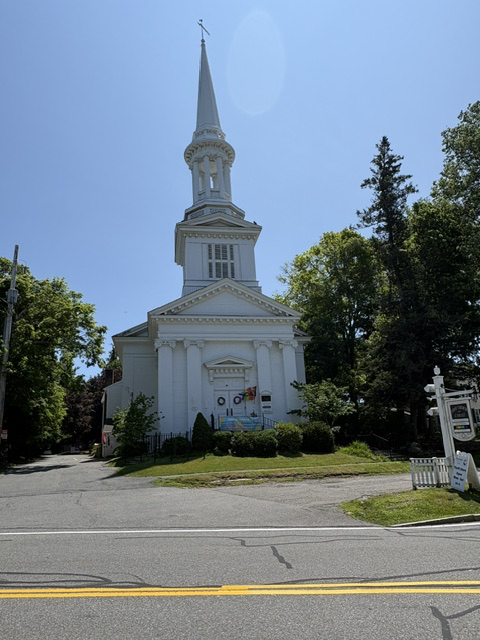
The first English settlers arrived in Sandwich in 1637, and religion was central to the organization of these early New England communities. The Congregational church became an important part of village life, serving not only as a place of worship but as a gathering place in a community where religious and civic affairs were closely intertwined.
The historical marker beside the church tells us that a Congregational chapel was built on this particular site in 1813. That earlier building was eventually replaced by the present church in 1848. Its classical façade, columns, triangular pediment and soaring multi-stage steeple reflect the importance communities placed on their meetinghouses. This was intended to be one of the defining buildings of the village.
The church stands within an especially historic section of Sandwich. Nearby is the Dexter Grist Mill, whose origins reach back to the seventeenth century. Together they represent two necessities of early community life: the mill provided the means to process the grain that helped feed the town, while the meetinghouse provided a place for worship and community gathering.
Nearly two centuries after the present building was constructed, its steeple still rises above the village center. It remains one of those landmarks that helps Sandwich retain the appearance and character of an old New England town.
Read More From Nancy
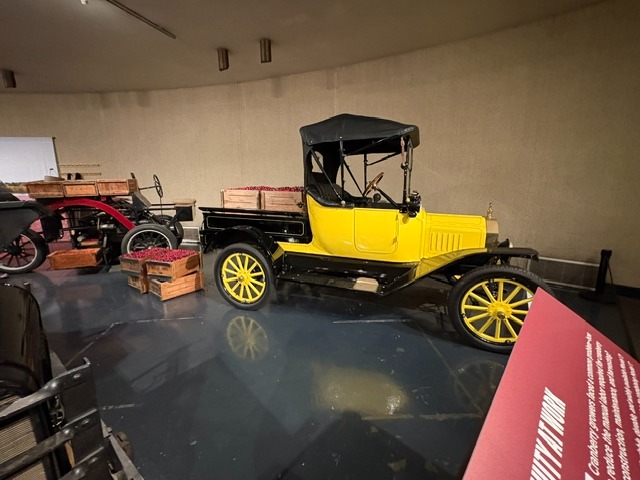
Working the Cranberry Bogs
The small locomotive and tip cart at Heritage Museums & Gardens introduce a practical side of cranberry growing: moving heavy materials across the bogs. Beyond picking berries, growers needed to build and maintain beds, transport supplies, and move their crop toward markets. Small industrial railways helped meet those needs. Temporary tracks allowed equipment to reach […]
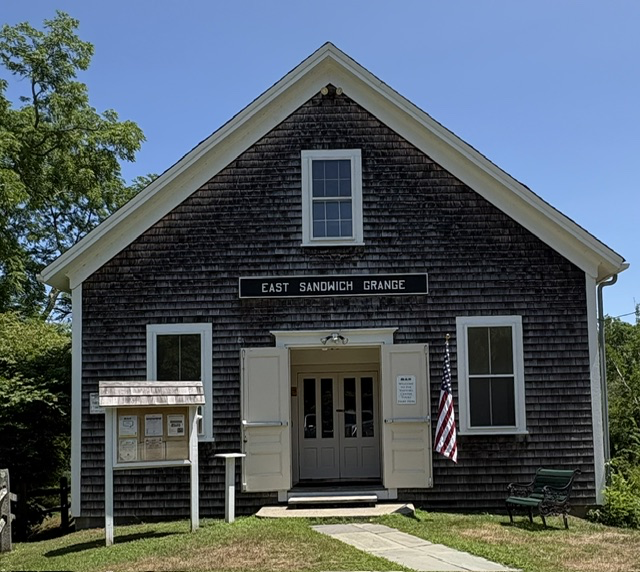
East Sandwich Grange Hall
While visiting the Benjamin Nye Homestead, I also stopped at this simple shingled building nearby. The sign above the entrance identifies it as the East Sandwich Grange. It may not be as old as the 1678 Nye Homestead next door, but it represents another important part of life in this farming community. The East Sandwich […]
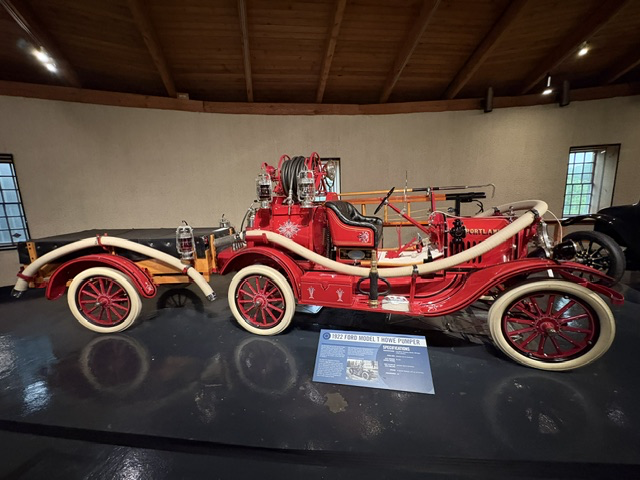
1922 Ford Model T Howe Pumper
This 1922 Ford Model T Howe Pumper tells the story of how motorized vehicles transformed firefighting in small American communities. Before trucks like this became available, many rural fire departments depended upon hand-operated or horse-drawn equipment. Firefighters often had to transport heavy pumps, ladders, and hoses over unpaved roads while every passing minute allowed a […]

