Frederic Soler Statue
Walking through Barcelona, I came across this seated figure in a small square. I didn’t know who the man was or why a monument had been placed here. But that is one of the things I enjoy about traveling: a statue, plaque or old building can make me stop and ask a simple question: who was this person, and why did someone believe he should be remembered?
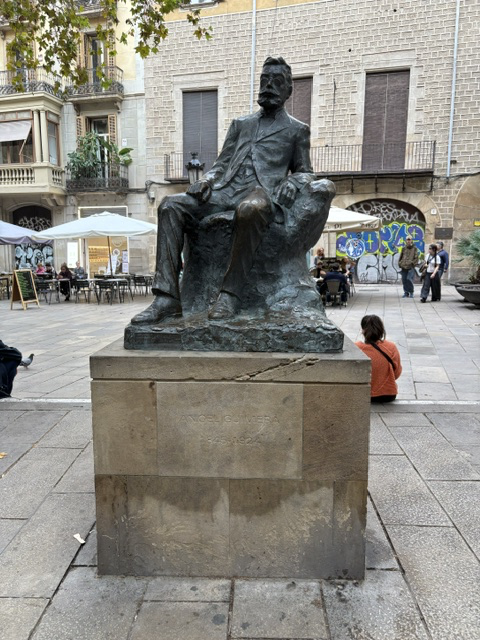
The man is Frederic Soler, a 19th-century Catalan playwright, poet and theatrical figure who wrote under the name Serafí Pitarra. Born in Barcelona in 1839, Soler became one of the important figures in the revival of Catalan language and culture at a time when Spanish dominated much of the country’s formal literary and cultural life.
Soler began writing humorous and satirical plays using the Catalan that people actually spoke in everyday life. His work attracted popular audiences and helped demonstrate that Catalan could be used not simply as a language of conversation, but as a vibrant language for theater and literature.
His career became part of the Renaixença, the 19th-century cultural movement that sought to revive Catalan as a literary language and renew interest in Catalonia’s history and cultural identity. Writers, poets and artists became important participants in that movement, and Soler’s theater brought those ideas before audiences in a particularly accessible way.
He became closely associated with Barcelona’s Teatre Romea, one of the city’s important theaters for Catalan-language drama, eventually serving as its director. By the time of his death in 1895, he had written a remarkable number of works and had become an important figure in the development of modern Catalan theater.
The location of his monument therefore has meaning. It stands in Plaça del Teatre, near La Rambla, in an area long connected with Barcelona’s theatrical life. The seated bronze figure is not simply remembering a writer; it commemorates someone who helped give the Catalan language a stronger voice on the stage.
When I took this photograph, I didn’t know any of that. I simply saw a monument to someone whose story was unfamiliar to me. But the statue did exactly what monuments can do when we take the time to notice them—it made me curious. Sometimes discovering history begins with nothing more complicated than stopping in front of a statue and wondering, “Who was this person?”
Read More From Nancy
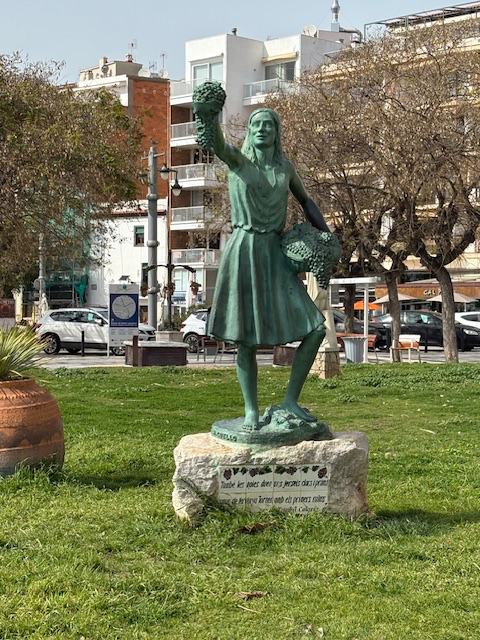
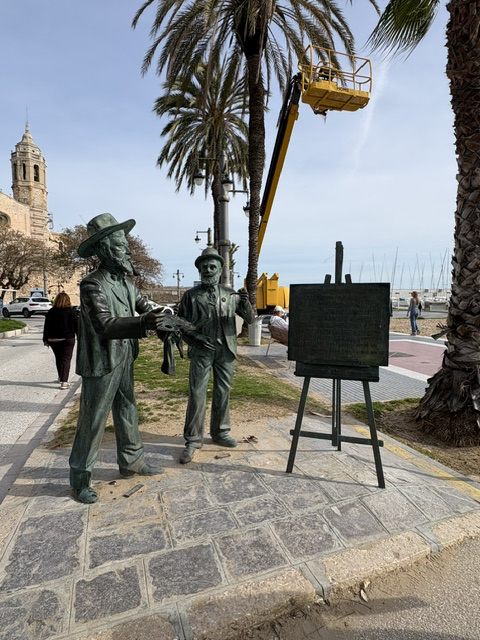
“La Verema”
It was great to spend a day in Sitges, exploring a new town after teaching in Barcelona. The views of the Mediterranean stretched out endlessly shifting in color with the light. Walking along the beach was refreshing and a quiet transition for our time in Barcelona. Sitges is a town of white buildings against the blue of […]
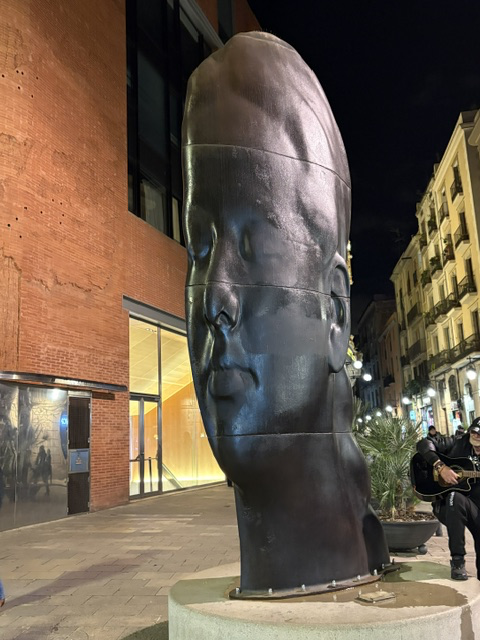
Carmela
Walking through Barcelona, we came upon this enormous face standing unexpectedly on the street near the Palau de la Música Catalana. It is exactly the kind of discovery I love when traveling. Here is something we were not necessarily looking for that immediately made us stop and wonder what it was. The sculpture is called […]

