Joseph Rotblat’s Room
This modest bedroom at Thinkers’ Lodge is associated with Joseph Rotblat, one of the most important figures in the Pugwash movement. Originally identified as Room No. 4, it became Rotblat’s preferred room when he returned to Pugwash for conferences and meetings. His association with it became so strong that the Pugwash Park Commission eventually designated it the Joseph Rotblat Room.
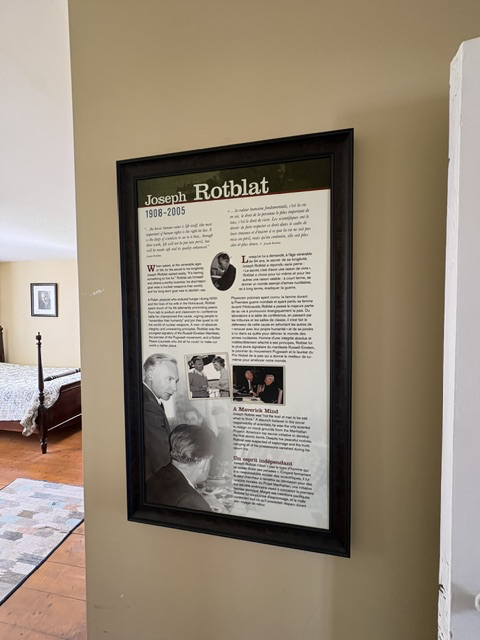
Born in Warsaw, Poland, in 1908, Rotblat was a nuclear physicist whose life was profoundly shaped by the development of atomic weapons. During World War II, he joined the Manhattan Project at Los Alamos because he feared Nazi Germany might develop an atomic bomb first. When evidence convinced him that Germany was no longer pursuing such a weapon, he left the project in 1944, the only scientist to leave the Manhattan Project on moral grounds before the war ended.
After the war, Rotblat increasingly devoted himself to the dangers posed by nuclear weapons and to the responsibility scientists carried for the consequences of their work. In 1955, he became one of eleven scientists to sign the Russell-Einstein Manifesto, which warned of the potentially catastrophic consequences of nuclear war and called upon scientists from opposing political systems to meet and seek peaceful solutions.
That appeal ultimately helped bring Rotblat to Pugwash. He was one of the principal organizers of the first Pugwash Conference held here in July 1957, when 22 scientists from ten countries gathered at Thinkers’ Lodge. Rotblat would remain closely connected with both the Pugwash Conferences and this house for decades, returning to Pugwash many times and staying in this room.
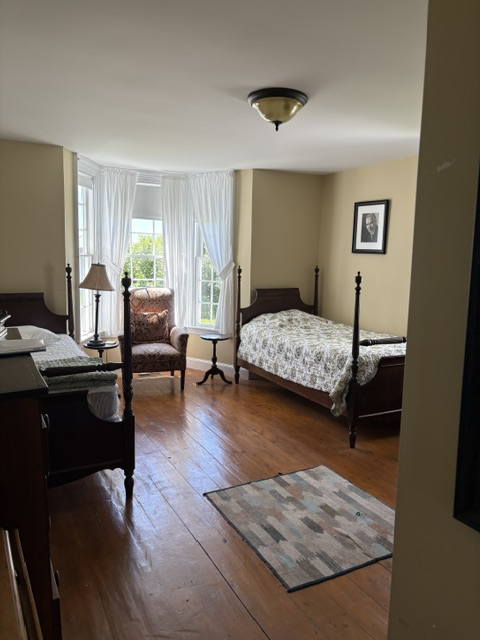
The simplicity of the room is part of what makes it so interesting. Two beds, a chair beside the windows, a wooden floor and basic furnishings were enough for a man involved in discussions about some of the largest questions facing humanity. There was nothing grand about the surroundings.
For me, knowing that Rotblat returned to this room makes it different from a bedroom merely named for a famous person. This was his room when he came back to Pugwash. A quiet personal space within the house where a physicist who had once participated in the development of the atomic bomb continued a very different life’s work: bringing scientists together to find ways of preventing nuclear war.
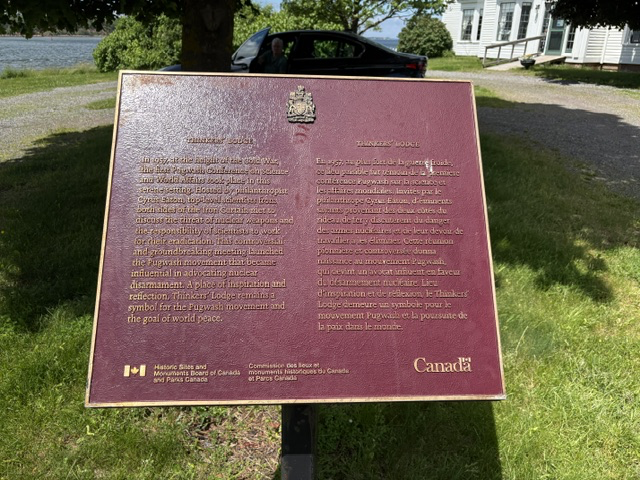
Read More From Nancy
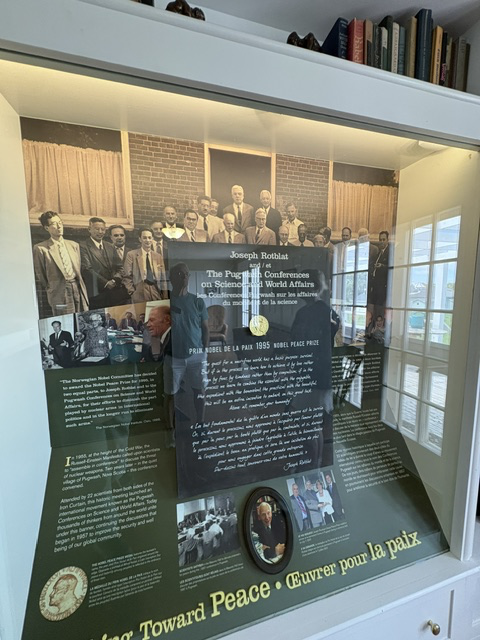
The 1995 Nobel Peace Prize — Pugwash and Joseph Rotblat
This display brings the story of Thinkers’ Lodge forward almost forty years from the first conference. Across the bottom are the words “Toward Peace,” while the center identifies Joseph Rotblat and the Pugwash Conferences on Science and World Affairs as recipients of the 1995 Nobel Peace Prize. The large photograph at the top shows’ participants at the […]
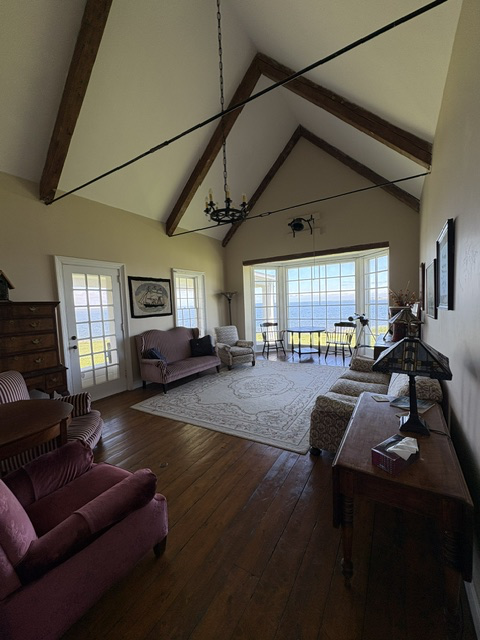
The Living Room at Thinkers’ Lodge
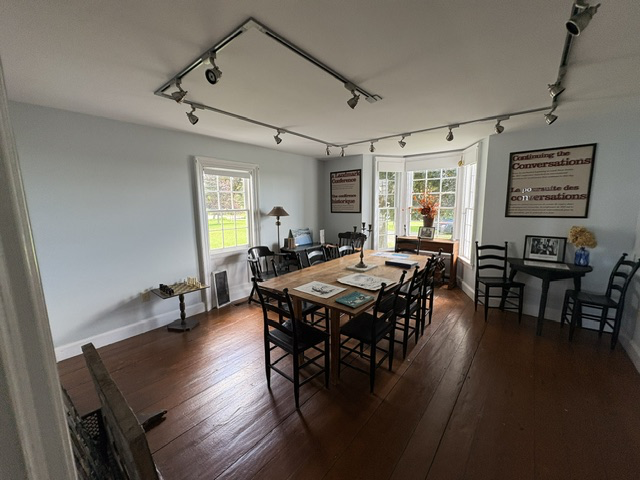
This room helps explain why Thinkers’ Lodge was such an unusual setting for an international gathering. Rather than meeting in a formal conference center, the scientists who came to Pugwash lived and spent time together in a house overlooking the Northumberland Strait. Rooms like this provided informal spaces where conversations could continue beyond the scheduled […]
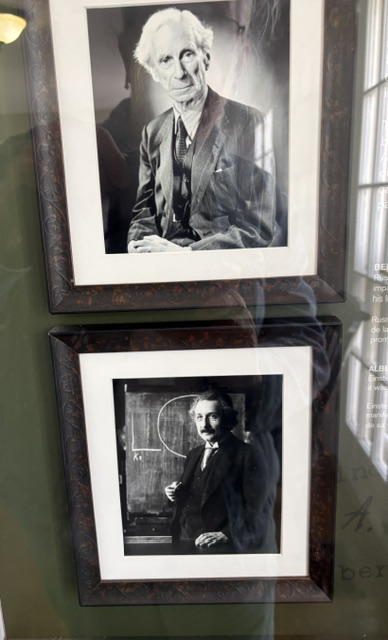
The Russell-Einstein Manifesto
Before there was a meeting at Thinkers’ Lodge, there was a warning. In the years following World War II, scientists who had witnessed the development of nuclear weapons increasingly understood that humanity had entered a fundamentally different age. Among those most concerned were philosopher and mathematician Bertrand Russell and physicist Albert Einstein. In 1955, Russell […]

