Little Rock Central High School National Historic Site
This is another one of those National Park Service sites that seems to have stopped in time. Standing across from Little Rock Central High School, it is remarkably easy to picture the events of 1957 unfolding in front of the same imposing building. What makes the experience even more unusual is that Central High is not simply a preserved historic building. It remains an operating public high school, with students still walking through the same doors that became the focus of national attention nearly seventy years ago.
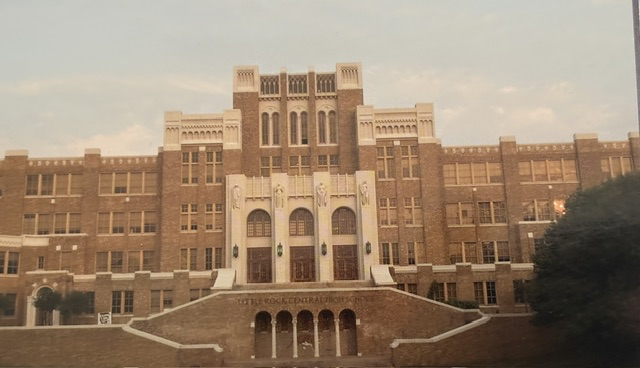
The story began with the Supreme Court’s 1954 decision in Brown v. Board of Education, which declared racial segregation in public schools unconstitutional. Little Rock’s school board developed a gradual integration plan, beginning with Central High School in the fall of 1957.
The nine students who ultimately integrated Central High were not simply nine children selected at random. Initially, many more African American students expressed interest or were eligible to attend Central. The students were recruited through the NAACP and carefully considered for the enormous challenge they would face. As opposition increased and families recognized the dangers involved, the number willing to participate declined. Eventually nine remained: Melba Pattillo, Minnijean Brown, Elizabeth Eckford, Ernest Green, Gloria Ray, Carlotta Walls, Thelma Mothershed, Jefferson Thomas and Terrence Roberts.
They were chosen in part because they were academically capable of succeeding at Central and were believed to have the determination to withstand the pressures, they were likely to encounter. Their families also had to agree to allow their teenagers to become participants in what was rapidly becoming far more than a change of schools. Daisy Bates, president of the Arkansas State Conference of the NAACP, became one of their principal organizers, advisers and supporters.
What followed demonstrated just how much courage that decision required.
Arkansas Governor Orval Faubus ordered the Arkansas National Guard to Central High, ostensibly to maintain order but effectively preventing the Black students from entering. On September 4, 1957, the students attempted to enter the school while an angry crowd gathered outside. Elizabeth Eckford, who had not received word that the students planned to arrive together, approached the school alone. Photographs of her walking through the hostile crowd became some of the defining images of the Civil Rights Movement.
The confrontation became a test not simply of school integration but of federal authority. Could a state refuse to comply with a ruling of the United States Supreme Court? President Dwight D. Eisenhower eventually acted. On September 24, he federalized the Arkansas National Guard and ordered members of the U.S. Army’s 101st Airborne Division to Little Rock. On September 25, 1957, protected by federal troops, the Little Rock Nine entered Central High and attended a full day of classes.
Getting through the doors, however, did not end their ordeal. Inside the school they faced continuing verbal abuse, threats and physical harassment. Soldiers could provide some protection, but they could not eliminate the hostility the students encountered in hallways, classrooms and cafeterias.
Ernest Green became the first of the nine to graduate from Central High in May 1958, with Martin Luther King Jr. attending the graduation. But resistance to integration continued. Rather than allow further integration, Little Rock closed its public high schools for the entire 1958–59 academic year, a period remembered as the “Lost Year”.
The nine eventually followed very different paths. Melba Pattillo Beals became a journalist, educator and author whose memoir Warriors Don’t Cry recorded her experience. Minnijean Brown Trickey became an educator and civil-rights advocate. Elizabeth Eckford served in the U.S. Army and later worked as a probation officer. Carlotta Walls LaNier returned to Central and graduated in 1960 before pursuing a career in real estate. Terrence Roberts earned a doctorate in psychology and became an educator and psychologist. Others built careers in education, government, technology and public service.
In 1999, President Bill Clinton presented all nine with the Congressional Gold Medal. By then, the teenagers who had once needed soldiers to escort them into their high school had become nationally recognized figures in the history of American civil rights.
The importance of the place itself was formally recognized over time. Central High was listed on the National Register of Historic Places in 1977 and designated a National Historic Landmark in 1982. On November 6, 1998, President Bill Clinton signed legislation establishing Little Rock Central High School National Historic Site as a unit of the National Park Service.
I spent a lot of time in the visitor center exploring this history. The exhibits use photographs, news footage, documents, recordings and personal accounts to take us beyond the familiar photographs of soldiers and crowds. They help explain who these nine young people were, why they volunteered, what they encountered inside the school and how the confrontation in Little Rock became a national constitutional crisis. The school is still there. The steps are still there. Students still walk through its doors.
The Little Rock Nine were teenagers asked to carry a burden that should never have been theirs alone. Yet they walked through those doors and continued returning despite what awaited them inside. Their actions forced the country to confront the difference between declaring that Americans possessed equal rights and being willing to protect those rights.
Read More From Nancy
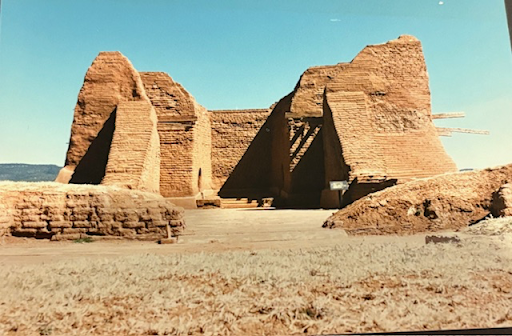
Pecos National Historical Park
Set against the foothills of the Sangre de Cristo Mountains, Pecos National Historical Park is a palace where centuries of history unfold quietly across the land. This land was home to the Pecos Pueblo, one of the most influential pueblos in the Southwest. For hundreds of years, Pecos served as a vital crossroads of trade linking […]
Capulin Volcano National Monument
I remember this special road trip with Erin as we explored the panhandle of Texas and drove into New Mexico. It was during on of her breaks from chiropractic school, and we flew into Texas and set out on a long stretch of road that carried us through a landscape shaped by drought. The land […]
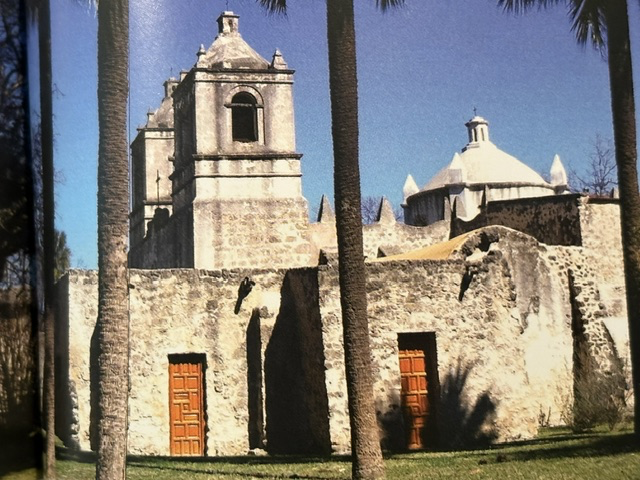
San Antonio Missions National Historical Park
Being from the Northeast, our roots are closely connected to England. Many of our towns bear the names of places in England, reflecting the heritage of the Pilgrims and Puritans who settled Massachusetts and established communities that would become the foundation of the region. Traveling through the Southwest, however, it becomes immediately clear that the […]

