This Week in Chicago
August 19, 1944Dearest Reader,
Among my father’s papers is this small wartime entertainment guide, This Week in Chicago, dated August 19, 1944. Its colorful cover advertised some of the entertainment available in the city that week, including bandleader and entertainer Ted Lewis at the Latin Quarter and Jane Mihan at Club So-Ho. At first glance, it seems like a simple souvenir from Chicago, but its date gives it a much more personal significance.
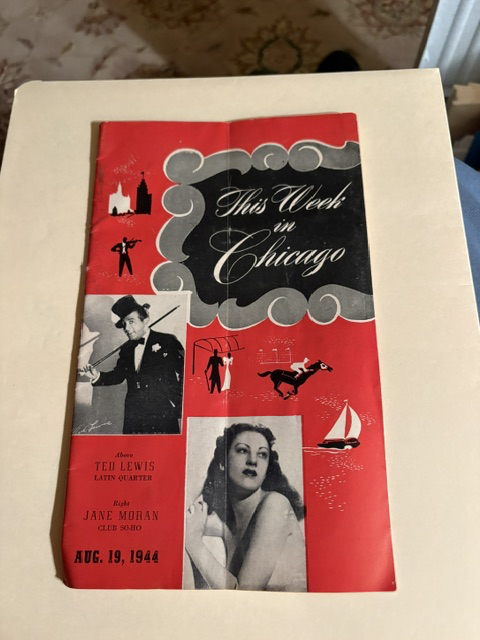
This Week in Chicago was not a program for a single performance. It was a weekly entertainment guide designed to help residents and visitors discover what was happening throughout the city: nightclubs, theaters, restaurants, music and other entertainment. The publication had already been circulating for at least a decade by the time of my father’s 1944 issue, and copies continued to be published for many years afterward.
In August 1944, a guide like this would have circulated in a very different Chicago from the peacetime city that followed. World War II was still raging in Europe and the Pacific, and Chicago was one of America’s great transportation crossroads. Its enormous railroad stations were filled with servicemen, war workers and civilians traveling across the country. At the same time, its theaters, restaurants and nightclubs offered moments of entertainment and escape from the realities of war.
That context makes the date on my father’s copy particularly intriguing. He was released from military service on August 16, 1944, only three days before the August 19 date printed on this guide. I also remember my father talking about being stopped in Chicago while making his way home after leaving the service.
I cannot know for certain that he picked up this guide during that stop, or whether August 19 was the exact day he was in Chicago. But the pieces fit together remarkably well. Here is an object he chose to keep, dated just three days after his release, from the very city that he later remembered being part of his journey home.
There is also something wonderfully ordinary about what he saved. This is not a military document or a newspaper announcing some great event of the war. It is a guide to what was happening in Chicago that week, where someone might hear music, see a show, have dinner or spend an evening in a nightclub. For a young man who had just been released from military service, it may represent one of those first small steps back into civilian life.
While newspapers that week carried reports of armies advancing across Europe and continued fighting in the Pacific, the cover of This Week in Chicago offered Ted Lewis, Jane Mihan, dancing, music and nightlife. War and ordinary life existed side by side.
We may never know exactly where my father went in Chicago or why he saved this particular guide. But sometimes the ordinary things people keep become their own kind of historical record. This small booklet gives us a date, a city and a connection to something my father himself remembered.
On August 16, 1944, he was released from the service. Three days later, This Week in Chicago was telling visitors what there was to see and do in the city where he remembered being stopped on his journey home. The guide cannot tell us exactly what happened during those days, but its survival among his belongings leaves us with a fascinating glimpse of that moment when his military service had ended and the journey back to civilian life had begun.
Dr. Nancy Watson
Washington
Read More From Nancy

In Belgium with the 142nd Infantry
Among my mother’s collection of wartime newspaper clippings was this photograph of Lieutenant Charles Ernest Bowers, a World War II officer serving with the 142nd Infantry Regiment in Belgium. The clipping reports that he had already spent seventeen months overseas, serving in the Aleutian Islands before his assignments in England, France and Belgium. He had been […]
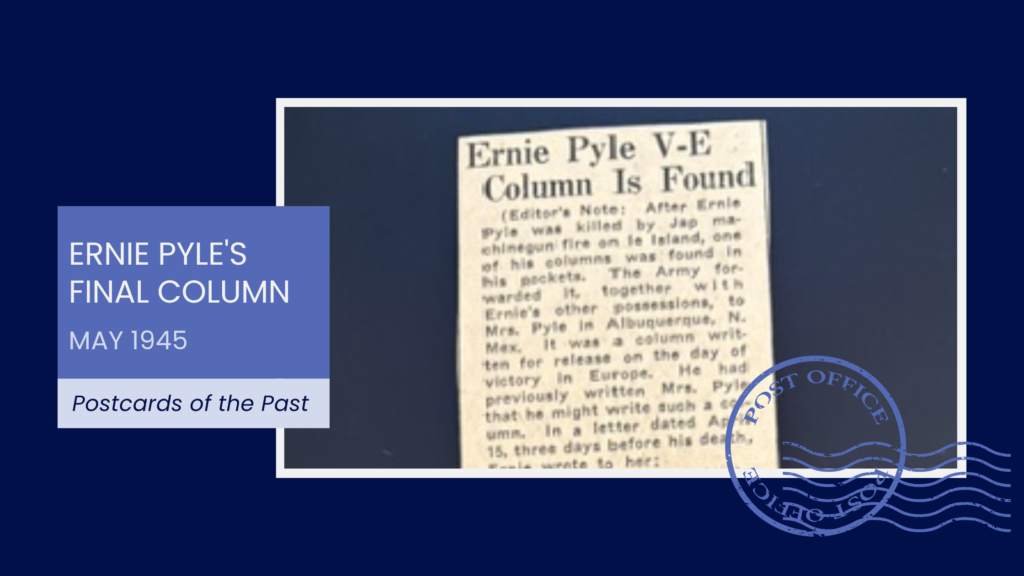
Ernie Pyle’s Final Column
Among my parents’ papers was this newspaper clipping titled “Ernie Pyle V-E Column Is Found,“ with the handwritten date of May 11, 1945. I do not know why they chose to save it, but its preservation suggests that it held some significance for them during the closing days of World War II. The article reports the publication […]
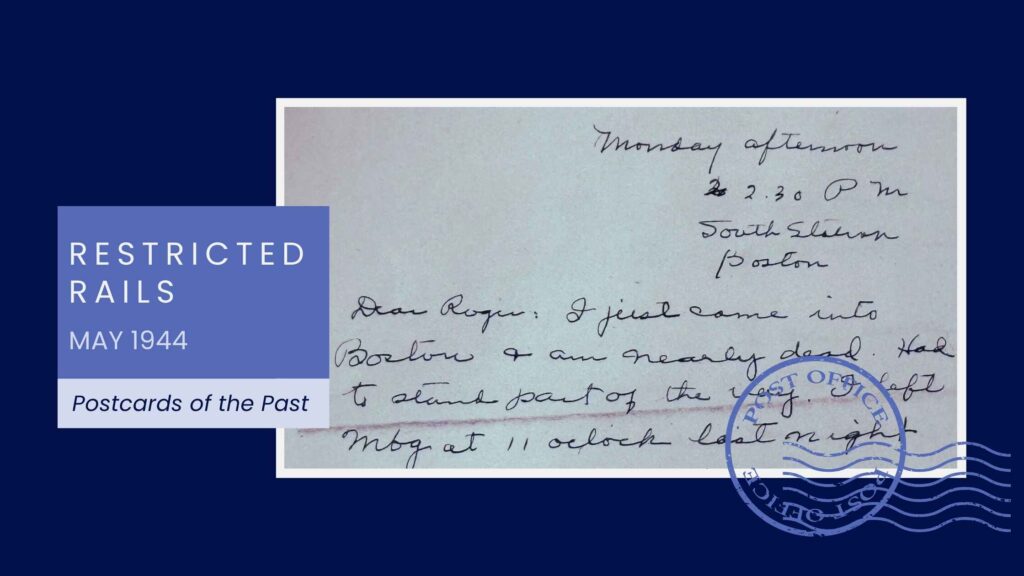
Restricted Rails
My parents were married in May of 1944 while my father was home on furlough, a brief pause in the turmoil of a world at war. The letters they left behind include tender notes between two young newlyweds and the steady, pleading correspondence from my grandmother to her only son. These letters form an intimate […]

