The World of Correspondence Schools
World War IIDearest Reader,
This advertisement from my father’s papers represents something that was once a familiar part of American life—the correspondence school. Long before online courses, instructional videos, or even widespread community colleges, companies promised that almost anyone could learn a new skill and perhaps begin a new career without ever entering a classroom.
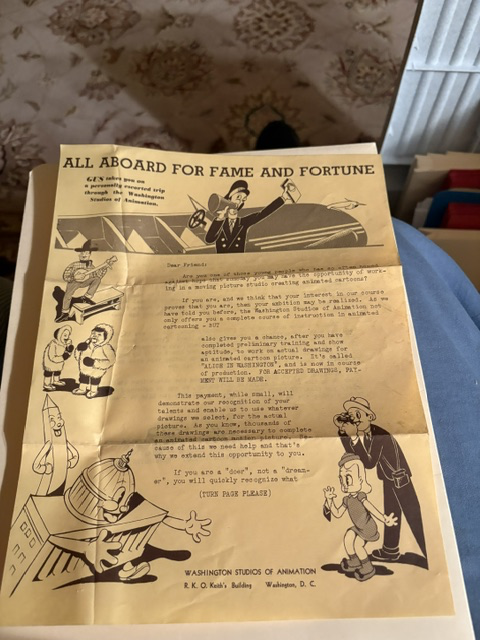
This advertisement came from the Washington Studios of Animation in Washington, D.C. Its headline, “All Aboard for Fame and Fortune”, captures the kind of promise these companies frequently made. The illustrations show cartoonists and animated characters, while the letter invites the recipient to demonstrate his artistic ability and potentially pursue training in commercial art and animation.
These schools operated largely through newspaper and magazine advertisements. A young person might see an ad asking, “Do you like to draw?” or promising opportunities in drafting, mechanics, radio repair, accounting, illustration, or dozens of other occupations. After mailing in a coupon, the prospective student would receive brochures, aptitude tests, sample lessons, and persuasive letters explaining how additional training might lead to a better-paying career.
The idea was not new. American correspondence education had developed during the late 19th century as industrialization created demand for workers with specialized technical skills. One of the largest early examples was the International Correspondence Schools, founded in Pennsylvania in 1891. It originally helped coal miners prepare for examinations but quickly expanded into engineering, drafting, architecture, electrical work, and many other fields. By the early 20th century, millions of Americans had enrolled in correspondence courses of one kind or another.
Art instruction became an especially visible part of this industry. For decades, newspapers and magazines carried advertisements inviting readers to copy a drawing and mail it in for evaluation. The famous “Draw Me” advertisements of the Art Instruction Schools became part of American popular culture. Similar companies taught cartooning, fashion illustration, commercial art, lettering, and eventually animation.
There was often a considerable amount of marketing mixed with the education. The advertisement might suggest that an applicant had demonstrated unusual talent, but the ultimate purpose was usually to sell a course. Phrases promising “fame and fortune”, better jobs, independence, or exciting careers were designed to appeal particularly to young people trying to determine what they might do with their lives.
Yet these programs also filled a genuine need. College was financially or geographically beyond the reach of many Americans. Specialized professional schools were concentrated in larger cities. Correspondence courses allowed someone living in a small town to study drafting, bookkeeping, art, mechanics, or another skill at the kitchen table. Lessons arrived through the mail, completed assignments were mailed back, instructors corrected them, and another lesson followed.
In many ways, these programs were the ancestors of today’s online education. The technology has changed completely, but the idea is remarkably familiar: learn from home, proceed through a structured series of lessons, receive feedback from an instructor, and acquire skills that might open new professional opportunities.
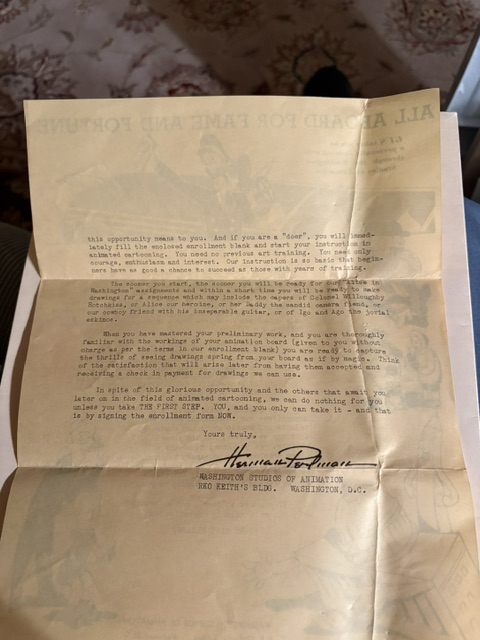
That is what makes these advertisements among my father’s papers interesting beyond his own story. They preserve a particular moment in American education when the mailbox could become a classroom and an advertisement could offer a young person an entirely different future.
The promises were sometimes much larger than the opportunities waiting at the end. But the underlying message was powerful, and distinctly American: wherever you lived and whatever your circumstances, perhaps there was something new you could learn that might change the direction of your life.
Dr. Nancy Watson
Washington
Read More From Nancy
Eider Point on Unalaska Island – Aleutian Island
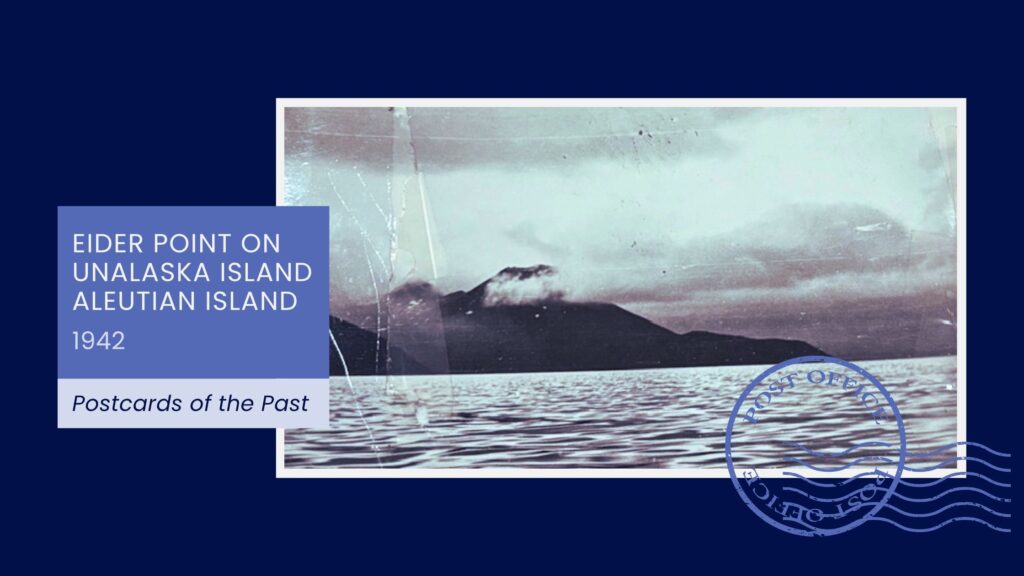
This photograph my father sent home is of water, land and sky and without the words on the back, I would not know where this was located. My father wrote on the back: “LOOKING FROM ISLAND AMAKNAK, DUTCH HARBOR ACROSS TO EIDER POINT ON UNALASKA ISLAND, EIDER POINT KNOWN AS FORT LEANARD OF “B” BTRY 264 CA” […]
Army Hit on Vets Abuse in Hospitals
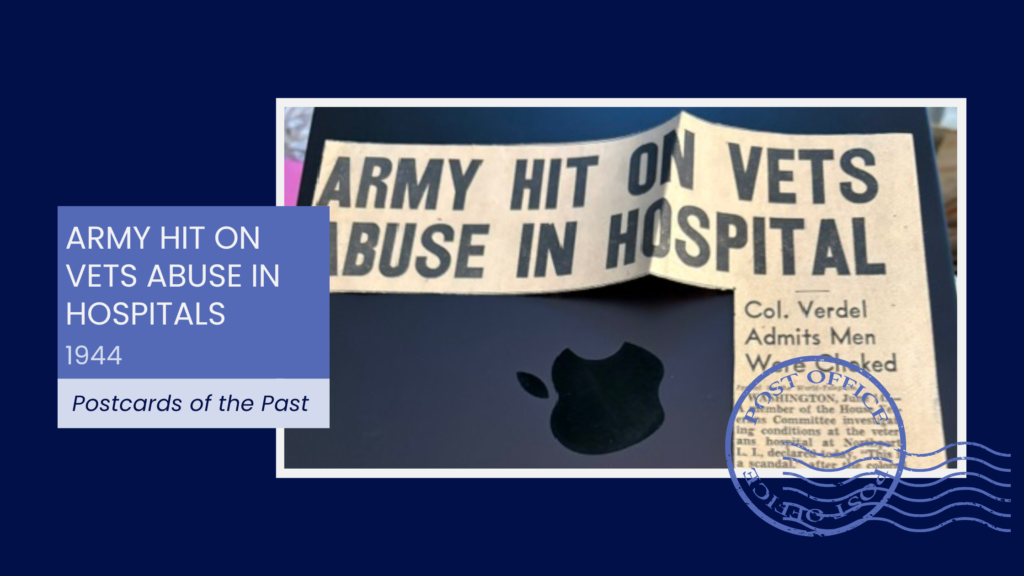
Among the newspaper clippings preserved by my mother is this article concerning allegations of mistreatment at a military veteran’s hospital during World War II. I have no direct evidence connecting the article to my family, butcannot help wondering why it was saved. At the time the article appeared, my father was serving in the Army and was spending part of 1944 in Washington […]
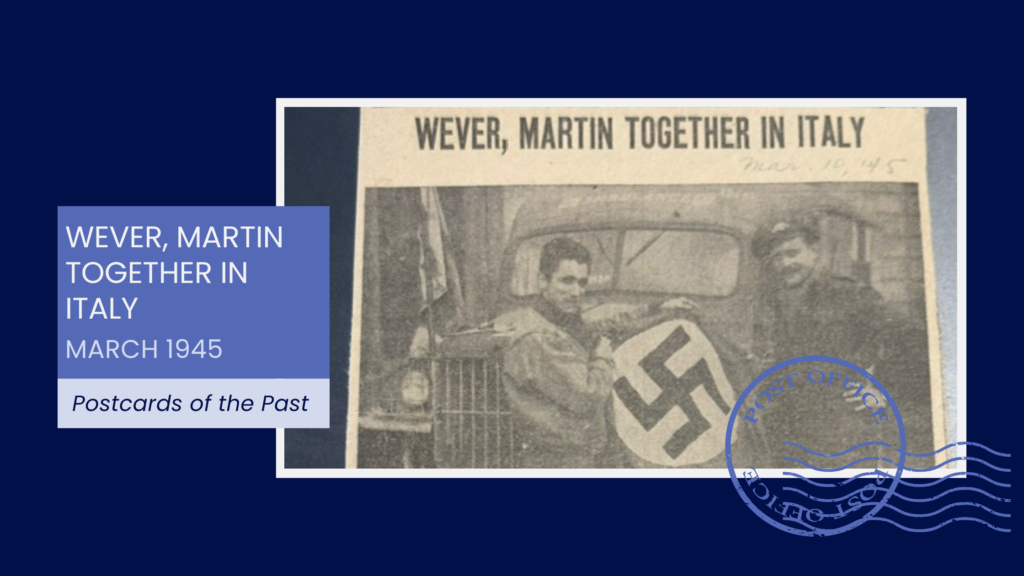
Wever, Martin Together in Italy
Among the newspaper clippings preserved through the years is a remarkable wartime photograph dated March 10, 1945. This hometown news item tells a larger story about World War II, the bonds of community and the unexpected encounters that occurred thousands of miles from home. These two young men are from Martinsburg, West Virginia, standing together in Italy […]

