The Cannons of Sitges
Standing beside these weathered cannons on the Baluard overlooking the Mediterranean, it is easy to think of them simply as historic decorations. Visitors stop to admire the sea, photograph the coastline, and enjoy the peaceful atmosphere of Sitges. Yet these cannons were once an essential part of the town’s defense, guarding a community whose prosperity depended upon the very waters that also brought danger.
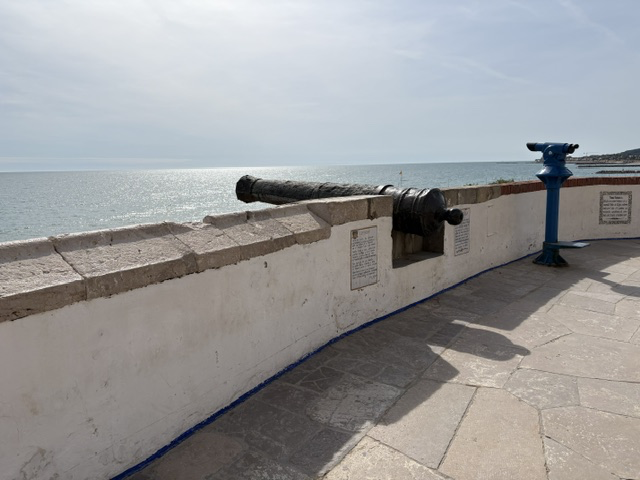
For centuries, the Mediterranean was both a highway for commerce and a route for conflict. Merchant ships carried goods between Spain, Italy, France, and North Africa, but the sea was also patrolled by pirates, privateers, and the warships of rival nations. Coastal towns like Sitges could never assume that an approaching vessel came in peace. Watchmen constantly scanned the horizon, and church bells were prepared to sound the alarm whenever a threat appeared.
The Baluard, where these cannons still stand today, formed the heart of Sitges’ coastal defenses. Built on the highest point overlooking the harbor, it provided an ideal location from which to protect the town and its anchorage. Although the walls have changed over the centuries, the commanding view remains exactly as it was when soldiers stood watch over the Mediterranean.
These cannons were more than symbols. They were used in battle. On April 27, 1797, during the wars between Spain and Great Britain, two British frigates entered the waters off Sitges intending to capture four merchant ships anchored near the town. The battery of six cannons mounted on the Baluard opened fire, and for nearly four hours the defenders exchanged cannon fire with the British ships. The determined resistance of the townspeople and coastal artillery forced the British to abandon their attack and withdraw, leaving the merchant vessels safely in the harbor. For a small coastal town, it was an extraordinary victory against one of the world’s greatest naval powers.
Alongside the documented history is one of Sitges’ most beloved legends. According to local tradition, when pirates threatened the town, a courageous young woman named Tecla helped defend the village by firing one of the cannons while the church bells summoned the townspeople to the walls. Whether every detail of the story is historically accurate matters less than what it has come to represent. Like many local legends, it reflects the courage and determination that the people of Sitges have long admired in their own community. The story has been passed down through generations and is commemorated on one of the ceramic plaques beside the cannon.
Today the horizon is filled with sailboats and pleasure craft. In 1797, those same waters carried the uncertainty of war. Every ship approaching the harbor demanded careful attention, and the men stationed beside these very cannons knew that within moments they might be called upon to defend their homes. These cannons have never been moved into a museum. They remain where they were intended to serve, overlooking the same sea they once defended.
Read More From Nancy
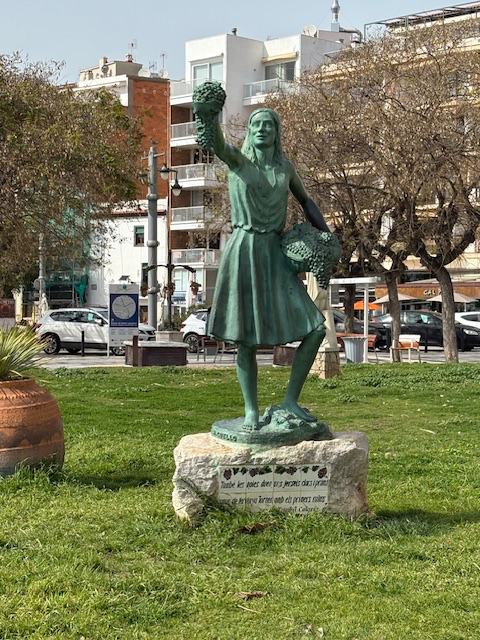
“La Verema”
It was great to spend a day in Sitges, exploring a new town after teaching in Barcelona. The views of the Mediterranean stretched out endlessly shifting in color with the light. Walking along the beach was refreshing and a quiet transition for our time in Barcelona. Sitges is a town of white buildings against the blue of […]
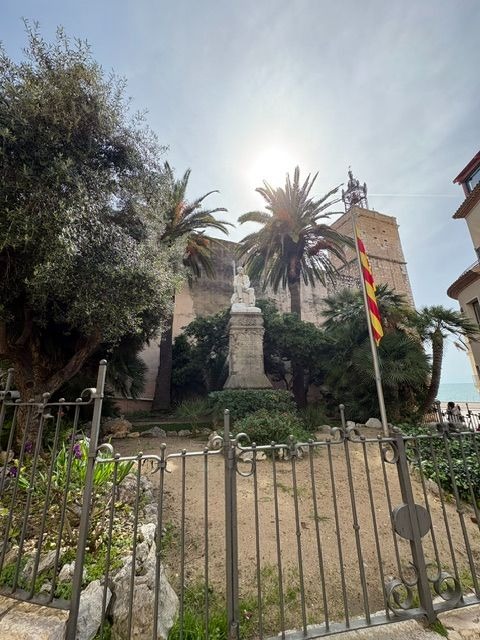
Monument to Dr. Bartomeu Robert
In a small garden near Sitges’s town hall, a seated stone figure honours a man remembered for both medicine and public service. The monument depicts Dr. Bartomeu Robert i Yarzábal, whose career took him to Barcelona but whose family connections and early education tied him to Sitges. Sculptor Josep Reynés created the work, which was […]
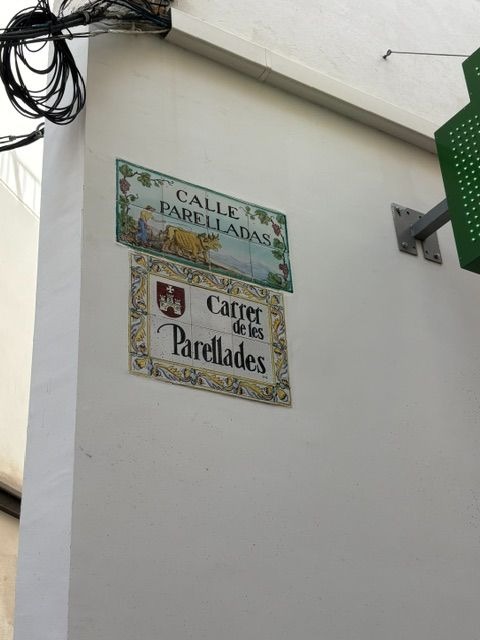
A Street Name Rooted in the Soil
Along Carrer de les Parellades in Sitges, a ceramic street sign offers a clue to the meaning of an old name. Its scene of a farmer guiding two oxen through a field recalls a time when land was measured by the labor required to cultivate it. A parellada was an agricultural measure associated with the […]

