The Fort House
While visiting Colonial Pemaquid in New Harbor, Maine, I was naturally drawn to the reconstructed fort overlooking the harbor. Yet one of the buildings that interested me most was not the fort itself, but the simple white structure known as the Fort House. At first glance, it appears to be a typical eighteenth-century New England farmhouse. As I learned more about it, I realized that it represents nearly three centuries of Maine’s history.
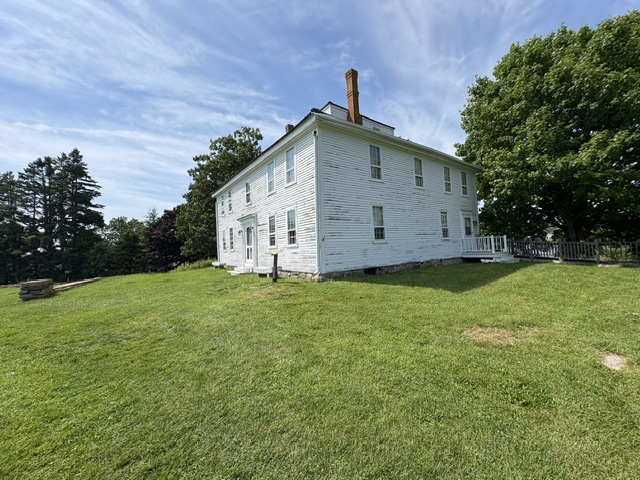
For many years, people believed the Fort House had been built in 1729 by Colonel David Dunbar, the British official who established Fort Frederick after the earlier colonial settlement was abandoned. Modern archaeological and architectural research, however, tells a different story. The house was most likely built several decades later by Alexander Nickels, Jr., the son of the last commander of Fort Frederick, as the center of a working farm.
That discovery reminds us that history is constantly being refined. What earlier generations accepted as fact is sometimes challenged by new evidence uncovered through archaeology, careful examination of buildings, and historical documents. The Fort House is a wonderful example of how our understanding of the past continues to evolve.
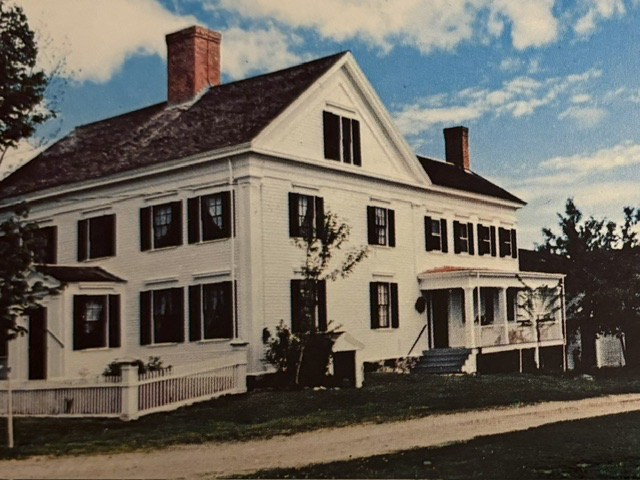
The building itself reflects the changing history of Pemaquid. During the late eighteenth and nineteenth centuries, it served as the heart of a family farm. Successive owners expanded and modified the house, adding features that reflected changing needs and styles. By the early twentieth century, it had become a summer residence before eventually being acquired by the State of Maine, which restored and preserved it as part of Colonial Pemaquid State Historic Site. Today it serves as an archaeological laboratory, research library, and repository for thousands of artifacts uncovered during excavations of the surrounding settlement.
What makes this house especially fascinating is its location. It stands amid the remains of one of the earliest English settlements in Maine. Archaeologists have uncovered the foundations of homes, workshops, warehouses, and public buildings dating to the seventeenth century, revealing a community that experienced prosperity, conflict, destruction, and renewal. Walking across the grounds, it is remarkable to realize that beneath the grass lie the remains of generations of people who lived and worked here more than three hundred years ago.
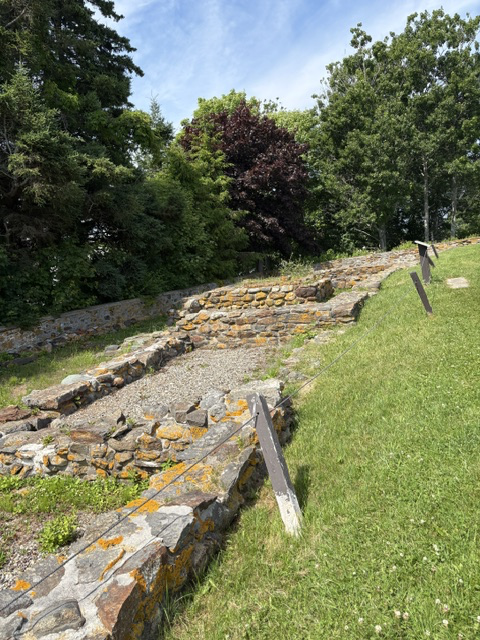
As I explored the site, I found myself appreciating the Fort House for what it represents. It is not famous because a great historical event occurred within its walls. Instead, it reminds us that history is built layer upon layer. A frontier settlement became a military outpost. A military outpost became a farm. A family home became a summer retreat. Today it has become a place where historians and archaeologists continue to uncover the stories of those who came before us.
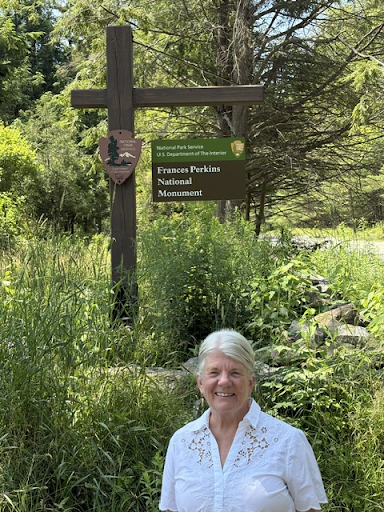
Read More From Nancy
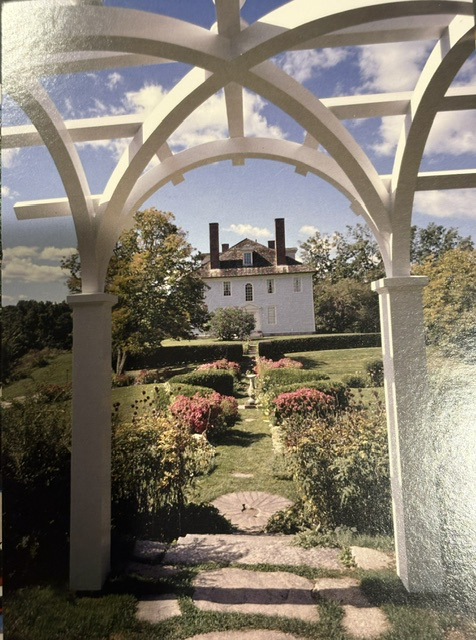
The Hamilton House
The Hamilton House in South Berwick, Maine is one of the most beautiful historic homes preserved by Historic New England. Overlooking the Salmon Falls River, this elegant Georgian mansion was built around 1785 by merchant and shipbuilder Jonathan Hamilton during a time when this region thrived through maritime trade and shipbuilding. Today, the house stands as both […]
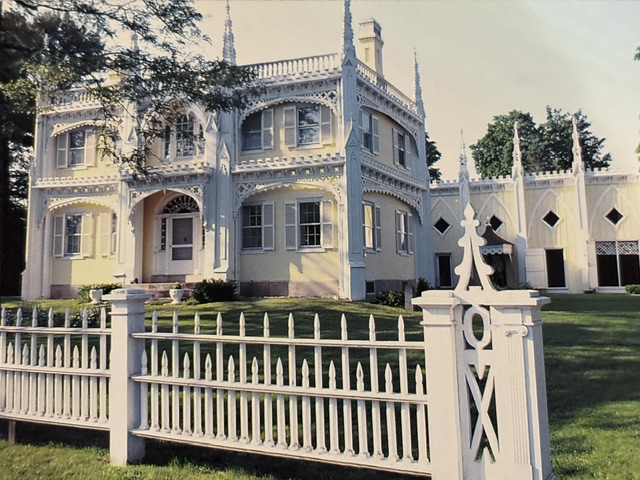
The Wedding Cake House
This is not a house I have been able to visit, but I have driven by it many times over the years. Known as the Wedding Cake House, it is one of the most recognizable landmarks in Kennebunk, Maine. Built in 1825 by shipbuilder George W. Bourne, the house originally reflected the Federal style popular in early […]
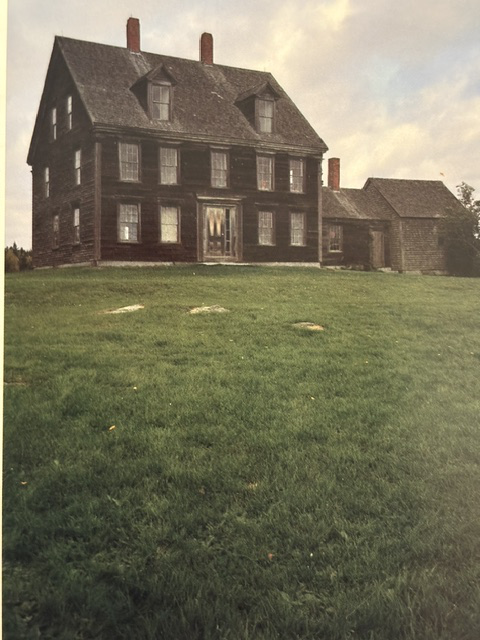
The Olson House
There are some places where the landscape tells only part of the story. The Olson House in Cushing, Maine, is one of those places. Sitting quietly atop a gentle hill overlooking the fields and Muscongus Bay, this weathered farmhouse appears much as it did when Andrew Wyeth first arrived here in 1939. It is an unassuming home, […]

