Pike Haven Homestead
While driving through Framingham, I came across this weathered historical marker commemorating the Pike Haven Homestead. It is the kind of roadside marker that is easy to overlook, yet it tells the story of one of the area’s most remarkable colonial homes. Had I simply driven past, I never would have learned about the extraordinary legacy of the Pike family.
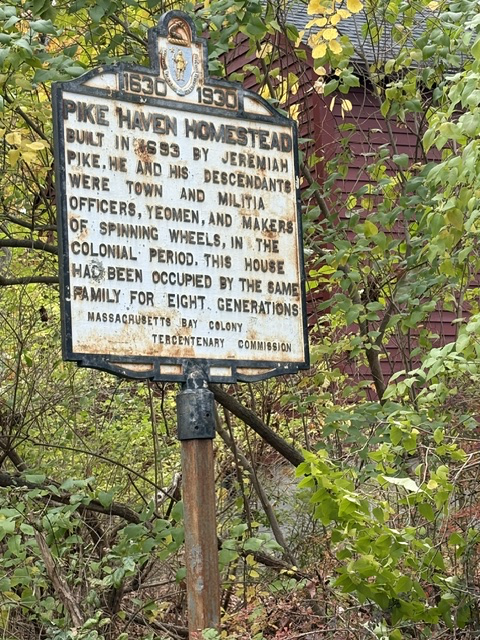
The Pike Haven Homestead was built in 1693 by Jeremiah Pike, one of Framingham’s earliest settlers. At the time, the area was still developing into the town that would officially become Framingham in 1700. Jeremiah Pike established a homestead that would become much more than a family residence. Over the next two centuries, it remained in the hands of the same family through eight successive generations, an extraordinary record of continuity that few New England homes can claim.
The marker describes the many roles the Pike family played within their community. They served as town and militia officers, worked as yeoman farmers, and became respected makers of spinning wheels during the colonial period. Like many early New England families, they were farmers, craftsmen, and civic leaders, contributing to the growth and stability of their town.
The importance of the homestead was formally recognized in 1930 when the Massachusetts Bay Colony Tercentenary Commission placed this historical marker as part of the celebration marking the 300th anniversary of the Massachusetts Bay Colony. Rather than honoring only famous battles or political leaders, the commission also recognized homes like this one, where generations of ordinary families quietly shaped the history of Massachusetts through their work, service, and perseverance.
Read More From Nancy
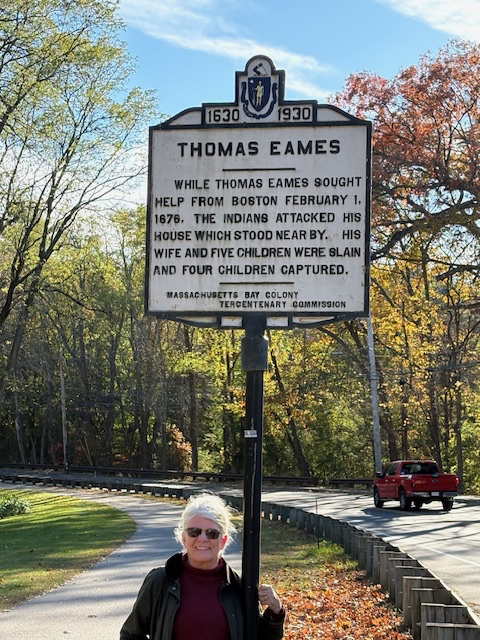
Thomas Eames Sign
Driving along a road in Framingham is this roadside sign that marks the location where the home of Thomas Eames once stood. There is no remaining structure, only the sign indicating that this was the site of a 17th century homestead. On February 1, 1676, during the King Philip’s War, the Eames house was attacked. At […]
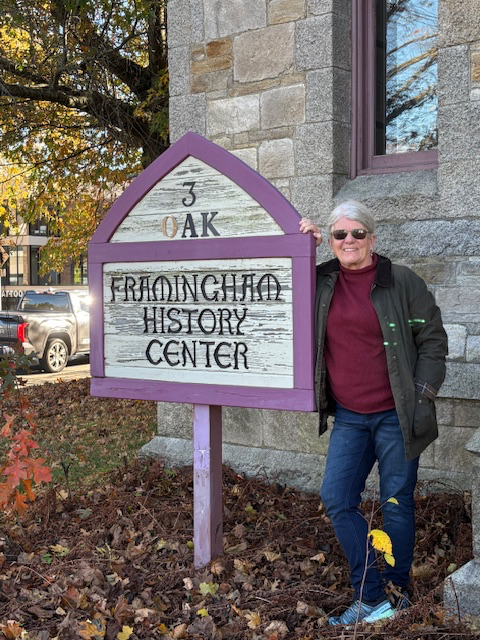
Framingham History Center
The home of the Framingham History Center is as much a historical artifact as the collections inside. The Center is housed in the former Edgell Memorial Library, a late 19th century structure that was completed in 1898. It was constructed as a public library through a private gift from philanthropist George Loring Edgell. This was an era when […]
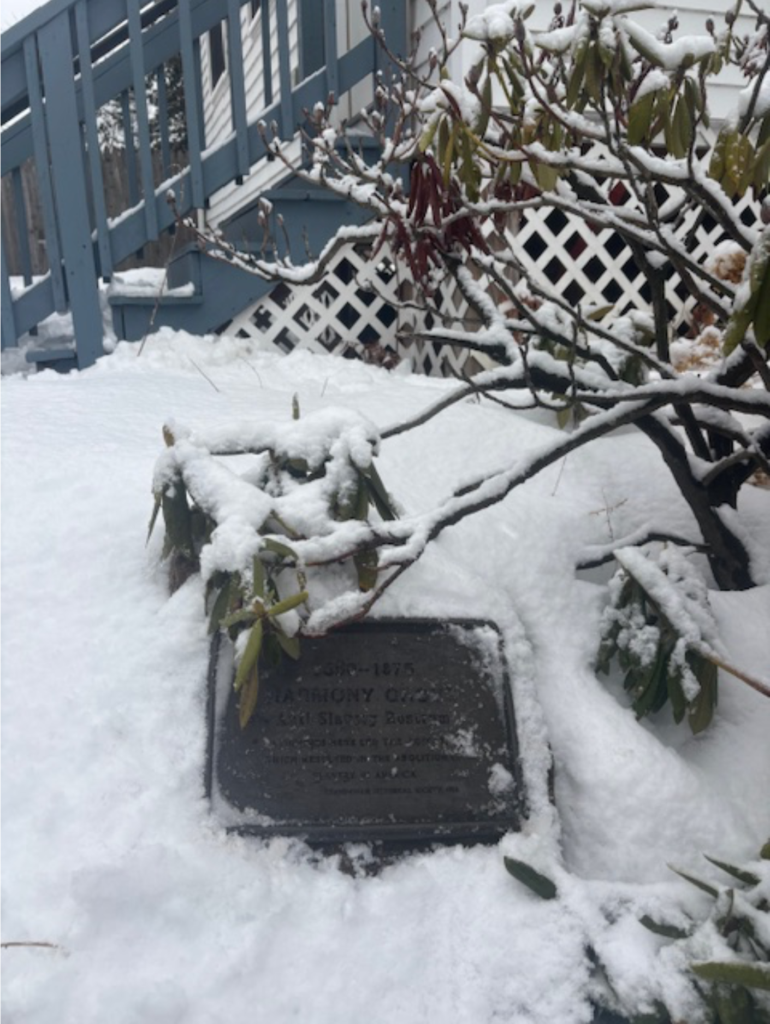
Harmony Grove Anti-Slavery Plaque
I went searching for the Harmony Grove Anti-Slavery plaque. The marker was nearly covered with snow, and I brushed it off so I could read it clearly. It is a small plague, easy to miss, but it marks ground that once held powerful voices. In the mid-1800s, Harmony Grove was an outdoor meeting site where […]

