The Old Burial Ground
Long before modern cemeteries were carefully landscaped parks, New England towns established simple burial grounds at the heart of their communities. The Old Burial Ground in Sturbridge is one of those places. Established in 1740, only two years after the town itself was incorporated, it became the final resting place for generations of the men, women, and children who built this community from the ground up.
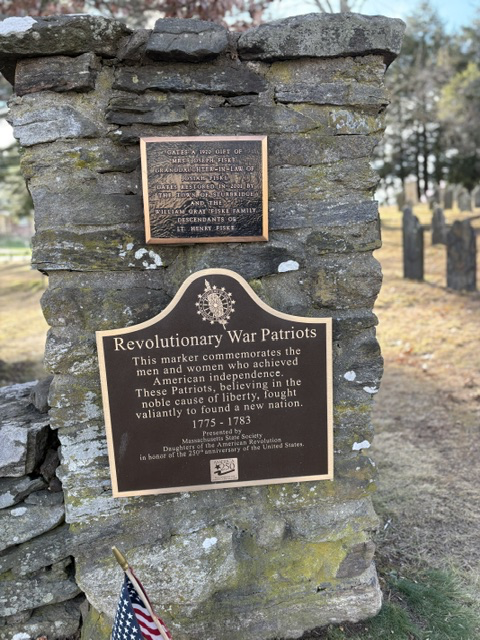
Approaching the cemetery, I was immediately drawn to the entrance marker. It recognizes the Revolutionary War patriots buried here, but it also reminds visitors that this entire cemetery is part of the nation’s story. The stone wall surrounding the grounds was built in 1794 by Revolutionary War veterans themselves. Imagine the significance of that. The very people who had fought to establish the United States returned home and, together, enclosed the resting place of their families and neighbors with a wall that still stands more than two centuries later.
Walking through the cemetery, it becomes clear that this is more than a collection of gravestones. It is the history of Sturbridge written in stone. Here lie early ministers, farmers, craftsmen, merchants, soldiers, mothers, and children, ordinary people whose lives shaped an extraordinary period of American history. The oldest surviving gravestones date to 1740, and together they document more than a century and a half of the town’s earliest generations.
The Revolutionary War is naturally one of the cemetery’s defining themes. More than sixty patriots are buried here, each representing a personal story of sacrifice during the struggle for independence. Some served on the battlefield, while others contributed in less visible but equally important ways. Together they remind us that the founding of the nation depended not only on famous generals and statesmen but also on the commitment of ordinary citizens.
Read More From Nancy
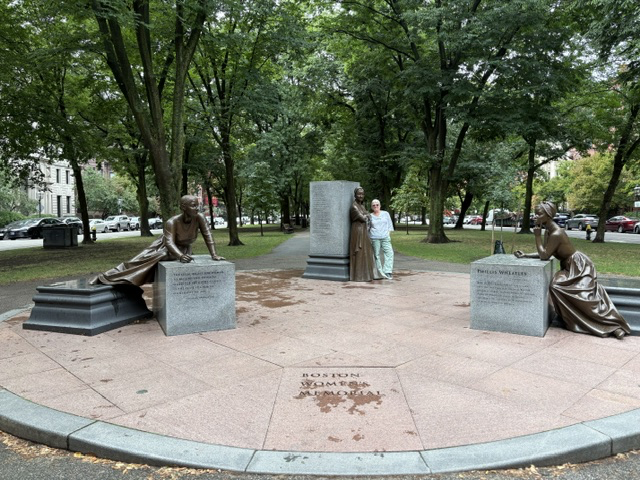
Boston Women’s Memorial
Located on the Commonwealth Avenue Mall, the Boston Women’s Memorial honors Abigail Adams, Lucy Stone and Phillis Wheatley, three women whose words challenged the political, social and intellectual boundaries of their times. Created by sculptor Meredith Bergmann, the bronze-and-granite memorial was dedicated by the City of Boston on October 25, 2003. The idea for the […]
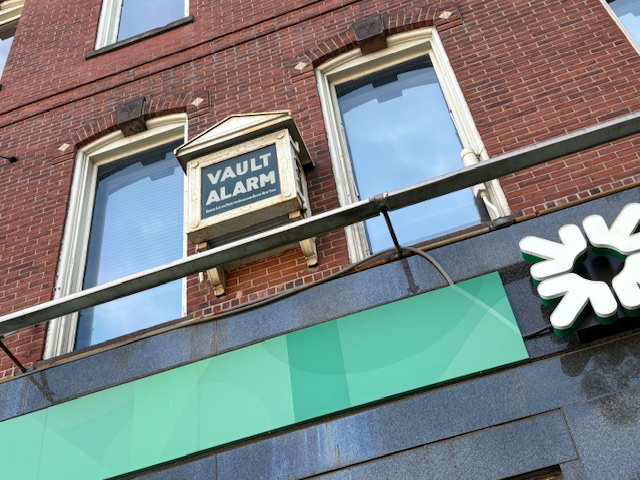
Vault Alarm
Looking up, above the street level to the second floor of the Citizens Bank in Natick, I noticed a small metal box mounted on the exterior wall. It reads: Vault Alarm This is a relic from a time when security was mechanical. In the late 19th and early 20th centuries, banks were designed to safeguard […]
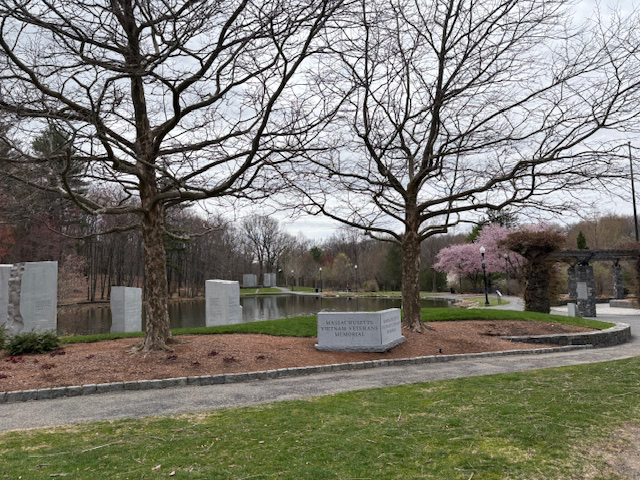
Massachusetts Vietnam Veterans Memorial
Some memorials ask you to stop and reflect. The Massachusetts Vietnam Veterans Memorial in Worcester is one of those places. Unlike many war memorials that focus on statues or monuments, this memorial invites visitors to walk quietly through the landscape. Granite monuments surround a peaceful reflecting pond, each bearing words that tell the story of […]

