Greektown
While visiting Detroit, we spent some time exploring Greektown, one of the city’s best-known historic neighborhoods. It was an easy place to enjoy with colorful signs, restaurants lining the streets, plenty of activity and, of course, the opportunity to try some wonderful Greek food. But like so many neighborhoods built around food and culture, there is a much deeper immigrant story behind what visitors experience today.
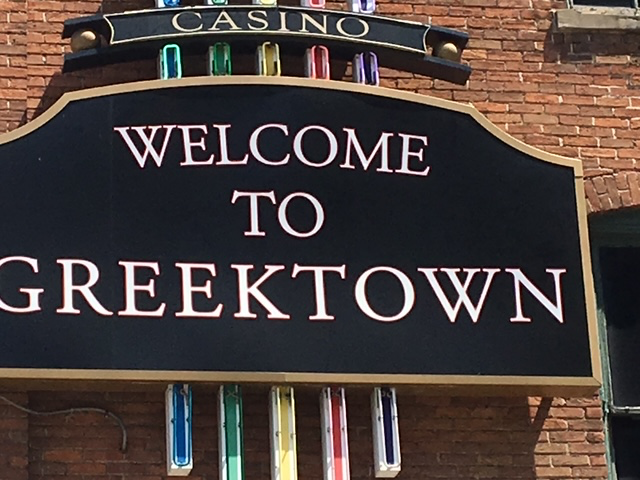
Greek immigrants began settling in Detroit in significant numbers in the late nineteenth and early twentieth centuries. By the early 1900s, a Greek community was developing in the area around Monroe Avenue, just northeast of downtown. New arrivals established restaurants, coffeehouses, bakeries, grocery stores and other businesses while creating a neighborhood where language, religion, food and traditions from Greece could be maintained far from home.
Greektown was never isolated from the larger immigrant story of Detroit. The surrounding area had previously been home to German immigrants, and as the city grew, different ethnic groups repeatedly moved through its neighborhoods. Detroit’s booming automobile industry drew workers from across the United States and around the world, transforming the city into a patchwork of communities shaped by migration.
By the middle of the twentieth century, many Greek families had moved from Greektown into other parts of Detroit and its suburbs. Yet the restaurants and businesses remained, and food became one of the primary ways the neighborhood maintained its Greek identity. Monroe Street developed into an entertainment and dining destination where Detroiters could come for Greek specialties and experience at least a small piece of the culture that had created the neighborhood.
In the 1960s, community leaders and business owners worked to strengthen Greektown’s identity and preserve the neighborhood at a time when major changes were taking place throughout downtown Detroit. In 1982, the Greektown Historic District was added to the National Register of Historic Places, recognizing both its architecture and its connection to Detroit’s immigrant history.
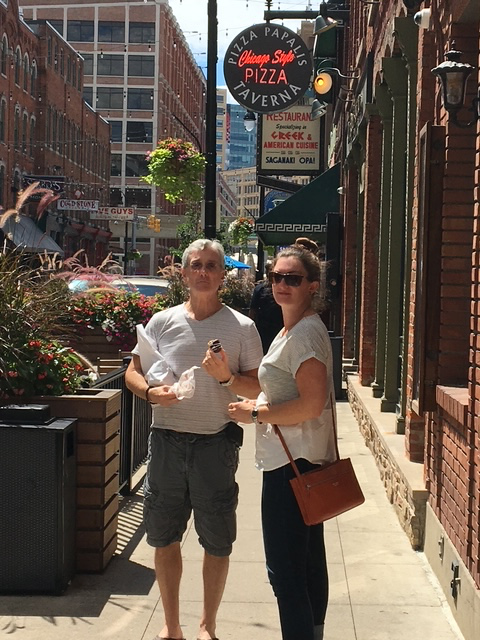
I love neighborhoods like this because food can become a doorway into history. The restaurants may be what initially draw people to Greektown, but behind them is the story of immigrants arriving in a rapidly growing American city, establishing businesses, building a community and finding ways to preserve pieces of the culture they had brought with them. We came to Greektown to explore and enjoy some great food. In doing so, we were also walking through another chapter of Detroit’s immigrant story.