Lincoln’s Chair — Preserving a Moment in American History
Standing beside this chair at the Henry Ford Museum of American Innovation, it is difficult to comprehend that Abraham Lincoln actually sat here on the night of April 14, 1865. He was watching Our American Cousin at Ford’s Theatre in Washington when John Wilkes Booth entered the presidential box and shot him. Lincoln was carried across the street to the Petersen House, where he died the following morning.
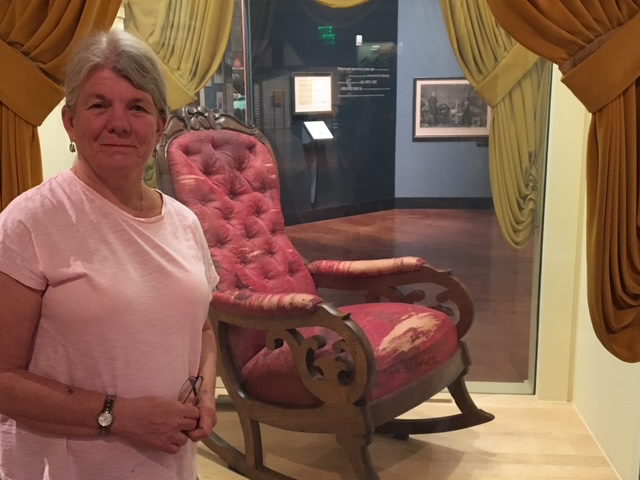
The chair itself was not made for Lincoln. It belonged to Ford’s Theatre and was brought into the presidential box for his use. After the assassination, the federal government took possession of it as evidence. It remained in government custody for decades before eventually being returned to the Ford Theatre family and sold at auction.
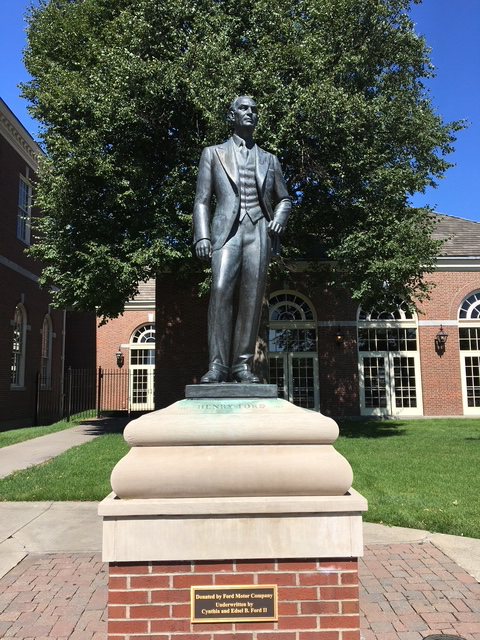
Henry Ford acquired the chair in 1929. For me, that is an important part of this story because one of the things I most appreciate about Henry Ford was his vision of preserving American history through its objects. He understood that history could be experienced differently when we could stand in front of something that was there.
Ford collected far more than famous automobiles and machinery. He gathered furniture, tools, household objects, documents, buildings and artifacts connected with both famous Americans and ordinary people. He even moved entire historic structures to Greenfield Village. Collectively, these objects preserve pieces of lives that otherwise might have disappeared.
A chair is an ordinary object. But this particular chair carries a memory that no reproduction can duplicate. Lincoln sat here during the final conscious moments of his life. Because Ford recognized the importance of preserving the original, generations of people have been able to stand before it and experience a tangible connection with that night in 1865.
That is what I appreciate about Ford’s collecting. By saving the objects people touched, made, worked with and lived among, he was also preserving something of the people themselves. In collecting these objects, he honored their memories and gave future generations a way to encounter history not simply as something they read about, but as something that once physically existed.