Bishop’s Gate
Standing beneath Bishop’s Gate, it is easy to think of it as simply another old stone archway. But for more than four centuries, this gateway has marked one of the principal entrances into one of the best-preserved walled cities in Europe.
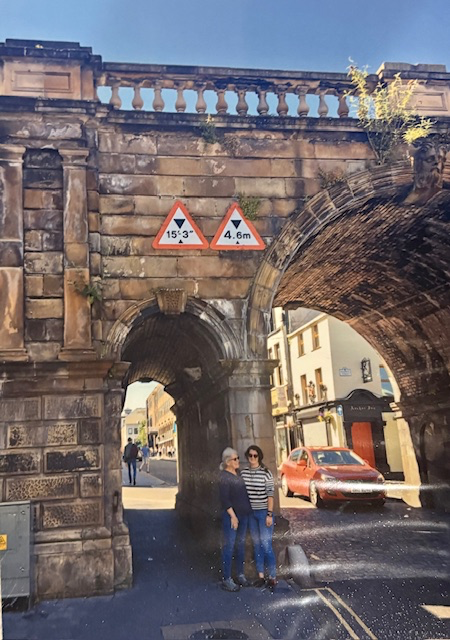
The walls of Derry were constructed between 1613 and 1619 after the Plantation of Ulster, when the English Crown encouraged settlers from England and Scotland to establish communities in the north of Ireland. Built by the Honourable Irish Society, the massive stone walls enclosed the new city and were designed to withstand artillery as well as traditional siege warfare. Remarkably, they were never breached.
Bishop’s Gate was one of the city’s original four entrances, together with Ferryquay Gate, Butcher Gate and Shipquay Gate. It took its name from the road leading toward the Bishop’s residence and nearby St. Columb’s Cathedral. For centuries, merchants, clergy, soldiers and ordinary townspeople passed through this gateway as they entered and left the city.
The gate witnessed one of the defining events in Irish history: the Siege of Derry in 1689. During the 105-day siege, the city’s gates were closed against the forces of King James II. Thousands of defenders and civilians endured starvation, disease and constant bombardment while refusing to surrender. The successful defense of Derry became one of the defining moments in Protestant history in Ireland and shaped the city’s identity for generations.
But as we walked through Bishop’s Gate on our guided tour of Derry, we were reminded that the city’s history did not end in the seventeenth century. Our guide spoke openly about The Troubles, the decades of political and sectarian violence that affected Northern Ireland from the late 1960s until the Good Friday Agreement in 1998. We learned how Derry became one of the focal points of the conflict, from the civil rights marches of the late 1960s to the tragedy of Bloody Sunday in 1972, when fourteen unarmed civilians were killed during a protest. Hearing these stories while standing inside the walls made the history feel immediate rather than distant.
Like many historic cities, Derry also changed as transportation evolved. The original gateways proved too narrow for increasing traffic, and several were enlarged during the eighteenth and nineteenth centuries. The larger arch visible today accommodates modern vehicles, while the smaller adjoining passage reminds visitors of the scale of earlier entrances designed for pedestrians, horses and carts.
Walking through Bishop’s Gate became much more than seeing an old structure. It became an opportunity to understand how one place can hold layer upon layer of history. From the Plantation of Ulster and the Siege of Derry to the civil rights movement and the peace process, this gateway has stood through some of the most significant events in Irish history.
Read More From Nancy
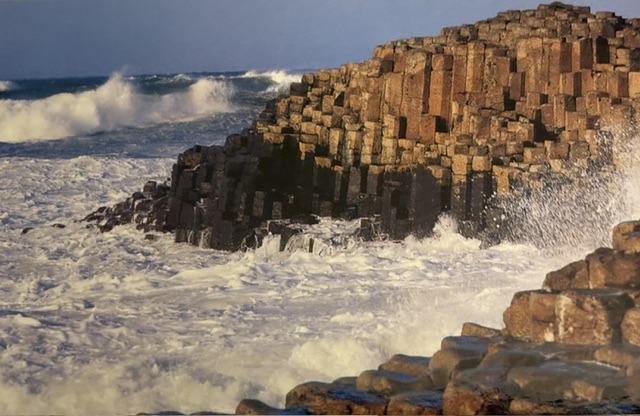
Giant’s Causeway
When Erin and I visited Northern Ireland, we decided to hire a private guide to take us along the spectacular Causeway Coastal Route. Driving on the opposite side of the road from what we were accustomed to, I wanted us to relax and enjoy the experience rather than worry about unfamiliar roads, directions, and navigating […]
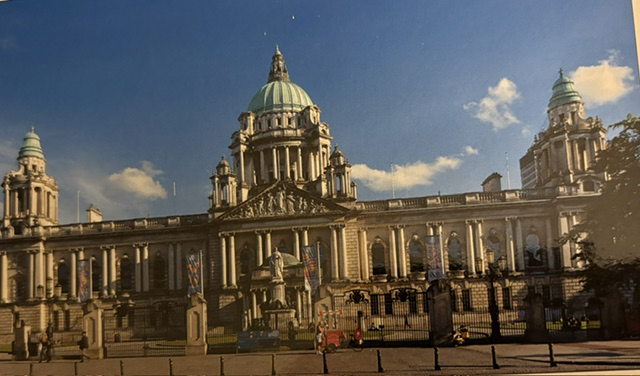
Town Hall
Standing in the center of Belfast is this enormous Baroque Revival building, crowned by its great green copper dome. Belfast City Hall seems almost oversized for a municipal building, but its scale tells an important story about what was happening in Belfast when it was created. Belfast had expanded dramatically during the nineteenth century. Linen […]
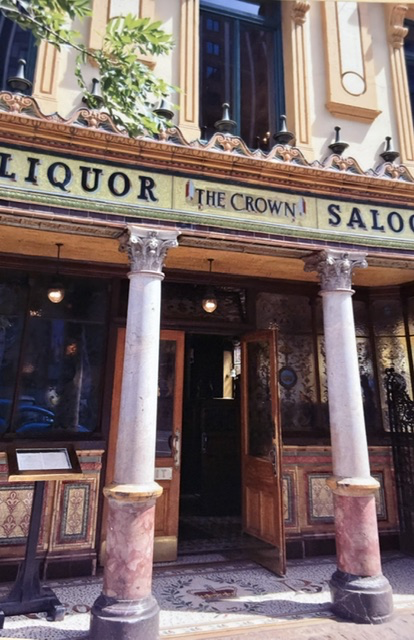
The Crown Liquor Saloon
While touring Belfast, Erin and I made our way to The Crown Liquor Saloon for lunch. We had heard that it was one of the city’s most famous landmarks. Long before we reached our table, we found ourselves standing outside, looking up at the richly decorated façade and appreciating the extraordinary craftsmanship that has welcomed […]

