The Stanwood House
Standing at 323 Washington Street in Wellesley Hills, the Stanwood House has been part of this neighborhood for more than a century. Today it is the home of the Wellesley Historical Society and the Wellesley History & Exhibit Center, but the building began as both the family home and medical office of one of Wellesley’s longtime physicians.
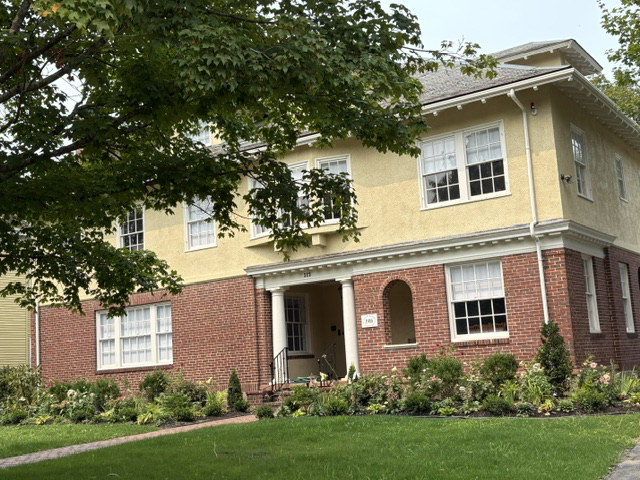
The house was built in 1916 for Dr. Frederic A. Stanwood and his wife, Jeannette. It was designed by Boston architect Luther C. Greenleaf, whose work was associated with several projects developed in Wellesley by figures including Isaac Sprague and Roger Babson. The Town describes the Stanwood House as a strong example of pre-World War I Colonial Revival architecture.
The house was substantial but not ostentatious, combining a brick first story with stucco above, a broad roofline, classical columns at the entrance, and the symmetry and traditional details characteristic of the Colonial Revival movement. It was a style that deliberately looked back, the location of the house is important as well. When it was constructed, Wellesley Hills was changing. What had once been a more rural landscape was developing into the residential, commercial and institutional center we recognize today. When Wellesley considered historic protection for the house, the Town specifically noted that the Stanwood property helped illustrate that transformation of Wellesley Hills from a rural farming community into a more progressive business and institutional center. It embraced colonial architectural traditions while creating a thoroughly modern early-twentieth-century home.
But this was more than the Stanwood’s’ residence. Dr. Stanwood practiced medicine here as well. A small examination room at the back of the house allowed him to see patients without separating his professional life from the community in which he lived. He remained in the house from its construction in 1916 until his death in 1975—nearly sixty years.
His relationship with Wellesley extended far beyond the patients who came through his door. Dr. Stanwood served as chairman of the Wellesley Board of Health from 1918 until 1963—an extraordinary 45 years—and also served as physician to the Wellesley schools. For generations of Wellesley families, therefore, Dr. Stanwood was not simply a neighbor living on Washington Street. He was part of the town’s everyday medical and civic life.
Importantly, the Historical Society did not simply acquire an old house and convert it into offices. Wellesley formally recognized the historical importance of the building in 2020 when Town Meeting designated 323 Washington Street as the Stanwood House Historic District, one of the town’s small number of single-building historic districts.
After years of fundraising and extensive rehabilitation, the house began its newest chapter. The former residence and doctor’s office became the Wellesley History & Exhibit Center, with galleries, archival and collection storage, research facilities, educational programming and gathering spaces. The restored center officially opened in 2025.
Read More From Nancy
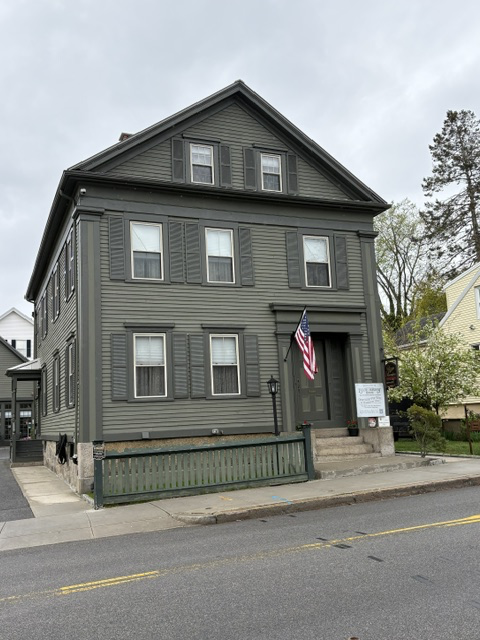
The Lizzie Borden House
The Lizzie Borden House is one of the most infamous true-crime sites in American history. Located in the heart of Fall River, this modest Victorian home became the scene of the brutal 1892 murders of Andrew and Abby Borden, a crime that remains officially unsolved more than a century later. On August 4, 1892, Andrew Borden and […]
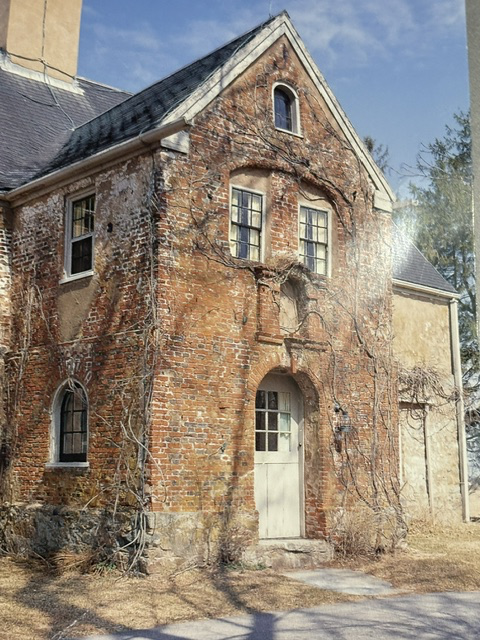
Spencer-Peirce-Little Farm
There are some historic homes that stand apart from all the others, and the Spencer-Peirce-Little Farm in Newbury, Massachusetts, is certainly one of them. The moment I saw its weathered brick walls and centuries-old architecture, I realized this was not the typical colonial farmhouse. It possesses a quiet strength that reflects more than three hundred […]
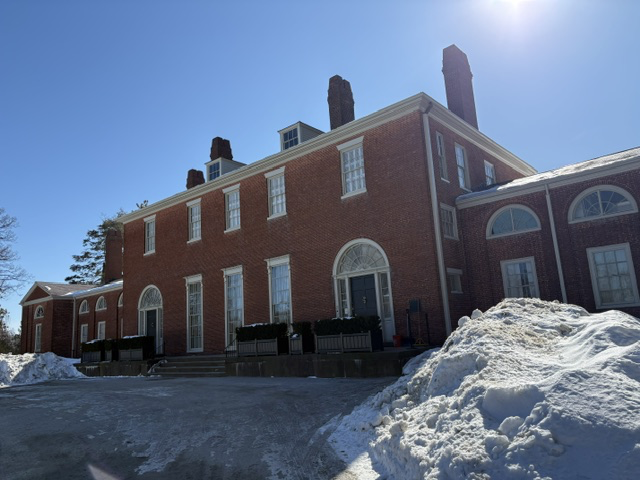
Gore Place
Surrounded by open lawns and mature trees, the Gore Place remains one of the finest surviving Federal-era estates in New England and offers a glimpse into the aspirations of the young American republic. Gore Place was built between 1804 and 1806 for Christopher Gore and his wife, Rebecca Amory Payne Gore. Christopher Gore was one of […]

