The Clark Art Institute
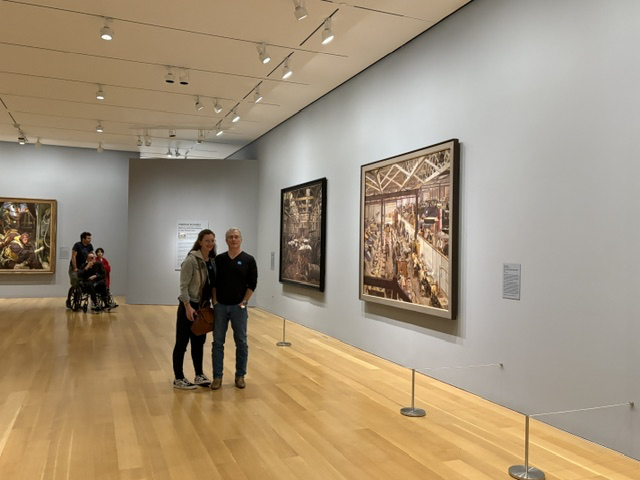
On Father’s Day, while we were camping at Mount Greylock State Reservation, Erin came to spend the day with us. We decided to head over to Williamstown and visit Clark Art Institute. We have visited the Clark many times over the years, but it is one of those museums that is always worth returning to. The collection is extraordinary, the exhibitions change, and the setting in the Berkshire hills is as much a part of the experience as the art itself.
The story of the Clark begins with Robert Sterling Clark and his wife, Francine. Sterling was born in 1877 into a family whose wealth came from the Singer Sewing Machine Company. His grandfather, Edward Cabot Clark, had been Isaac Singer’s business partner, and Sterling and his brothers inherited a considerable fortune. But Sterling’s life took some interesting turns before he became one of America’s important art collectors. He graduated from Yale with an engineering degree, served in the U.S. Army during the Boxer Rebellion in China, and in 1908 led a scientific expedition through remote areas of northern China to conduct surveys and collect zoological and ethnographic information.
After settling in Paris, Sterling began seriously collecting art. He had inherited several works from his family in 1909 and made his first purchases a few years later. Initially interested in Dutch, Flemish, and Italian Old Masters, he gradually turned toward nineteenth-century French and American artists. Renoir became a particular passion, but the collection also grew to include works by Degas, Monet, Pissarro, Homer, Sargent, Cassatt, and Remington, along with sculpture, drawings, prints, silver, porcelain, furniture, and rare books. The Clark today is especially celebrated for its remarkable group of Renoirs—thirty-nine paintings collected by Sterling and Francine
Francine was an important part of this story. Born Francine Clary, she had been an actress in France when she met Sterling around 1910. They married in 1919, and collecting became something they did together. The Clark’s own archives describe them as partners who visited galleries and dealers together while building the collection that eventually became the museum.
There was also considerable family drama behind the collection. Sterling’s relationship with Francine contributed to a serious rift with his younger brother Stephen. Sterling worried that the structure of the family trusts meant that his fortune could eventually return to the Clark family rather than pass to Francine and her daughter. He unsuccessfully went to court seeking to break the trusts, and the brothers never reconciled. Interestingly, Stephen Clark became an important art collector in his own right and was a founding trustee of New York’s Museum of Modern Art.
By the middle of the twentieth century, Sterling and Francine had to decide what would ultimately happen to their collection. They considered several possibilities, including giving works to the Virginia Museum of Fine Arts or establishing a museum in New York. Instead, they chose the small college town of Williamstown, Massachusetts. One reason was the presence of Williams College and its long-established interest in art history. In 1950, they chartered the Sterling and Francine Clark Art Institute, and the museum opened to the public in 1955. Sterling died the following year.
From the beginning, the Clark was intended to be more than a place to display paintings. It developed into both a public museum and a center for scholarship and research. Today it includes an important art history library, research programs, visiting scholars, and a graduate program in the history of art offered in cooperation with Williams College.
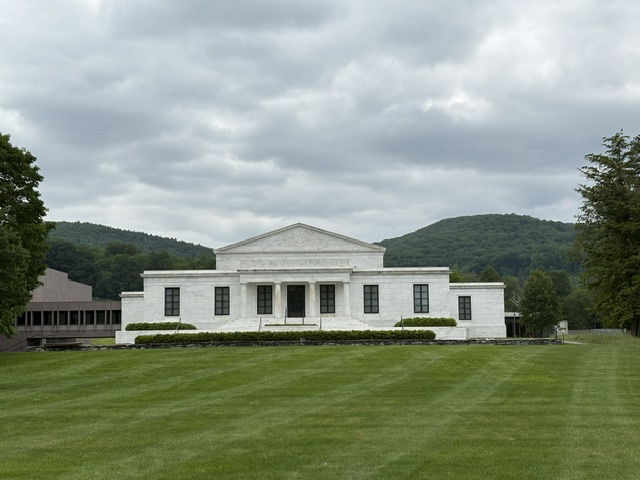
The original white marble museum building in my photograph dates from the founding of the institution and gives the Clark the appearance of a small classical temple set against the Berkshire hills. Over the decades, however, the campus has expanded considerably. One of the most important modern additions was designed by Japanese architect Tadao Ando. His restrained architecture, terraces, reflecting pools, and use of glass were designed to connect the museum more closely with the surrounding landscape. The result is a wonderful mixture of old and new architecture rather than a single museum building.
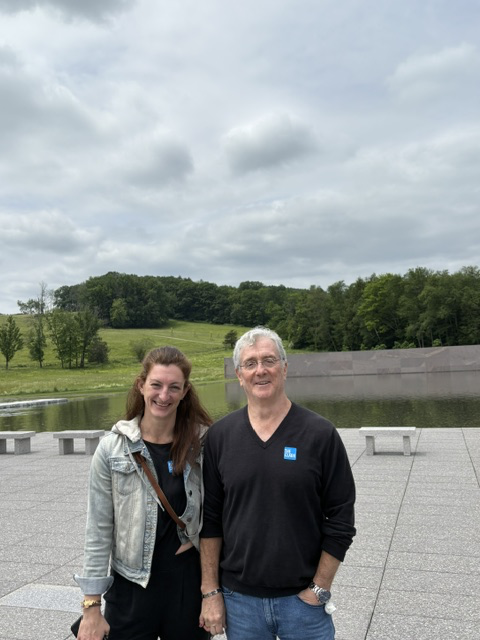
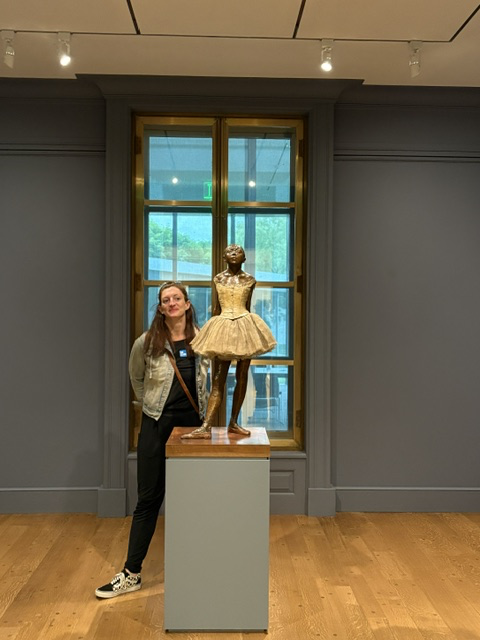
The Clark is surrounded by approximately 140 acres of meadows, woods, trails, ponds, and views toward the Berkshire hills. You can spend part of the day looking at Renoir, Sargent, Homer, and Degas and then simply walk outside into the landscape. That combination of art and nature is one of the things that distinguishes the Clark from museums located in the middle of large cities.
The Clark began as the very personal collection of Sterling and Francine Clark, assembled largely for their own enjoyment. Their decision to place it in Williamstown ultimately transformed that private passion into something generations of visitors could share. For us, after many visits, it has become a familiar part of exploring western Massachusetts—a place where there is always another painting to look at, another exhibition to discover, and another reason to return
Read More From Nancy
Harvard Museum of Natural History
The Harvard Museum of Natural History is one of those museums I have returned to a few times over the years. Located on the Harvard University campus in Cambridge, it is not simply a collection of natural curiosities. It brings together specimens and objects from Harvard’s enormous scientific collections and provides a public window into […]
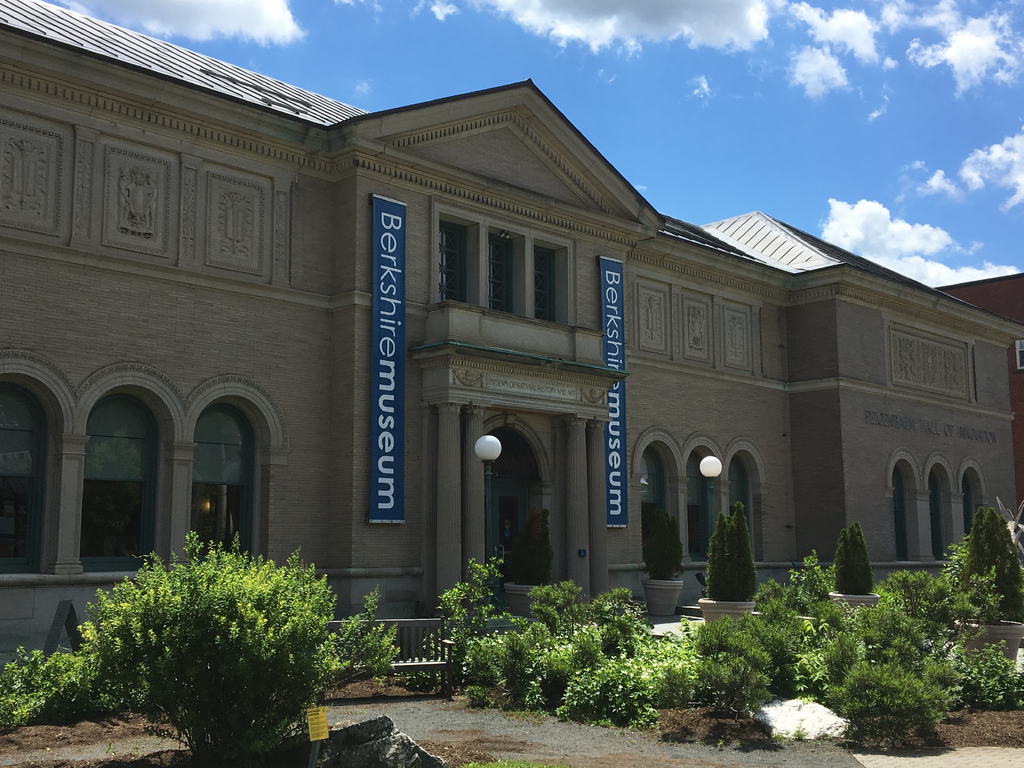
Berkshire Museum
While spending time in the Berkshires, I visited the Berkshire Museum in downtown Pittsfield. A special exhibition devoted to guitars added an enjoyable musical element to the visit, but it was the museum’s varied permanent collection that made the strongest impression on me. The Berkshire Museum was founded in 1903 by local businessman and philanthropist […]
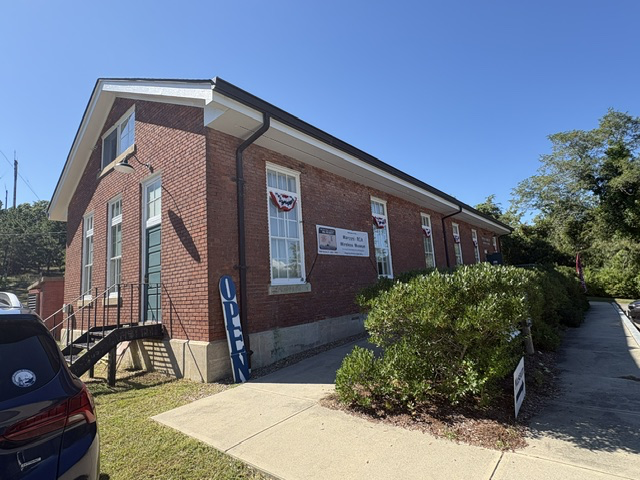
Marconi-RCA Wireless Museum
Long before messages could be sent instantly by telephone, satellite or the internet, Chatham served as an important link between ships at sea and the rest of the world. The Marconi-RCA Wireless Museum preserves the story of the people and technology that made those connections possible. Italian inventor Guglielmo Marconi helped transform communication through his […]

