Signal Hill
High above the entrance to St. John’s Harbour, Signal Hill is one of those places where the landscape and the history are equally compelling. Standing here, with the Atlantic stretching out before us, it is easy to understand why this rocky height has been so important for centuries.
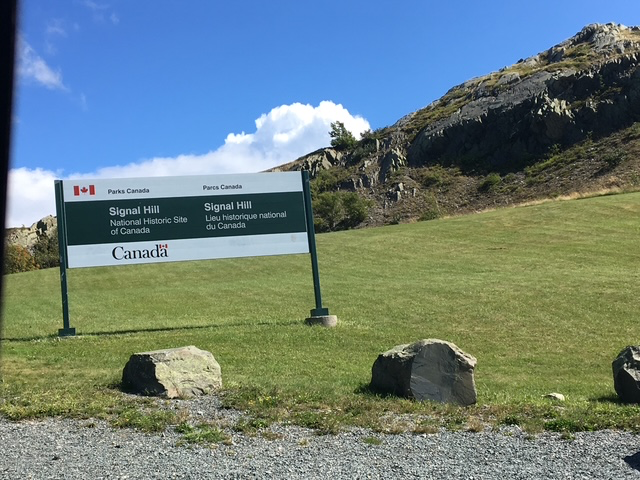
Its location gave Signal Hill enormous strategic value. From the summit, ships approaching St. John’s could be spotted far out at sea, while the narrow entrance to the harbor below could be watched and defended. The hill was used for military purposes beginning in the 17th century and became particularly important during the long struggle between Britain and France for control of Newfoundland.
One of the most important events occurred in 1762 during the Seven Years’ War. French forces had captured St. John’s, but British troops under Lieutenant Colonel William Amherst attacked the French position on the hill on September 15. The Battle of Signal Hill resulted in a British victory, and the French surrendered St. John’s shortly afterward. It was one of the final battles of the Seven Years’ War fought in North America.
The name Signal Hill comes from another important role the site played. Beginning in the 18th century, flags were raised from the hill to communicate information about ships approaching St. John’s. Merchants, military officials, and townspeople below could learn that vessels were arriving before they actually entered the harbor.
But Signal Hill became internationally famous because of an event that had nothing to do with warfare.
On December 12, 1901, Italian inventor Guglielmo Marconi received a wireless signal here that had been transmitted across the Atlantic from Poldhu in Cornwall, England. The signal was the Morse-code letter “S”—three dots. Marconi’s experiment demonstrated the potential for radio communication across enormous distances and became an important milestone in the development of global wireless communication.
The large stone Cabot Tower that now crowns Signal Hill was begun in 1897 to commemorate both Queen Victoria’s Diamond Jubilee and the 400th anniversary of John Cabot’s 1497 voyage to Newfoundland. It was completed in 1900, just before Marconi conducted his famous experiment nearby.
In 1951, the Canadian government designated Signal Hill a National Historic Site because of its importance to Canada’s military and communications history. Today it is administered by Parks Canada.
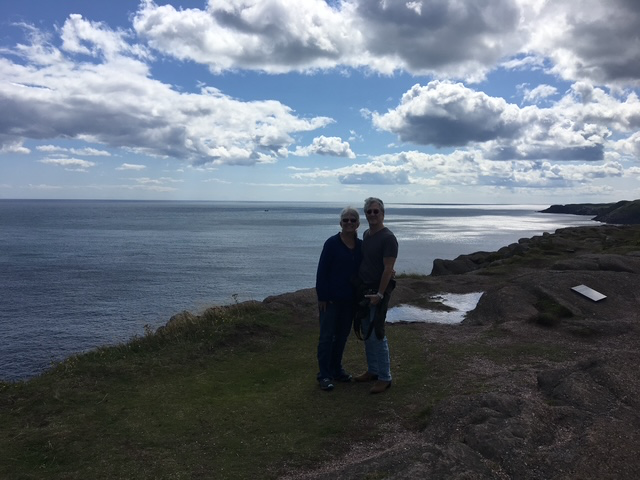
Standing together overlooking the Atlantic, we were surrounded by a landscape that has witnessed centuries of exploration, warfare, communication, and change. Sometimes geography helps create history, and at Signal Hill it is impossible to separate the two.
Read More

Read More From Nancy
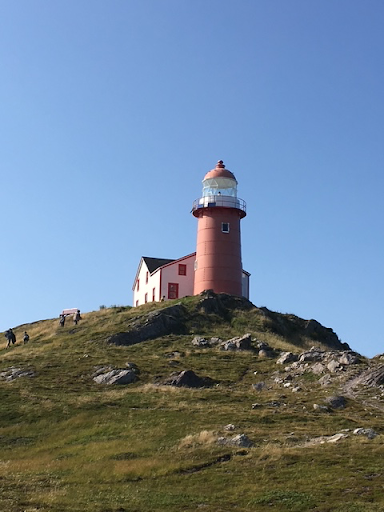
Ferryland Lighthouse
Ferryland is one of those places where history feels present and layered into the land itself. Marty and I made our way along the coastline of Newfoundland, where the road fellows the edge of the Atlantic, and each turn reveals another stretch of rugged shoreline. Arriving in Ferryland, there is a sense that this place has been […]
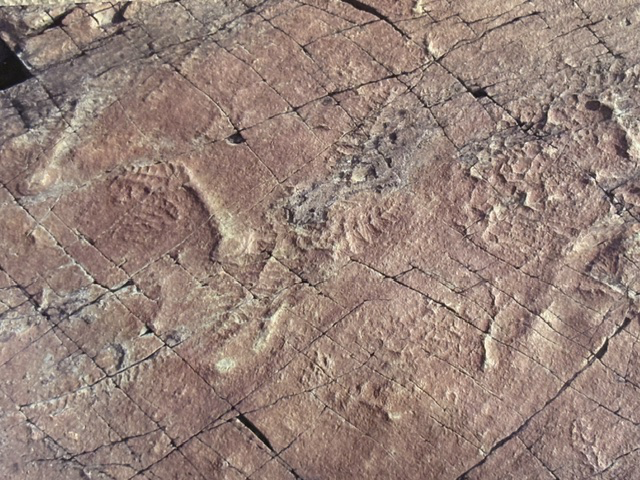
Mistaken Point Ecological Reserve
Mistaken Point Ecological Reserve in Newfoundland tells a story far older than humanity itself. During a visit in Newfoundland, Marty and I made the drive to this remote site to see one of the world’s most important fossil discoveries. The fossils preserved at Mistaken Point are approximately 565 million years old and represent some of the earliest known complex […]

