Mistaken Point Ecological Reserve
Mistaken Point Ecological Reserve in Newfoundland tells a story far older than humanity itself. During a visit in Newfoundland, Marty and I made the drive to this remote site to see one of the world’s most important fossil discoveries.
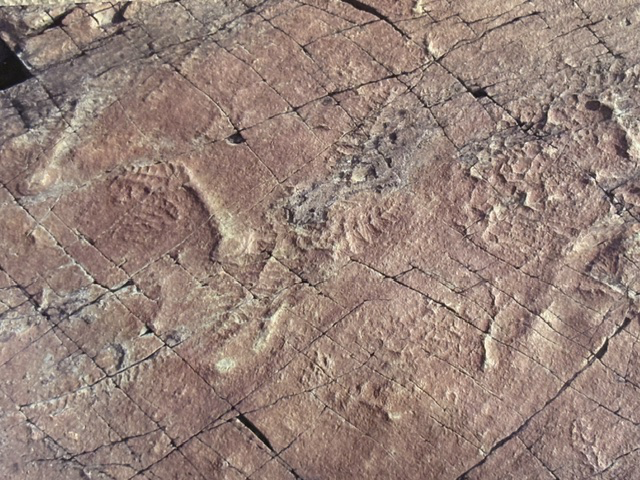
The fossils preserved at Mistaken Point are approximately 565 million years old and represent some of the earliest known complex multicellular life on Earth. Long before dinosaurs, fish, birds or even the first creatures with hard shells appeared, these strange organisms lived on the floor of an ancient ocean that once covered this part of Newfoundland. Their impressions were preserved in layers of volcanic ash and sediment, creating an extraordinary record of life during the Ediacaran Period.
What makes Mistaken Point so significant is the quality and abundance of the fossils. Thousands of specimens remain preserved exactly where they lived, providing scientists with a unique opportunity to study some of the earliest large organisms ever known. Many of these life forms have no modern equivalent and represent evolutionary experiments from a distant chapter in Earth’s history.
Recognizing its global scientific importance, UNESCO designated Mistaken Point a World Heritage Site in 2016. The reserve protects one of the most significant fossil assemblages ever discovered and continues to attract scientists from around the world who seek to better understand the origins of complex life on Earth.
Our visit to Mistaken Point connected us to the earliest chapters of life itself. These fossils remind us how brief human history is when measured again the vast timeline of our planet.

Read More From Nancy
Bell Island
While visiting Newfoundland, Marty and I made our way to Bell Island to take a tour of the mines. From the outside, the island is quiet, with coastal views, open sky and a sense of distance from everything else. But stepping into the mines reveals a different story. Bell Island was once one of the most […]
St. Johns
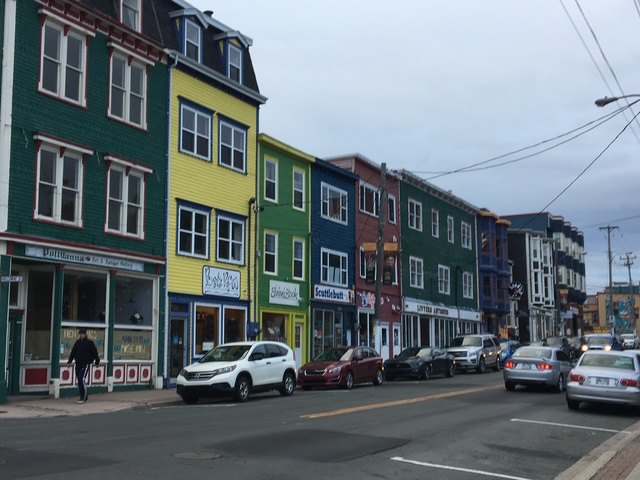
One of the things that stands out when visiting St. John’s is the color. The rows of brightly painted buildings lining the streets create a feeling that is both cheerful and welcoming. The city has a rugged maritime structure personally shaped by the Atlantic Ocean, fishing traditions, Irish and English heritage, and centuries of survival along one […]

