St. Johns
One of the things that stands out when visiting St. John’s is the color. The rows of brightly painted buildings lining the streets create a feeling that is both cheerful and welcoming. The city has a rugged maritime structure personally shaped by the Atlantic Ocean, fishing traditions, Irish and English heritage, and centuries of survival along one of the harshest coastlines in North America.
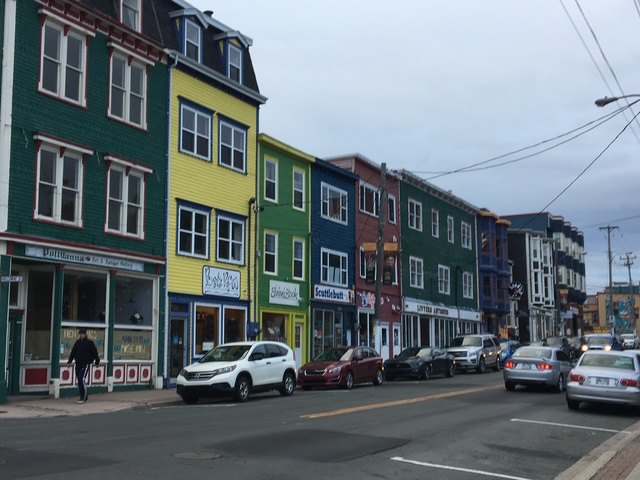
The colorful row houses, called “Jellybean Row,” have become one of the city’s most recognizable images. Against the fog, rain and long winters, the bright colors seem like an act of optimism. Walking these streets, you feel the strong sense of local identity that Newfoundland is known for.
St. John’s is also one of the oldest European founded cities in North America. For centuries it served as an important fishing port tied to the rich Grand Banks cod fisheries that brought fishermen from England, Ireland, Portugal, France and Spain across the Atlantic. The harbor became one of the most strategically important ports in the North Atlantic, shaping both the economy and culture of Newfoundland for generations.
The city’s history is deeply connected to the sea. Fishing families, merchants, sailors, immigrants and shipbuilders all helped shape the character of St. John’s. Over the centuries the city survived devastating fires, economic hardship, storms and wars, yet continued rebuilding itself again and again.
St. Johns also played important roles during both World Wars because of its strategic location in the North Atlantic. Convoys, naval operations and transatlantic communications all passed through Newfoundland during critical periods of the twentieth century. It was also here that Marconi received one of the first transatlantic wireless radio signals in 1901.
St. John’s does not try to resemble anywhere else. Its history, geography, language, music and culture give it a personality entirely its own.

Read More From Nancy
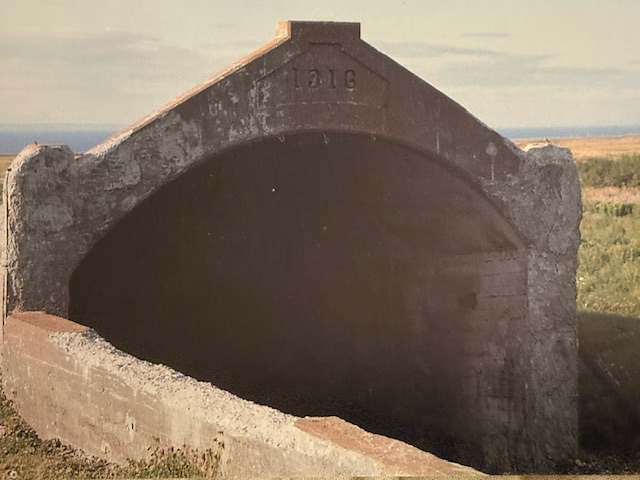
Bell Island
While visiting Newfoundland, Marty and I made our way to Bell Island to take a tour of the mines. From the outside, the island is quiet, with coastal views, open sky and a sense of distance from everything else. But stepping into the mines reveals a different story. Bell Island was once one of the most […]
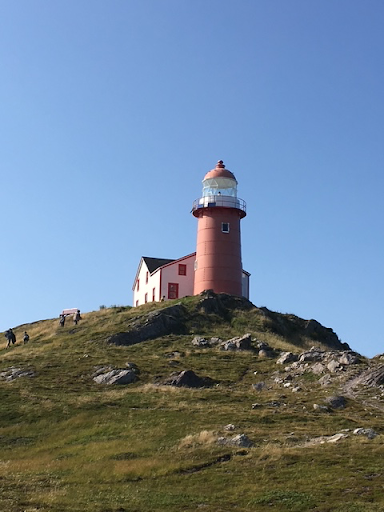
Ferryland Lighthouse
Ferryland is one of those places where history feels present and layered into the land itself. Marty and I made our way along the coastline of Newfoundland, where the road fellows the edge of the Atlantic, and each turn reveals another stretch of rugged shoreline. Arriving in Ferryland, there is a sense that this place has been […]

