Roman Aqueduct
Stretching along the Mediterranean shoreline, the Roman aqueduct at Caesarea stands as one of the finest surviving examples of ancient engineering in the world. While visitors often come to Caesarea to see King Herod’s palace, the amphitheater, and the ancient harbor, it is this remarkable aqueduct that tells one of the city’s most extraordinary stories. More than simply carrying water, it made it possible for an ambitious city to thrive in a landscape where fresh water was scarce.
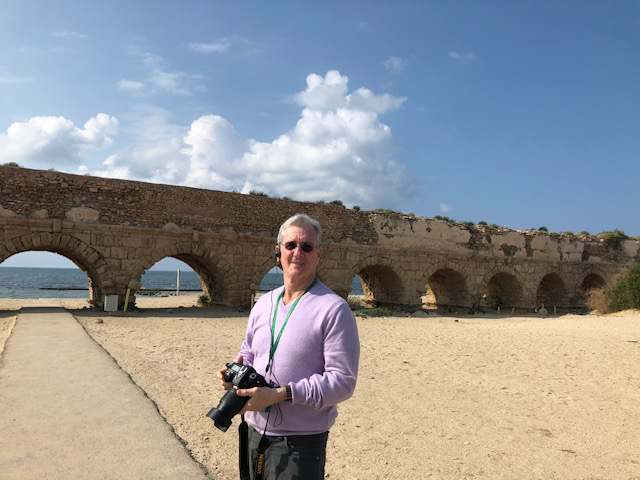
Caesarea was founded by King Herod the Great between 22 and 10 BC as a magnificent port city honoring the Roman emperor, Augustus Caesar. Herod envisioned a city that would rival the greatest cities of the Roman Empire, complete with a deep-water harbor, palaces, baths, temples, theaters, and public fountains. Such a city required an abundant and reliable supply of fresh water, something the immediate area could not provide.
To solve that problem, Roman engineers constructed an aqueduct that carried water nearly ten miles from the springs at Shuni, near the foot of Mount Carmel. Built with an almost imperceptible downward slope, the aqueduct relied entirely on gravity to deliver thousands of gallons of fresh water into the city every day. It supplied drinking water, public baths, fountains, gardens, and private homes, allowing Caesarea to flourish as one of the most important cities in the eastern Mediterranean.
As the city expanded, a second parallel aqueduct was added alongside the original, doubling the water supply for its growing population. The remains visible today represent both phases of construction, reminding visitors that this was not simply a monumental building project but an evolving engineering system that served Caesarea for centuries under Roman, Byzantine, and later rulers.
There are no elaborate carvings or towering monuments, yet the precision required to maintain a gentle, continuous slope over miles of uneven terrain is astonishing. Long before modern pumps or electricity, Roman engineers mastered the science of hydraulics, creating infrastructure that continued to function for hundreds of years. It is a lasting testament to Roman engineering and to the vision of a city that once stood as one of the jewels of the ancient world.
Read More
Read More From Nancy
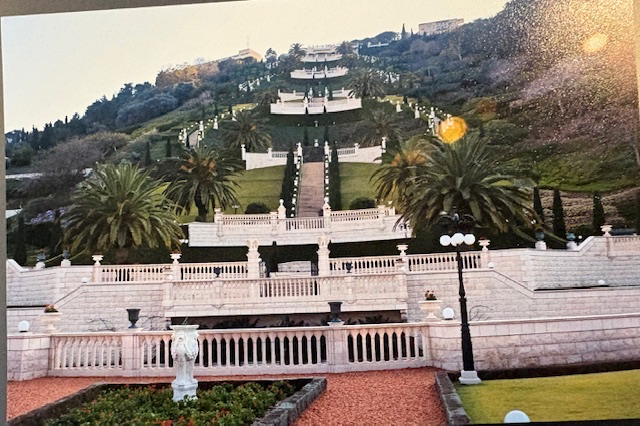
Baha’i Gardens
For Marty’s 65th birthday, we traveled to Israel, a journey filled with extraordinary places that I will write about in time. But the place I want to begin with is the Baha’i Gardens in Haifa. Our group was given special access to this sacred site, allowing us to walk the entire length of the gardens […]
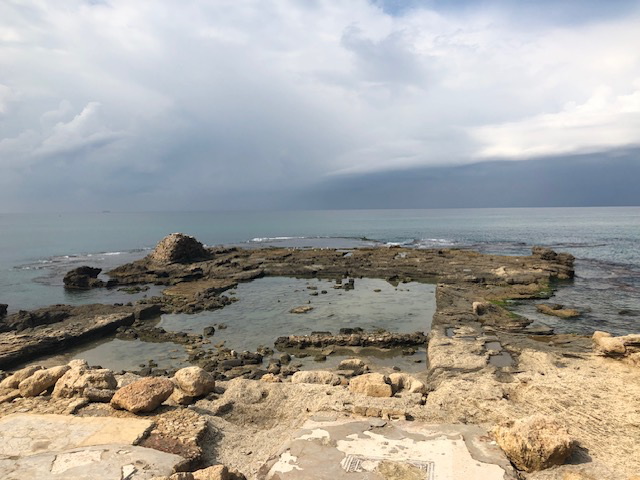
Herod’s Promontory Palace
On our visit to Caesarea, we walked among the remains of an ancient city built along the Mediterranean Sea. The setting alone was striking, with the ruins extending toward the water and waves breaking against the exposed stone. One of the most intriguing places we encountered was the remains of a large rectangular pool surrounded […]
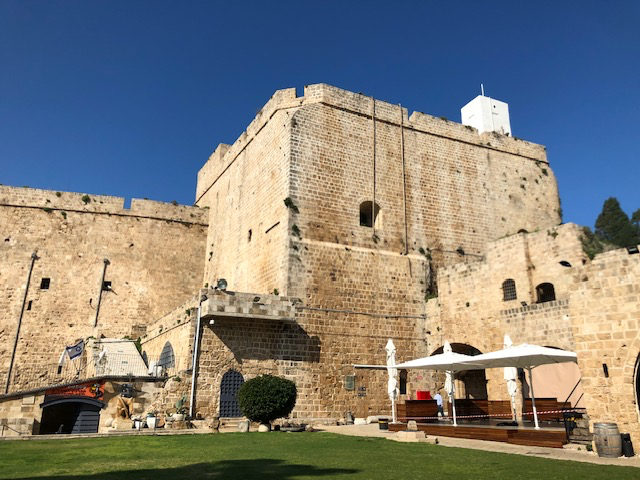
The Citadel of Acre
The Citadel of Acre rises above the northern section of the Old City, occupying a strategic position near the landward walls. Although the visible fortress dates primarily from the Ottoman period, it was constructed upon the remains of the medieval compound once occupied by the Knights Hospitaller. The result is a structure containing several distinct […]

