Herod’s Promontory Palace
On our visit to Caesarea, we walked among the remains of an ancient city built along the Mediterranean Sea. The setting alone was striking, with the ruins extending toward the water and waves breaking against the exposed stone. One of the most intriguing places we encountered was the remains of a large rectangular pool surrounded by the foundations of what had once been an elaborate palace.
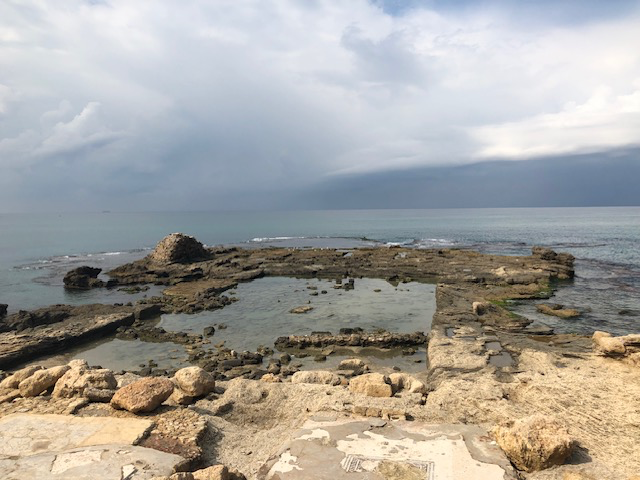
This was Herod the Great’s Promontory Palace, constructed on a rocky projection extending into the Mediterranean. Its position was extraordinary. Surrounded by water on three sides, the palace would have offered sweeping views of the sea while displaying the wealth, authority, and ambition of the ruler who built it.
Herod began transforming Caesarea around 22 BCE. Before that time, a smaller settlement known as Straton’s Tower occupied the site. Herod enlarged it into a magnificent Roman-style city and named it Caesarea in honor of Caesar Augustus. He built a theater, hippodrome, temples, markets, public baths, streets, government buildings, and one of the largest artificial harbors of the ancient world.
The palace was divided into two sections. The upper palace stood on the higher part of the promontory and was organized around a central courtyard. The lower palace was constructed much closer to sea level, where its rooms and colonnades surrounded a large pool cut directly into the natural sandstone.
The pool is believed to have been used for swimming or bathing. It was approximately Olympic-sized and coated with hydraulic plaster to prevent the water from escaping through the porous rock. Although it was positioned beside the Mediterranean, evidence suggests that it contained fresh water rather than seawater. Supplying and maintaining such a pool would have required sophisticated engineering.
That water was part of a much larger system. Caesarea lacked an adequate natural source of fresh water, so aqueducts carried it into the city from springs near Mount Carmel. The water supported homes, fountains, bathhouses, public toilets, gardens, and government buildings. Even the private pool within Herod’s palace depended upon the vast network that allowed this carefully planned city to function.
The lower palace was designed around the pool, with columns, paved walkways, and richly decorated rooms. Archaeologists have uncovered fragments of mosaics, plaster, and architectural details that suggest how impressive it once appeared. What is now an open stretch of weathered stone would have been an enclosed and elegant royal retreat overlooking the sea.
Herod was known for building on a monumental scale. His projects included the expansion of the Temple in Jerusalem, the fortress and palace at Masada, the palace complex at Herodium, and the development of Caesarea. His buildings were not created solely for comfort. They were also expressions of political authority and his close relationship with Rome.
After Herod’s death, Caesarea became the administrative capital of the Roman province of Judaea. The palace was likely used by the Roman governors who came after him, possibly including Pontius Pilate. The discovery at Caesarea of an inscription bearing Pilate’s name provides direct archaeological evidence of his presence in the city.
The New Testament also places the apostle Paul in Caesarea, where he was held for approximately two years before being sent to Rome. The Book of Acts states that he was guarded in “Herod’s Praetorium”, although it cannot be known with certainty whether this referred specifically to the remains now identified as the Promontory Palace.
Standing at the edge of the pool, it was difficult to imagine the grandeur that once surrounded it. The columns and decorated rooms have disappeared, portions of the palace have been lost to erosion, and the sea has gradually reclaimed parts of the promontory. Yet the shape of the pool remains clearly visible against the rocky shoreline.
The remains reveal more than Herod’s desire for luxury. They show how architecture, engineering, politics, and the natural landscape were brought together in one remarkable place. With the Mediterranean stretching beyond the ruins, Herod’s palace remains one of Caesarea’s most powerful reminders of the city that once stood at the center of Roman life in the region.
Read More From Nancy
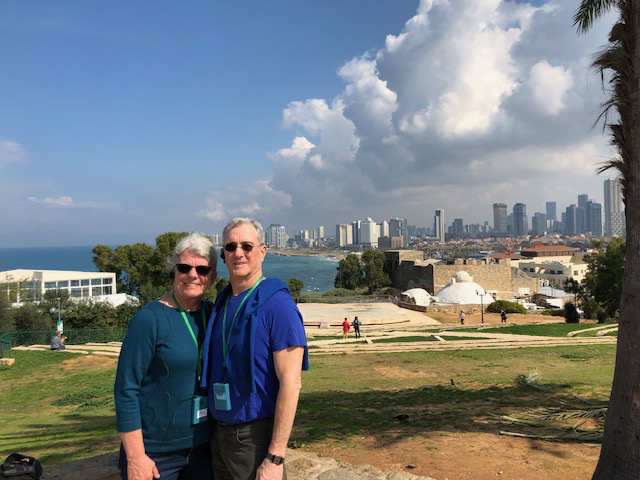
Abrasha Park
During our visit to Israel, Marty and I stopped at an overlook in Abrasha Park, high above the shoreline of Old Jaffa. From this peaceful spot, we could look north along the Mediterranean coast toward the modern skyline of Tel Aviv. The view brought two very different sides of Israel together: the ancient city of […]
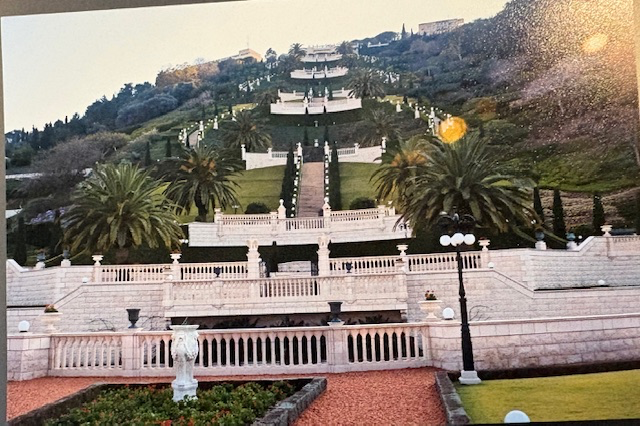
Baha’i Gardens
For Marty’s 65th birthday, we traveled to Israel, a journey filled with extraordinary places that I will write about in time. But the place I want to begin with is the Baha’i Gardens in Haifa. Our group was given special access to this sacred site, allowing us to walk the entire length of the gardens […]
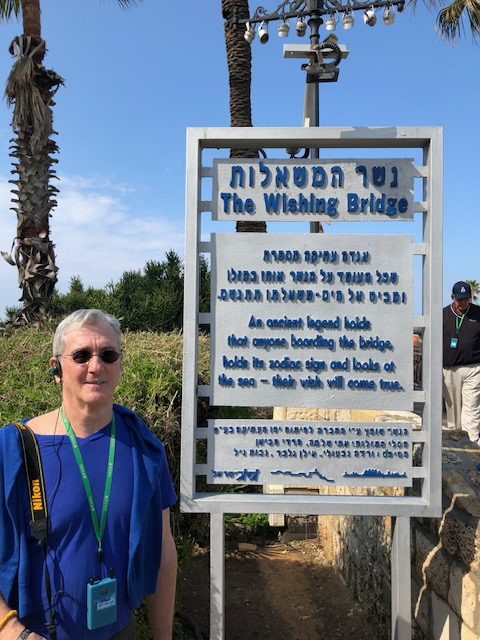
The Wishing Bridge
During our visit to Old Jaffa, we stopped at the entrance to the Wishing Bridge. The sign describes a local legend: anyone who stands on the bridge, holds the image of their zodiac sign, looks toward the sea, and makes a wish will have that wish come true. The bridge is decorated with twelve bronze […]

