Gyula Andrássy Monument
Standing beside the Hungarian Parliament Building in Budapest is this imposing equestrian monument to Count Gyula Andrássy, one of the most influential Hungarian statesmen of the nineteenth century.
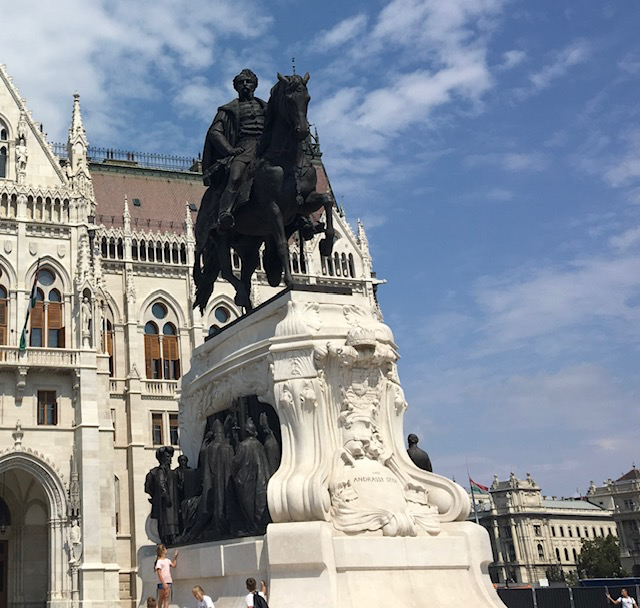
Andrássy’s life reflected the dramatic political changes Hungary experienced during his lifetime. Born in 1823, he became involved in the Hungarian Revolution of 1848–49, which sought greater independence from Habsburg rule. After the revolution was defeated, Andrássy fled Hungary. The Austrian government sentenced him to death in absentia, and because they could not capture him, he was symbolically hanged in effigy.
Remarkably, the man once condemned as a revolutionary eventually became one of the leading political figures of the Austro-Hungarian Empire. Andrássy was pardoned and returned to Hungary in 1858. Following the Austro-Hungarian Compromise of 1867, which created the Dual Monarchy and gave Hungary substantial control over its own internal affairs, he became the first prime minister of Hungary under the new political system.
Andrássy developed a particularly close political relationship with Emperor Franz Joseph and Empress Elisabeth, better known as Sisi. As prime minister, he played an important role in the coronation of Franz Joseph and Elisabeth as King and Queen of Hungary in Budapest in 1867. He later became foreign minister of Austria-Hungary, placing him at the center of European diplomacy during a period of rapidly changing alliances.
Andrássy died in 1890, and Hungary subsequently chose to honor him with this enormous monument beside its new Parliament building. Sculptor György Zala created the equestrian statue, which was unveiled in 1906. Andrássy appears on horseback above an elaborate stone pedestal decorated with reliefs recalling important moments in his political career.
The monument itself has experienced some of the political upheavals that followed Andrássy’s lifetime. It was removed from the square after World War II during the communist era. For decades, the great statesman who had once stood beside Parliament was absent from the landscape.
In the twenty-first century, Hungary decided to restore the historic appearance of the area surrounding Parliament. Because the original statue no longer survived intact, Andrássy’s monument was recreated using photographs and historical records. The reconstructed monument was unveiled in 2016 near the place where the original had stood.
That history makes this more than simply a statue of a man on horseback. Andrássy went from revolutionary condemned to death by the Habsburg government to prime minister of Hungary and foreign minister of the empire that had once sentenced him. His monument was erected, removed as another political system took control of Hungary, and eventually recreated.
Standing again beside Parliament, the monument reflects not only the life of Gyula Andrássy but the many changes in how Hungary has viewed and remembered its own history.
Read More From Nancy
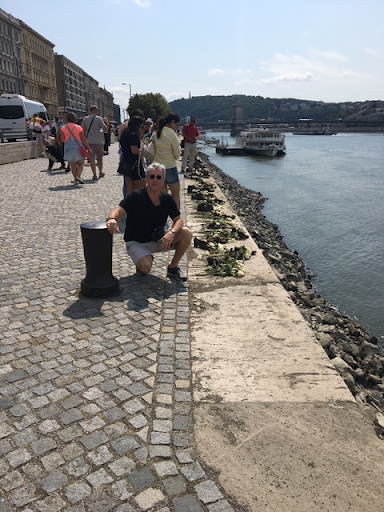
Shoes on the Danube
Budapest is a beautiful city known for its architecture, grand bridges. thermal bathhouses and a vibrant culinary scene. Among these pleasures, one of the most poignant moments of our visit came along the banks of the Danube. There, along the river’s edge, is a memorial known as “Shoes on the Danube Bank.” There are dozens […]
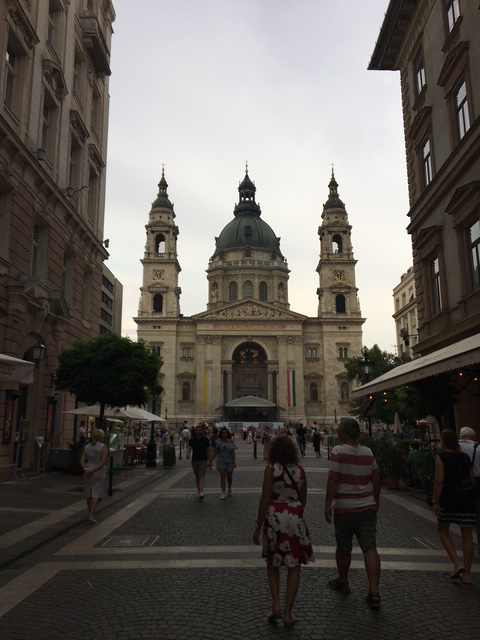
St Stephen’s Basilica
This photograph captures one of the grand landmarks of Budapest: St Stephen’s Basilica. Standing at the end of the broad pedestrian street, the basilica dominates the skyline with its massive dome, and the twin bell towers, creating one of the recognizable views of the city. Named after Stephen I of Hungary, the church honors the founder […]
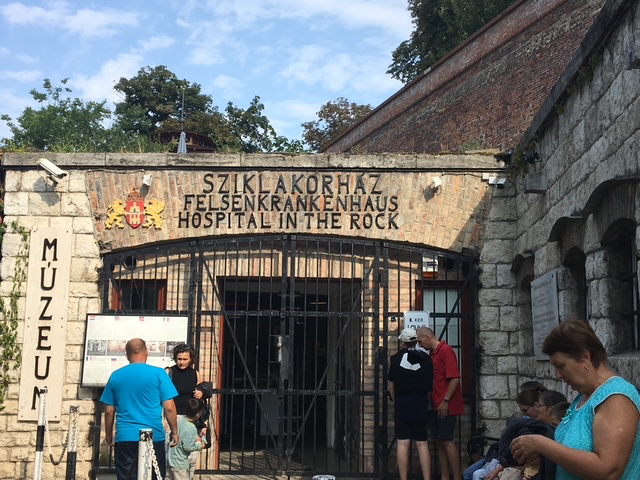
Hospital in the Rock
Beneath the streets of Budapest, carved into the natural cave system under Buda Castle, lies the Hospital in the Rock, a place where history exists not above ground, but hidden within it. Originally developed in the 1930s, the hospital was built into the caves as a secret medical facility, designed to operate during times of war. Its […]

