St Stephen’s Basilica
This photograph captures one of the grand landmarks of Budapest: St Stephen’s Basilica. Standing at the end of the broad pedestrian street, the basilica dominates the skyline with its massive dome, and the twin bell towers, creating one of the recognizable views of the city.
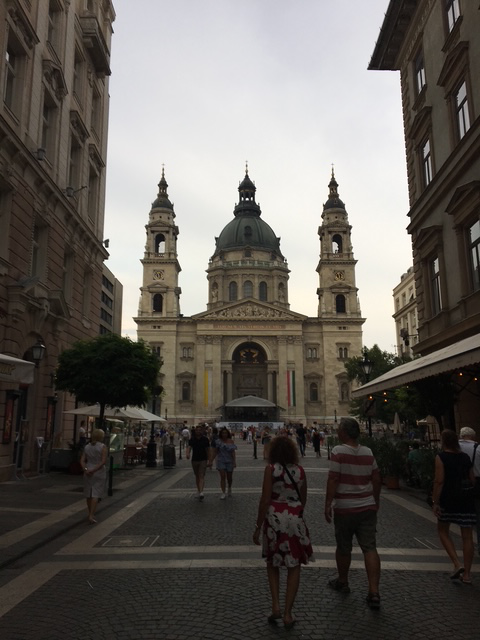
Named after Stephen I of Hungary, the church honors the founder of the Hungarian state and one of the country’s most important historical figures. Construction of the basilica took decades during the 19th century, and today it remains one of the largest churches in Hungary.
Everywhere you walk in Budapest, there are wide boulevards, dramatic architecture domes, bridges, monuments and cafes that reflect the city’s history as one of the great capitals of the Austro-Hungarian Empire. Budapest also carries layers of hardship beneath its beauty from wars, occupations, revolution, fascism, and communism that all shaped the city over generations.
Approaching St. Stephen’s Basilica on foot gives you a sense of how intentionally the city was designed. The broad street leading toward the church draws your eyes toward the dome rising above the surrounding buildings. History in Budapest is not confined to museums. It exists in the churches, memorials, riverbanks, and in the everyday life of the city itself.
Read More From Nancy
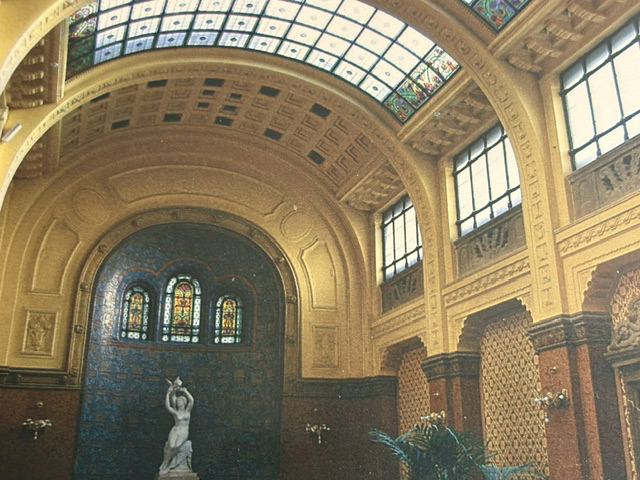
Gellért Baths
No visit to Budapest would be complete without experiencing the thermal baths that have made the city famous around the world. Fed by natural hot springs that rise beneath the city. Budapest has been a destination for healing waters since Roman times, with the tradition continuing through the centuries under Hungarian and Ottoman influence. During our visit, we […]
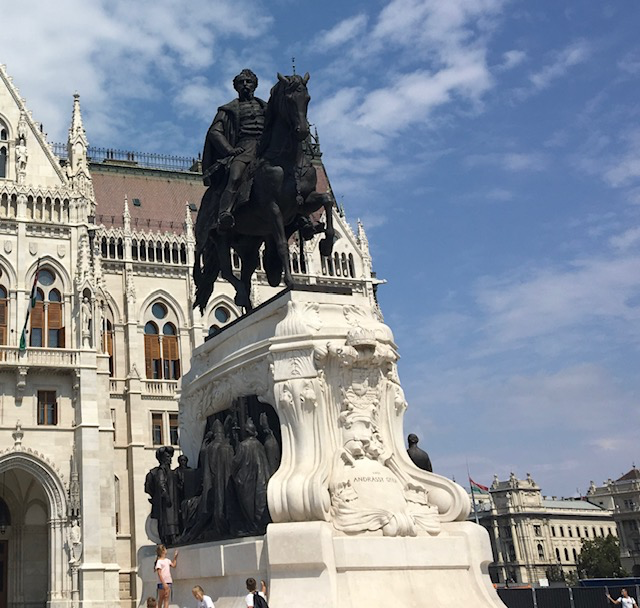
Gyula Andrássy Monument
Standing beside the Hungarian Parliament Building in Budapest is this imposing equestrian monument to Count Gyula Andrássy, one of the most influential Hungarian statesmen of the nineteenth century. Andrássy’s life reflected the dramatic political changes Hungary experienced during his lifetime. Born in 1823, he became involved in the Hungarian Revolution of 1848–49, which sought greater […]
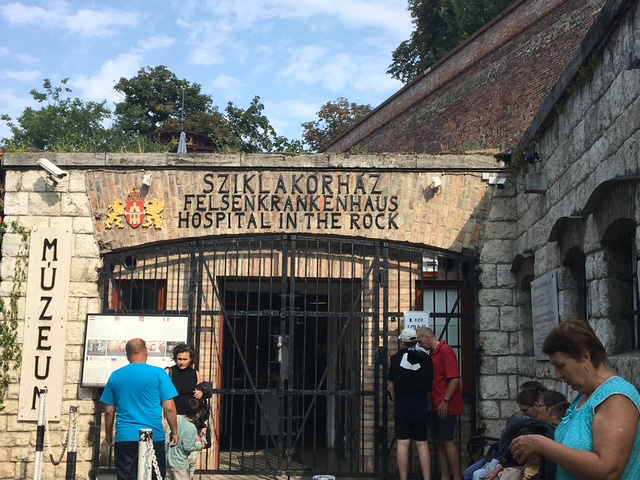
Hospital in the Rock
Beneath the streets of Budapest, carved into the natural cave system under Buda Castle, lies the Hospital in the Rock, a place where history exists not above ground, but hidden within it. Originally developed in the 1930s, the hospital was built into the caves as a secret medical facility, designed to operate during times of war. Its […]

