Central Cemetery
In the center of Sherborn, tucked behind an old fieldstone wall, is one of the town’s earliest burial grounds. The simple sign identifies Central Cemetery with the date 1686, immediately connecting this quiet patch of land with the earliest generations of Sherborn.
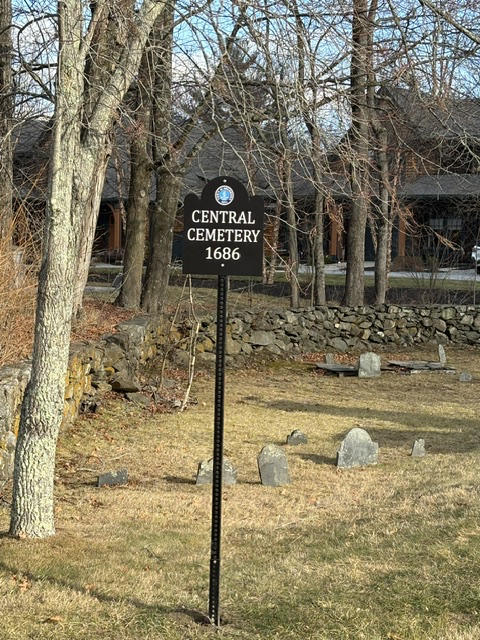
Sherborn itself had been incorporated only in 1674. During the years that followed King Philip’s War, the small community began establishing the institutions necessary for an organized New England town: a local government, a meetinghouse, a minister, and a place to bury its dead. Central Cemetery developed on land that had originally been part of the First Parish church common.
The oldest surviving inscription here belongs to Grace Bullen, who died in 1686. Her gravestone contains the unusual words, “The first grain sown in this granary,” suggesting that she was regarded as the first person buried in this ground. The cemetery therefore preserves a physical connection to Sherborn only twelve years after the town’s incorporation
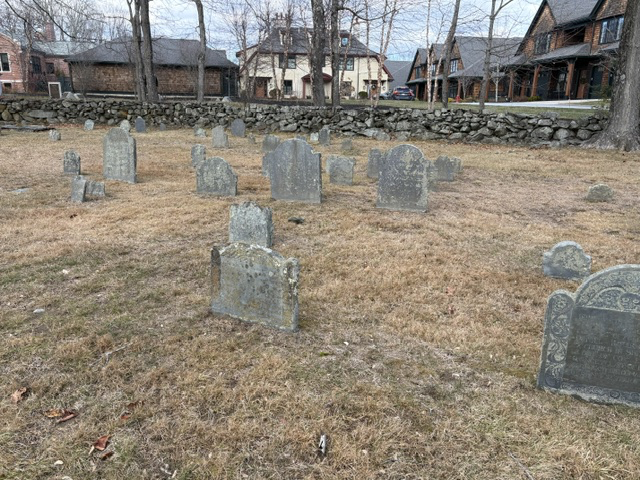
Today there are only about fifty stones remaining, many of them weathered or broken. But together they provide an extraordinary record of changing New England gravestone art. Among them are seventeenth-century winged skulls, eighteenth-century winged faces, and the willow-and-urn designs that became popular during the nineteenth century. Some retain delicately carved borders of intertwined leaves and flowers
Central Cemetery is not actually Sherborn’s oldest cemetery—the Old South Burial Ground and Farm Cemetery predate it, but it is one of the town’s three surviving seventeenth-century burial grounds. It is also now included among Sherborn’s historic properties listed on the National Register of Historic Places.
From the road, Central Cemetery is simply a small collection of old stones behind a fieldstone wall. But those stones take us back to the first generation of people building a community here more than three centuries ago.
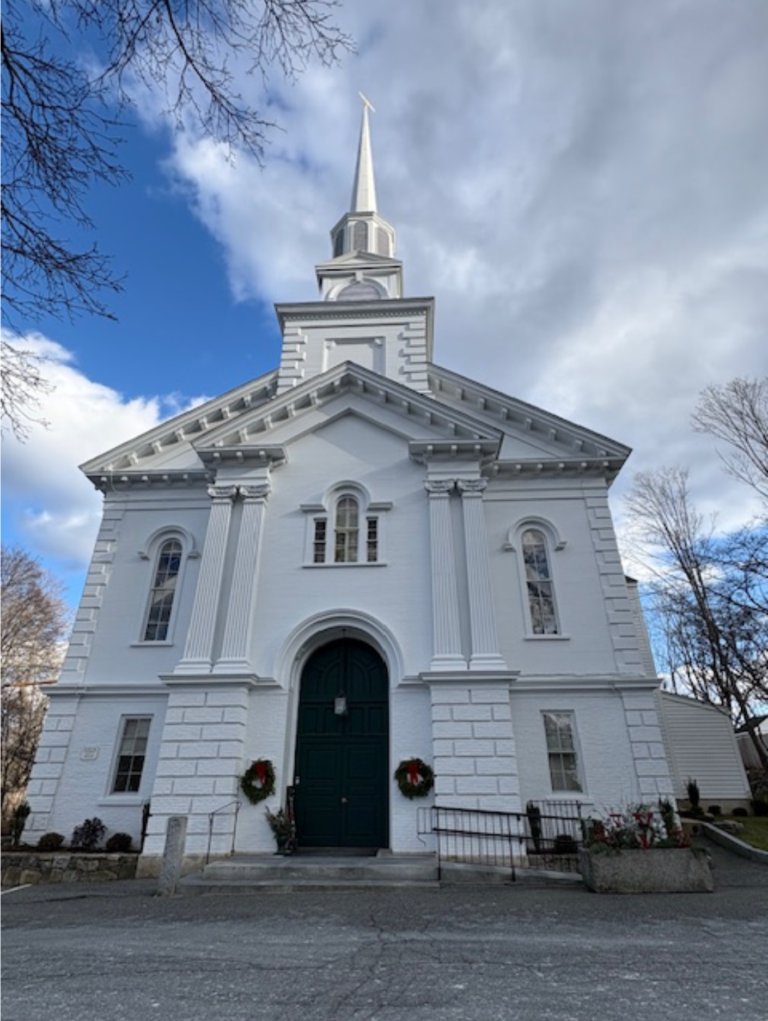
Read More From Nancy
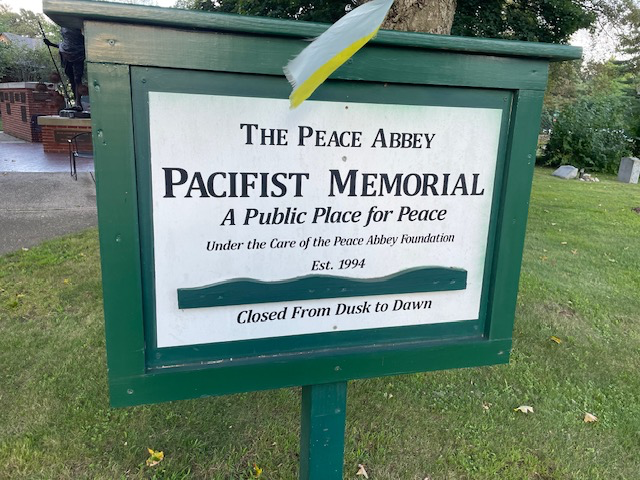
Pacificist Memorial
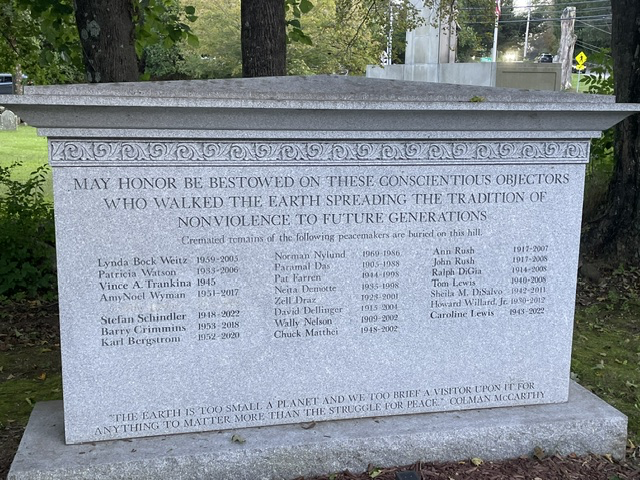
Tucked quietly within the grounds of what was The Peace Abbey in Sherborn, lies one of the most thought provoking memorials in New England: The Pacifist Memorial. Unlike traditional monuments that commemorate battles, this space is dedicated to those who chose a different path: the path of nonviolence. Established in the late 20th century as part of […]
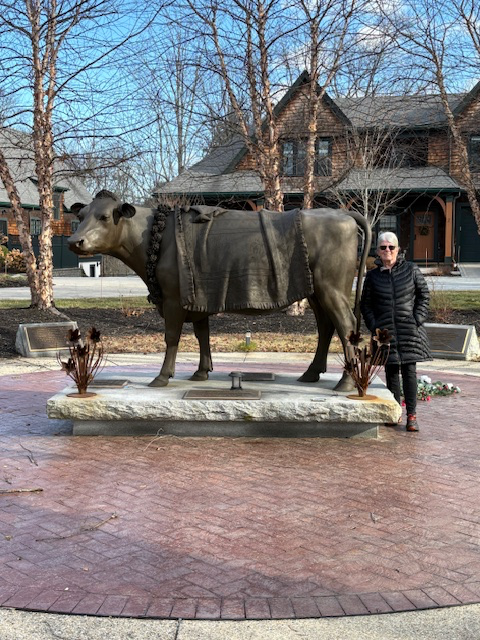
Emily the Cow
In Sherborn, this memorial stands for a cow whose life became a symbol of compassion in our time. Emily’s story belongs to the late twentieth century. After escaping from a slaughterhouse in 1995, she was taken in by the Peace Abbey, a sanctuary devoted to nonviolence, humanitarian causes and animal welfare. There she lived out the remainder of […]
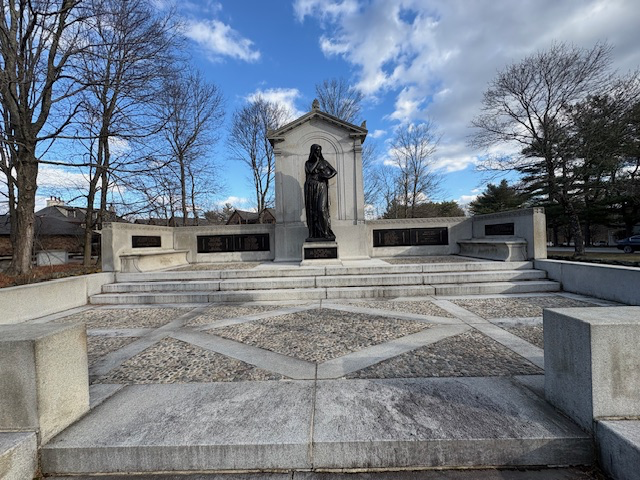
War Memorial
The small town of Sherborn sits quietly beside my hometown of Natick and carries a depth of history that reaches back to the very beginnings of colonial Massachusetts. Settled in the 1670s, and incorporated in 1674, Sherborn developed as a farming community shaped by Puritan roots, and winding country roads. A visit into Sherborn brings you […]

