The Centaur Relief
Among the many masterpieces displayed in the Acropolis Museum, this marble relief immediately caught my attention. It depicts one of the most familiar scenes in Greek mythology—a fierce battle between a centaur and a Lapith warrior. Although carved more than 2,400 years ago, the sculpture still conveys remarkable movement and emotion. The twisting figures, powerful muscles, and dramatic composition capture the intensity of the struggle with extraordinary realism.
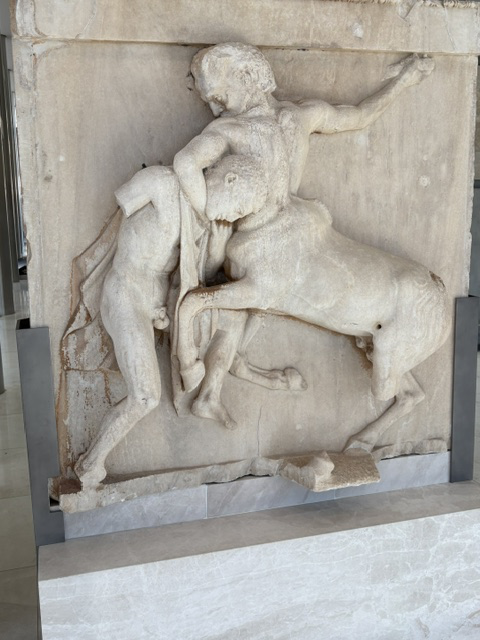
The relief once formed part of the sculptural decoration of the Parthenon or another major temple on the Acropolis. Scenes depicting battles between the Lapiths and the centaurs were a favorite subject of ancient Greek artists. According to mythology, the conflict began during the wedding feast of King Pirithous of the Lapiths. Invited to the celebration, the centaurs became intoxicated and attempted to abduct the bride and other women. The violence that followed erupted into a legendary battle between civilization and savagery.
To the ancient Greeks, this story represented far more than mythology. The centaurs symbolized uncontrolled passion, violence, and chaos, while the Lapiths represented reason, self-discipline, and the values of an ordered society. By decorating temples with scenes like this one, Greek artists celebrated the triumph of civilization over barbarism, a theme that became especially meaningful after the Greek victories over the Persian Empire during the fifth century BC.
Even though parts of the relief have been damaged by time, the movement remains unmistakable. The centaur lunges forward with tremendous force while the human figure twists in resistance, creating a sense of action rarely achieved in stone. The sculptor understood anatomy, balance, and emotion in ways that continue to inspire artists today.
Mythology was more than entertainment in the ancient world. It was a way of teaching values, explaining human nature, and celebrating the qualities that the Greeks believed were essential to a successful society. More than two millennia later, this sculpture continues to tell that story, demonstrating not only the brilliance of Greek mythology but also the extraordinary artistic achievements of classical Athens.
Read More From Nancy
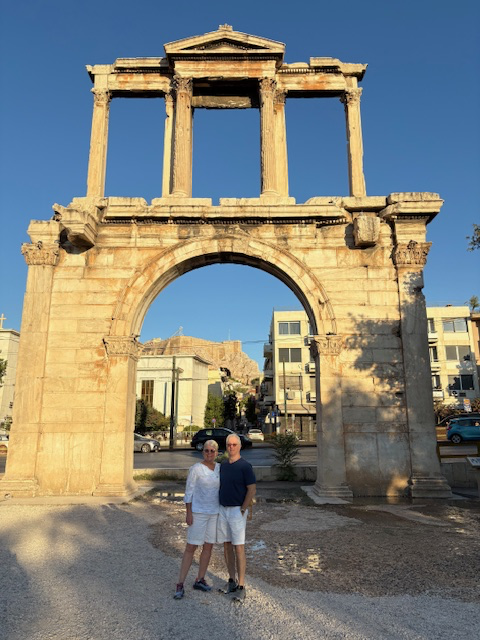
Arch of Hadrian
Marty and I stood in front of the Arch of Hadrian in Athens, with the modern city stretching out behind it. The steady rhythm of everyday life continues around a structure that has stood here for nearly 2000 years. The arch was built in 131AD to honor the Roman Emperor Hadrian, during a time when […]
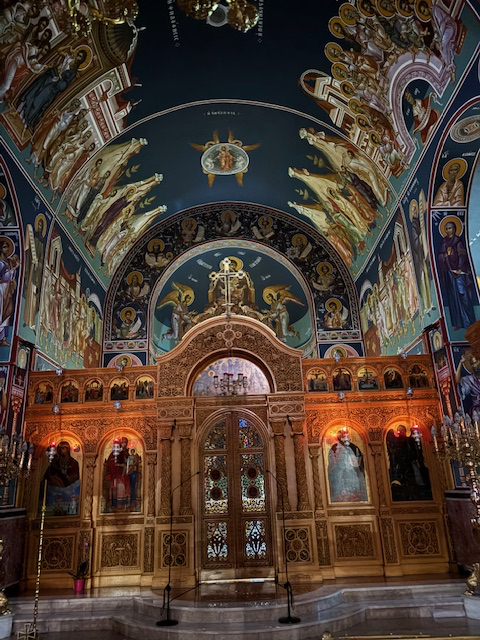
Orthodox Church
We stepped into this local neighborhood church in Piraeus and were struck by the beauty of its altar and ceiling. From the outside, there was nothing to suggest what was inside. But once we entered, the space opened upward in a way that commanded our attention. The ceiling was a deep blue, with Christ at […]
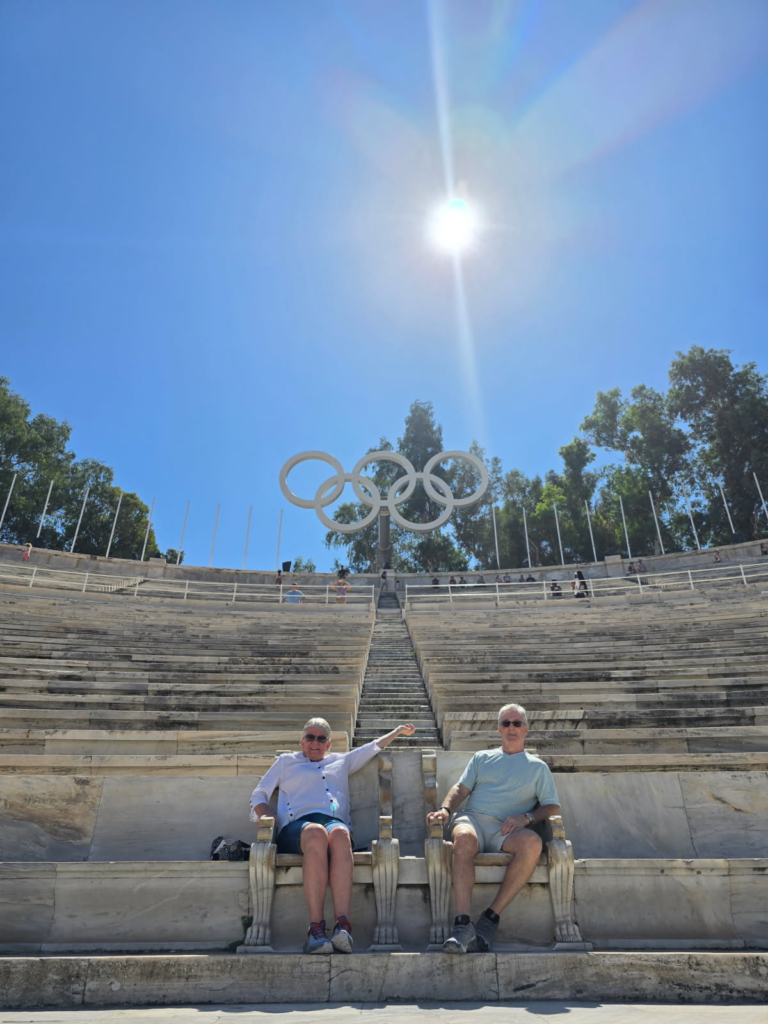
Panathenaic Stadium
Visiting the Olympic arena in Athens and sitting in the marble seats once reserved for royalty, was a special experience where we physically felt part of history. This site in Athens is the Panathenaic, meaning beautiful marble. This extraordinary venue is the only stadium ever built entirely of marble. This site was originally laid out in the 4th […]

