St. Patrick’s Church
The cornerstone of St. Patrick’s Church, laid in 1892, marks more than the construction of a building. It represents the beginning of an enduring Catholic presence in Natick. Before this time, Catholic families gathered in borrowed halls, private homes and makeshift chapels, worshipping quietly in a community still defined by its Protestant roots.
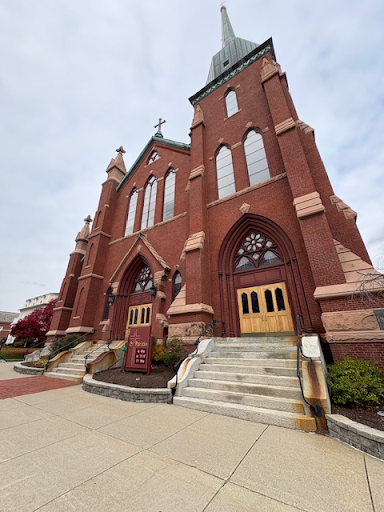
By the late 1800s, Natick was changing. Immigrants, many of them Irish, had come to work in the shoe factories and the mills. With them came their faith and a desire for a parish. Priests from neighboring towns would travel by train or horse to celebrate Mass.
That dream took form when the Archdiocese of Boston approved the creation of St. Patrick’s Parish. In 1892, the cornerstone was placed on East Central Street, and along with it Natick’s first Catholic Church. The red-brick Gothic structure rose as a visible sign of belonging. For the Catholic families of Natick, this was a declaration of faith and identity.
For me, this story echoes the lives of my own Irish grandparents who made their home in New Hampshire, but whose lives were deeply anchored in the rhythm of the Catholic Church. Their faith shaped their values, their work and the way they raised their families.

Read More From Nancy
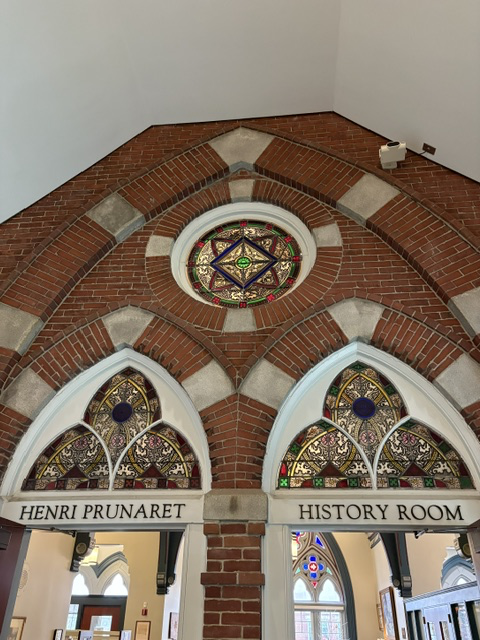
The Henri Prunaret History Room
Living in Natick, I have passed through the Morse Institute Library many times, but there are details inside the building that connect directly to the history of the town. One of them is this beautiful entrance to the Henri Prunaret History Room, framed by old brickwork, Gothic arches, and colorful stained glass. The Morse Institute […]
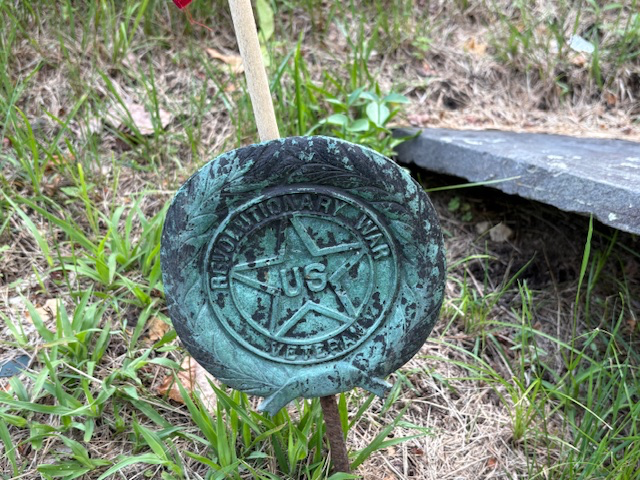
Revolutionary War Medallion
I enjoy wandering through old cemeteries and to the small symbols that mark the lives of people who came before us. Among the most powerful markers are the medallions places at the graves of Revolutionary War veterans, each one a reminder of the earliest defenders of our young nation resting beneath New England’s grass. As I explored these burying […]
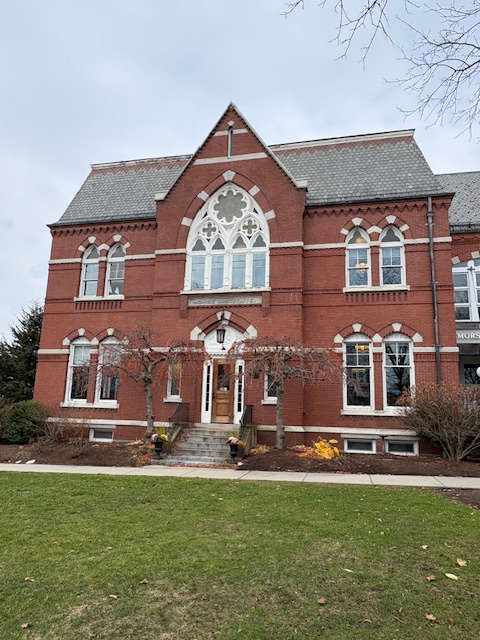
Morse Institute
In the center of Natick stands a building that reflects generosity and vision: The Morse Institute Library, established in 1873. This library was not simply constructed as a civic project. It was created through the will of Mary Ann Morse, who chose to leave a lasting gift to her community. The building itself was erected on the very site […]

