Trolley Bridge
One of the things I enjoy most when exploring a town is discovering the pieces of everyday history that have quietly disappeared. They are often overlooked because they were once so common. The Hopedale Trolley Bridge is one of those stories.
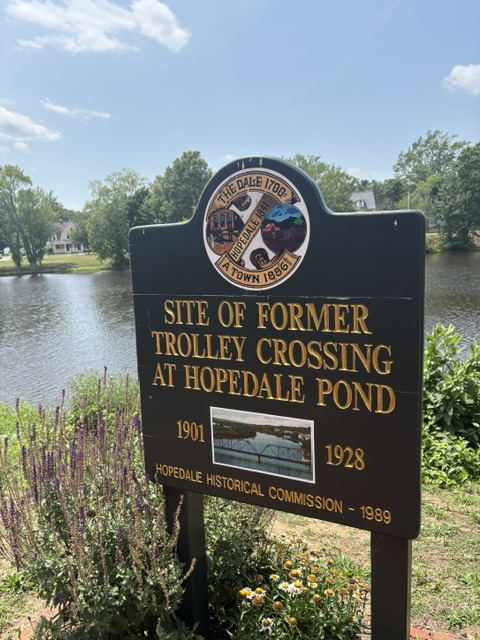
Standing along the shores of Hopedale Pond today, it is difficult to imagine that electric trolley cars once crossed the water, carrying workers, shoppers, and visitors through the center of town. Yet from 1901 until 1928, this bridge was an important link in a transportation network that connected Hopedale with Milford, Upton, Mendon, Holliston, Framingham, and communities beyond.
The bridge was part of the Milford, Uxbridge & Street Railway Company’s expanding electric trolley system. Built atop the stone abutments behind the marker, the 300-foot steel bridge was constructed by the American Bridge Company and represented the latest transportation technology of its day. At a time when automobiles were still relatively uncommon, electric trolleys made travel faster, more affordable, and more dependable than ever before.
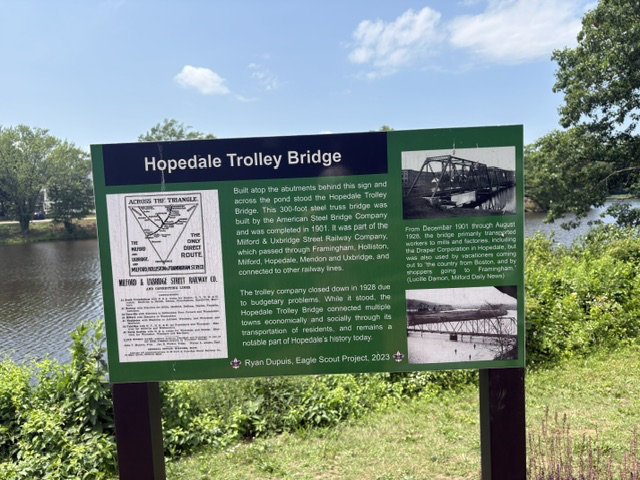
For Hopedale, the trolley was far more than a convenience. It connected residents to neighboring towns, allowed workers to travel more easily, supported local businesses, and strengthened the town’s growing economy. It also brought visitors into Hopedale, making this small industrial community more accessible than ever before.
Looking at the historic photographs, it is remarkable to think of trolley cars gliding across the pond where today there is only open water. The bridge must have been a familiar sight for nearly three decades, carrying thousands of passengers who likely gave little thought to the engineering that made their journey possible. Like so much of everyday infrastructure, it was appreciated most after it was gone.
By 1928, however, the rapid growth of the automobile and improvements to the road system changed the way Americans traveled. Maintaining trolley systems became increasingly expensive, and many electric railway lines across New England were abandoned. The Hopedale Trolley Bridge was dismantled, ending an important chapter in the town’s transportation history.
I am grateful that the Hopedale Historical Commission chose to preserve this piece of the town’s history. Without these signs, I would never know that a trolley once crossed this quiet pond. It is another reminder that history is often hidden in plain sight, waiting for someone to pause, read a marker, and imagine what once was.
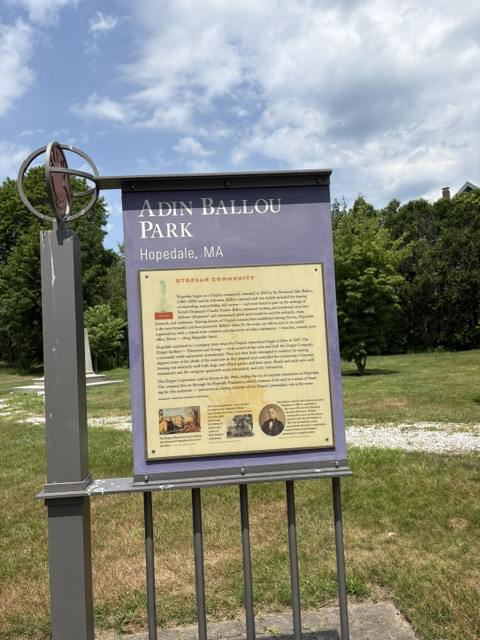
Read More From Nancy
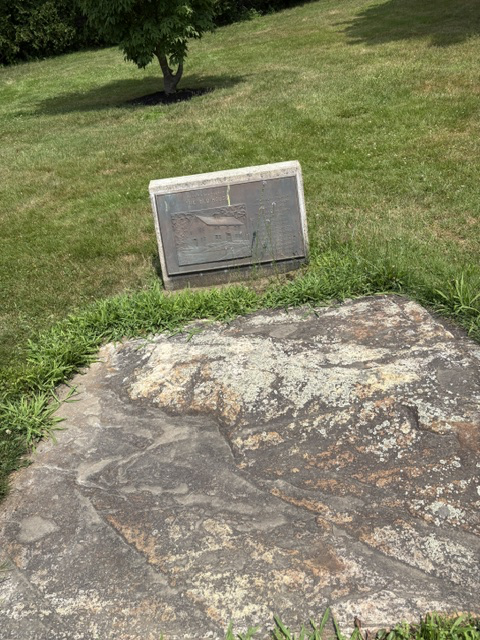
The Front Doorstep of the Old House
Sometimes the smallest pieces of history tell the biggest stories. At first glance, this weathered stone appears to be little more than an old granite slab resting in the grass. In reality, it is the original front doorstep of one of the oldest homes in Hopedale, a house that stood for more than two centuries […]
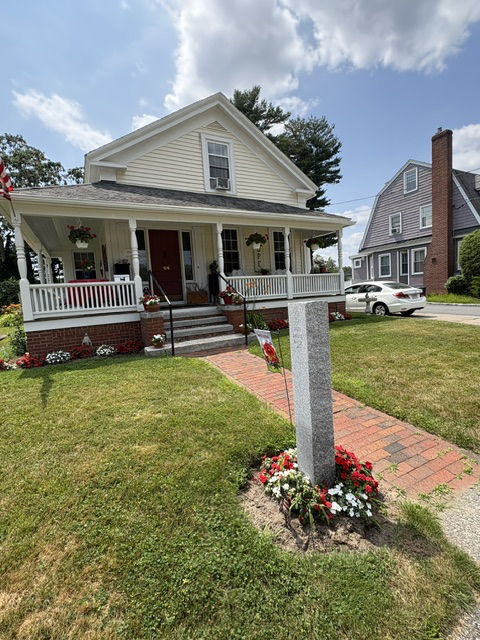
The Adin Ballou House
Every town has a founder. Few can still point to the home of the person whose ideas shaped its very identity. This modest house on Dutcher Street was the home of Reverend Adin Ballou, the visionary minister who founded the Hopedale Community in 1842. Although the house stands in a different location today, it originally […]
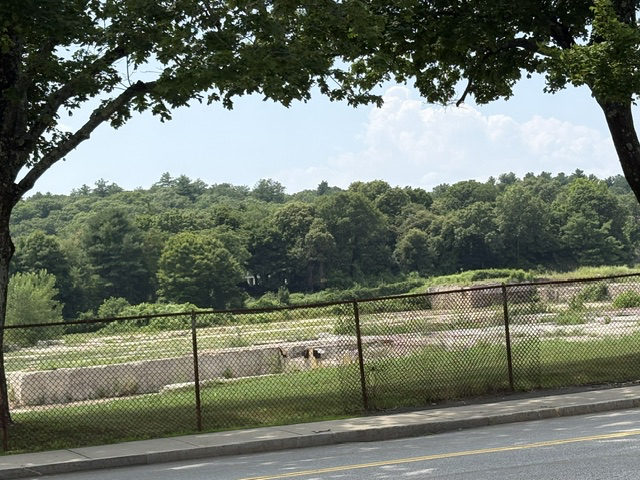
Where an Industrial Giant Once Stood
Today, it is a quiet field. It is difficult to imagine that this empty expanse was once the center of one of the most important textile machinery manufacturing complexes in the world. Beginning with the Little Red Shop in 1841, the Draper business grew over the next century into the sprawling Draper Corporation. Dozens of […]

