Lala Ngoxolo
The monument is simple yet deeply moving. A raised granite hand with the inscription:
Lala Ngoxolo
Nelson Mandela
RIP TATA
1918–2013
“Lala Ngoxolo” is an isiXhosa expression meaning “Rest in Peace,” or more literally, “Sleep in peace.” Beneath it is the phrase “RIP Tata.” Tata means “Father,” the name by which millions of South Africans affectionately came to know Nelson Mandela. Long before he became an international icon, he had become the father of a nation searching for healing.
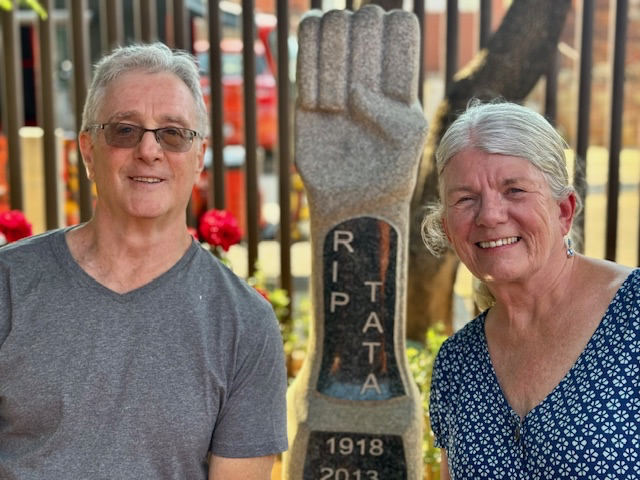
The monument was crafted by Khaabo Tombstones, a Soweto monument company whose name appears discreetly at its base. Rather than creating a grand public statue, they produced something that feels more like a personal memorial. It belongs here, in the yard of Mandela’s home, where family life unfolded alongside extraordinary events that changed the course of South African history.
This was the home he returned to after long days of organizing, the place from which he left before beginning the twenty-seven years he would spend in prison. It is remarkable that after nearly three decades of confinement, he emerged without bitterness, choosing reconciliation over revenge and unity over division.
The open hand rising from the monument seemed especially fitting. It is not a clenched fist demanding victory, but an open hand offering welcome, forgiveness, and hope. It reflects the qualities that defined Mandela’s leadership far more than any political speech ever could.
Lala Ngoxolo, Tata.
It is more than a farewell. It is a nation’s enduring expression of gratitude to the man who showed the world that true strength is found not in defeating your enemies, but in finding a way to become one people again.
Read More From Nancy
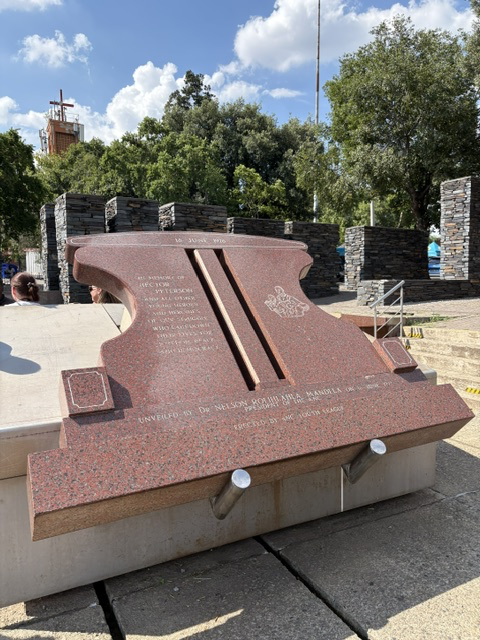
Hector Pieterson Memorial
Visiting the Hector Pieterson Memorial on our tour of Soweto, was a historically powerful experience of our time in South Africa. This place felt deeply personal. The history that unfolded here in 1976 still lives vividly in the memory of South Africa and continues to shape the country today. The memorial commemorates the young students who […]
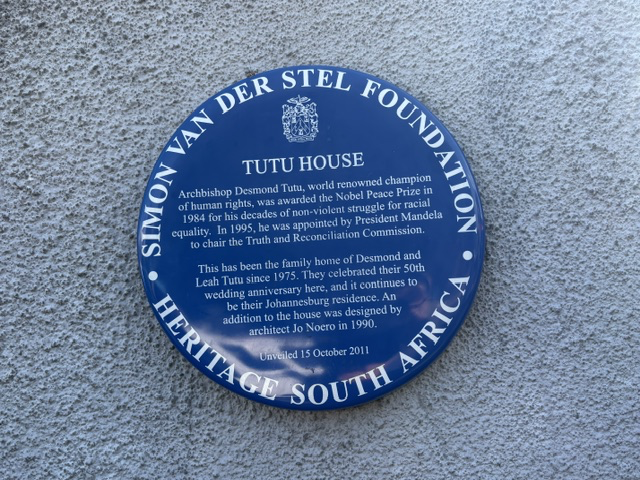
Tutu House
During our tour of Soweto, we stopped outside the home of Archbishop Desmond Tutu. Although we unable to go inside, we took time to reflect on the remarkable life and legacy of this extraordinary man. The blue plaque on the house commemorates Tutu’s decades-long struggle for justice and human rights and notes that this had been […]
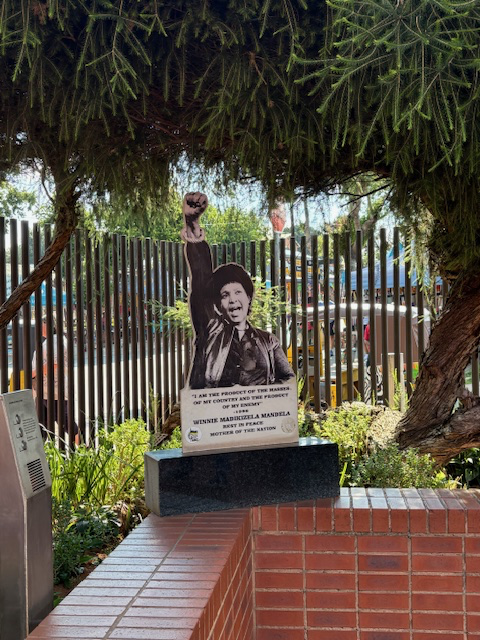
Winnie Nelson
We traveled to Johannesburg to teach, and before the seminar, we spent the day in Soweto. A high priority for me was to visit Nelson Mandela’s house. It is his history that I know the most about when it comes to South Africa. Arriving on Vilakazi Street, this is not a distant landmark set apart […]

