Winnie Nelson
We traveled to Johannesburg to teach, and before the seminar, we spent the day in Soweto. A high priority for me was to visit Nelson Mandela’s house. It is his history that I know the most about when it comes to South Africa.
Arriving on Vilakazi Street, this is not a distant landmark set apart from daily life, but a neighborhood, one that carries both history and the realities of the present. The house itself is often described as modest, but in the context of Soweto. It stands apart. Solid and well-built, it reflects a different level of stability than many of the surrounding homes, and that contrast is part of what makes it so meaningful.
This is the house associated with Nelson Mandela, but for many years, it was Winnie who lived here during his imprisonment. That reality becomes more apparent as you move through space. The home is not just tied to one story, but to both of them, each representing a different aspect of the same struggle.
In the courtyard is this image of Winnie Madikisela Mandela, her fist raised, her presence unmistakable “I am the product of the masses of my country and the product of my enemy.” This statement reflects her life shaped by both support and opposition. The image of Winnie in the courtyard reminds us that while Nelson Mandela became the global symbol, she carried the daily weight of that reality within these walls.
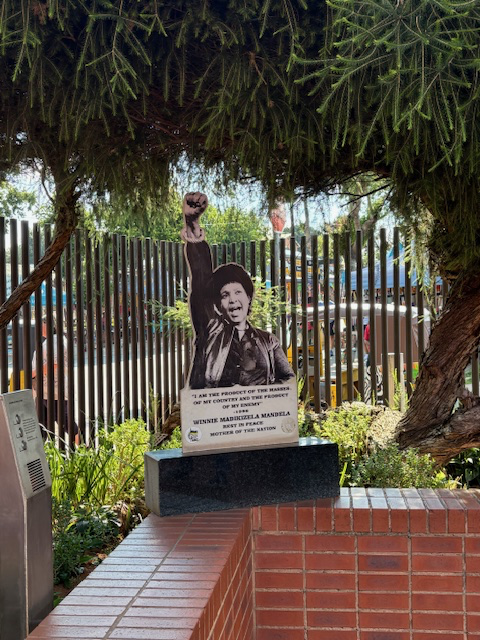
History here is not abstract. It is grounded in a place, in a home and in the lives of the people who moved through it. This is a shared story shaped by different roles and different experiences, both connected to this one address.
Read More From Nancy
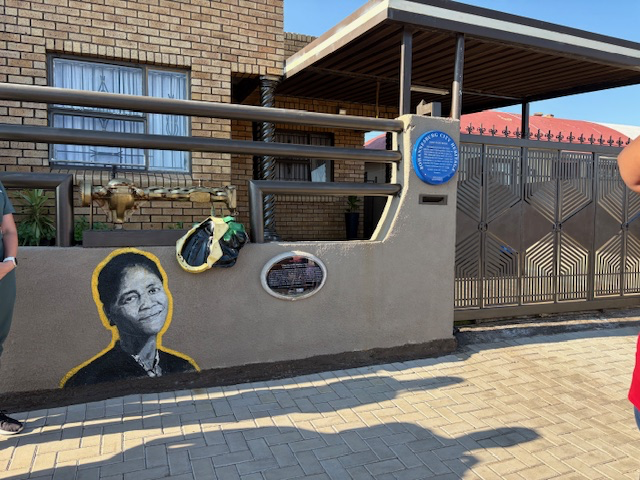
Lilian Ngoyi
On our teaching trip to South Africa, we took a tour of Soweto and stopped outside a modest home that holds extraordinary history: the house of Lilian Masediba Matabane Ngoyi. Lilian Ngoyi was one of the most prominent women in the anti-apartheid movement. A trade unionist and political leader, she became the first woman elected to […]
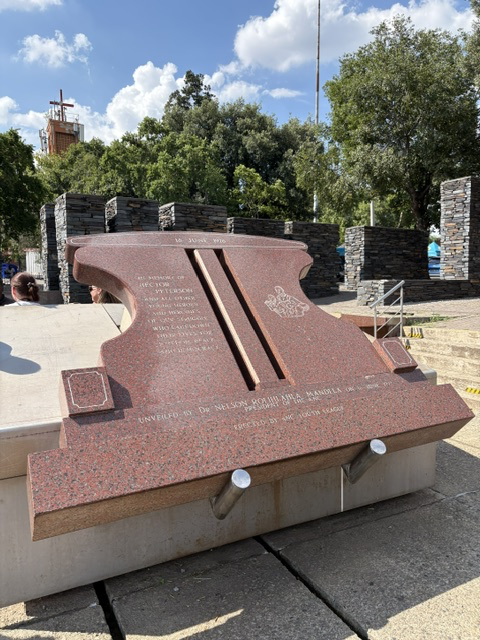
Hector Pieterson Memorial
Visiting the Hector Pieterson Memorial on our tour of Soweto, was a historically powerful experience of our time in South Africa. This place felt deeply personal. The history that unfolded here in 1976 still lives vividly in the memory of South Africa and continues to shape the country today. The memorial commemorates the young students who […]
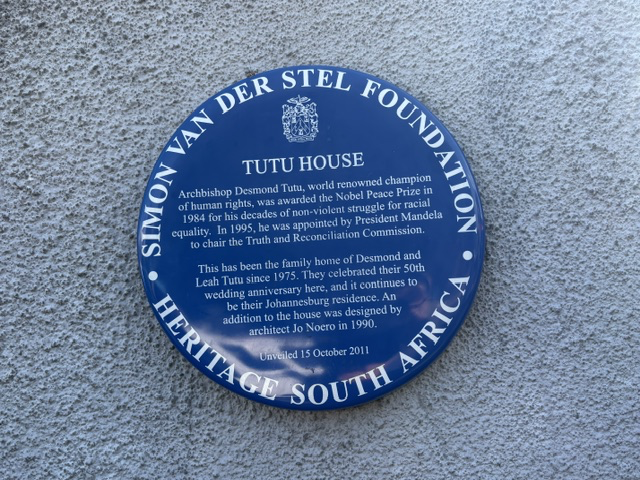
Tutu House
During our tour of Soweto, we stopped outside the home of Archbishop Desmond Tutu. Although we unable to go inside, we took time to reflect on the remarkable life and legacy of this extraordinary man. The blue plaque on the house commemorates Tutu’s decades-long struggle for justice and human rights and notes that this had been […]

