Orlando East and Orlando West
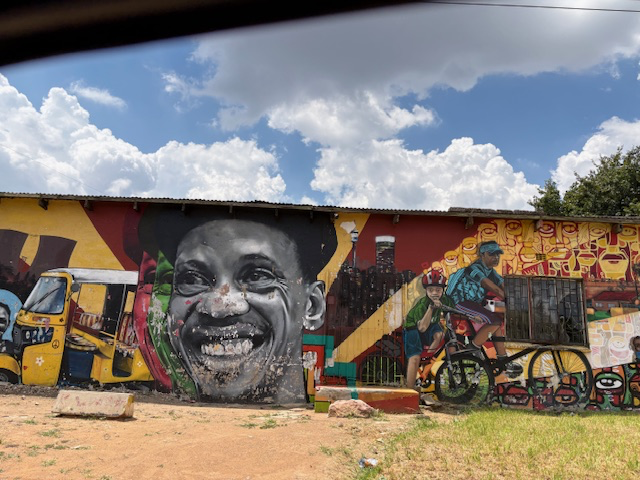
As we drove through Soweto, one mural caught my attention. Painted on the wall at 7336 Moema Street, it is part of the Art Rising project, a community initiative that uses public art to preserve the stories of Soweto’s past. Rather than standing in a museum, the mural is woven into the neighborhood itself, reminding residents and visitors that history happened here.
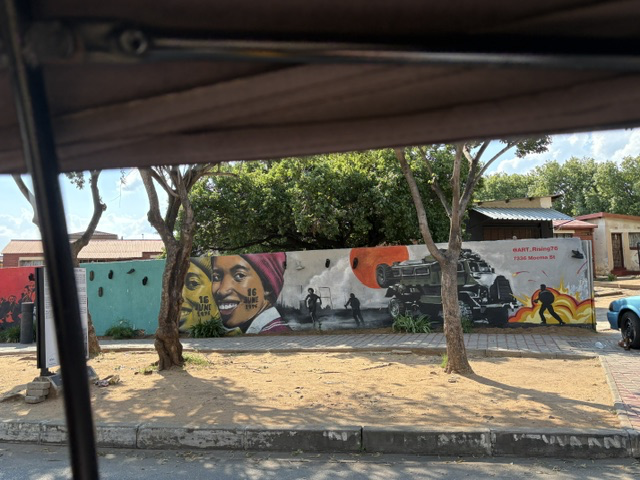
Beside the mural stands an interpretive panel titled The Building of Orlando East and Orlando West. It explains how these neighborhoods became two of the earliest planned townships established for Black residents outside Johannesburg. Beginning in the 1930s, Orlando East and later Orlando West were developed to provide housing for African workers and their families as Johannesburg continued to grow. Although they were created under policies of racial segregation, the communities developed their own strong identity, becoming places where families-built lives, established businesses, attended schools and churches, and created a vibrant cultural life despite the restrictions imposed by apartheid.
The mural tells that story through powerful images. One section features the face of a young person alongside the date 16 June 1976, commemorating the Soweto Uprising. Another depicts students confronting armored police vehicles, recalling the day when thousands of schoolchildren marched in protest against the apartheid government’s decision to impose Afrikaans as a language of instruction. The events of that day transformed Soweto into an international symbol of resistance and became a turning point in South Africa’s struggle for freedom.
What makes this memorial especially meaningful is its setting. It is not separated from everyday life by fences or museum walls. Homes, businesses, and neighborhood streets surround it. Residents pass by each day while visitors stop to learn the history, allowing the artwork to remain part of the living community rather than simply a monument to the past.
Read More From Nancy
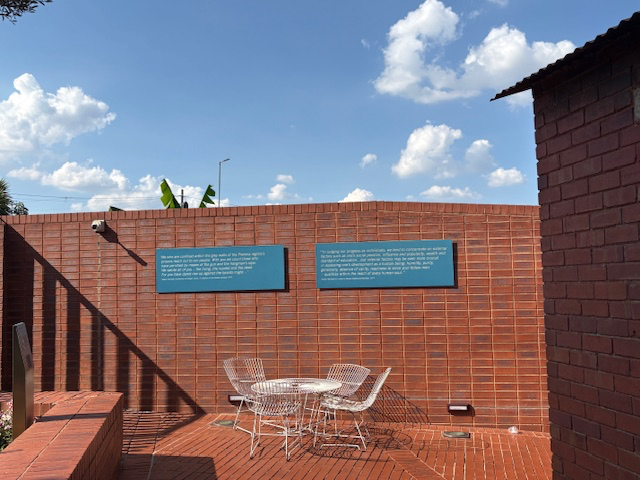
Nelson Mandela House
The first place I wanted to visit when I traveled to Johannesburg was Nelson Mandela’s house in Soweto. He was the most famous South African I knew, and the opportunity to visit the home where he and his family lived was at the top of my list. While there were many important sites connected with […]
Lebos Tours
I have just returned from my first visit to Africa: South Africa, a journey that began primarily as a professional one. I traveled there to meet and work alongside fellow chiropractors, but I also felt a strong pull to explore and better understand the country itself. Before arriving, my knowledge of South Africa was quite […]
Lala Ngoxolo
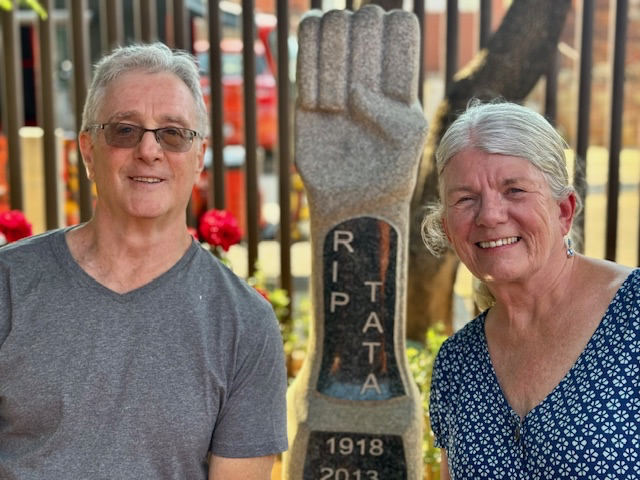
The monument is simple yet deeply moving. A raised granite hand with the inscription: Lala NgoxoloNelson MandelaRIP TATA1918–2013 “Lala Ngoxolo” is an isiXhosa expression meaning “Rest in Peace,” or more literally, “Sleep in peace.” Beneath it is the phrase “RIP Tata.” Tata means “Father,” the name by which millions of South Africans affectionately came to […]

