M42 Jump Jacket
While visiting the American Heritage Museum in Hudson, one exhibit drew my attention because it represented more than a uniform. It represented the courage of the young men who volunteered for one of the most dangerous assignments of World War II.
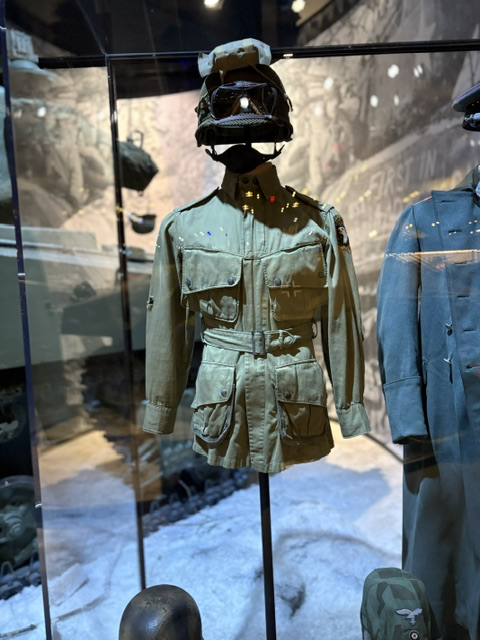
Displayed behind glass is an M42 jump jacket worn by Private Duane Tedrick of Company “D,” 506th Parachute Infantry Regiment, 101st Airborne Division. The museum is dedicated to preserving the human stories behind America’s military history, and artifacts like this help bring those stories to life.
The M42 jump jacket was designed specifically for America’s paratroopers. Lightweight but reinforced with large cargo pockets, it was intended to withstand the rigors of parachuting into combat while carrying ammunition, rations, medical supplies, and other essential equipment. It became one of the defining symbols of the airborne forces.
Private Tedrick wore this jacket when he jumped from a C-47 transport aircraft into German-occupied France during the early hours of June 6, 1944. Hours before Allied troops landed on the beaches of Normandy, the 101st Airborne was dropped behind enemy lines with the mission of securing bridges, disrupting German communications, and preventing reinforcements from reaching the invasion beaches. Their actions played a critical role in the success of D-Day.
Standing before this jacket, I found myself thinking less about the fabric and more about the young man who wore it. Like thousands of others, he climbed into an aircraft knowing he would soon be dropping into enemy territory with no certainty of what awaited him below. The jacket represents far more than military equipment. It represents courage, sacrifice, and a commitment to something greater than oneself.
One of the reasons I enjoy visiting museums like this is that they remind us history is ultimately about people. We often remember D-Day through maps, battle plans, and military strategy. Artifacts like this jacket bring us back to the individual soldier, helping us appreciate the bravery and sacrifice of those who changed the course of history.
Read More From Nancy
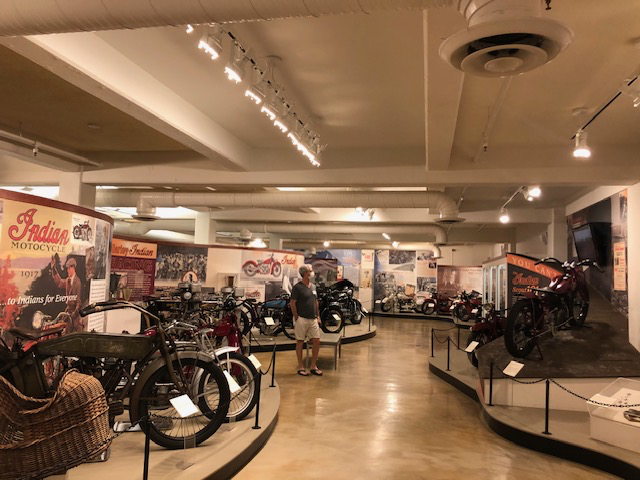
The Esta Manthos Indian Motorcycle Collection
Marty stood among rows of motorcycles at the Lyman and Merrie Wood Museum of Springfield History. Their frames, engines, and handlebars changed from one machine to the next, while old advertisements and photographs filled the walls around them. This gallery was about more than a famous motorcycle name. Indian began in Springfield, and for decades […]
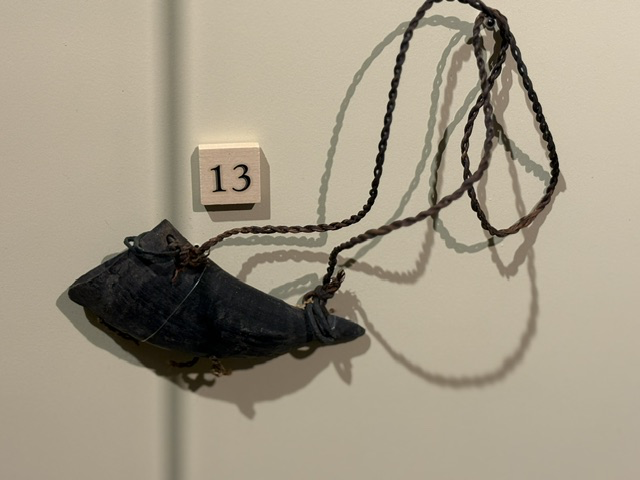
A Grease Horn
Among all the objects that survive from Plymouth’s earliest years, some of the most interesting are not the rare or elaborate possessions, but the simple tools people used in their daily lives. This small grease horn dates from approximately 1635–1665 and is identified as coming from Plymouth. A grease horn was a practical container, usually […]
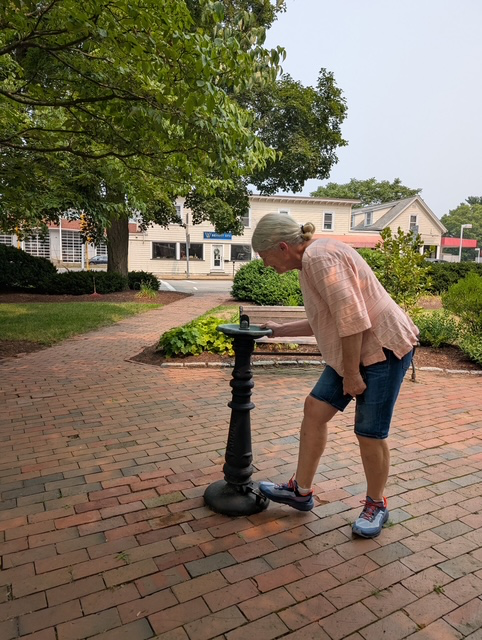
Water Fountain in Wellesley
Though I have walked the parks and paths of Wellesley, Massachusetts for years, I had not paused at this water fountain before. Growing up, I often drank from fountains because they were everywhere. The label on the base read: Murdock Manufacturing, Cincinnati, OH, a company founded in 1853. I learned that Murdock became one of […]

