Birthplace of Eli Whitney
One of the things I have noticed while exploring small towns across America is how they remember the people who stepped beyond their hometown and left a lasting mark on history. Sometimes it is with an impressive statue in the town square, a museum, or a grand memorial. Other times, the recognition is much more modest.
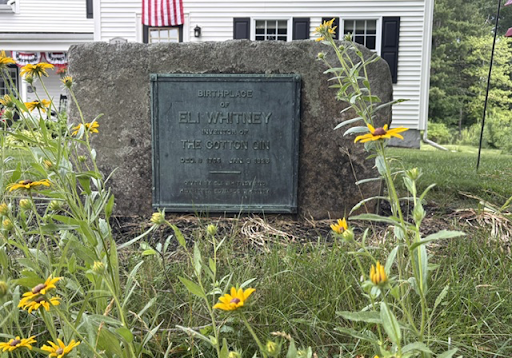
Westborough’s most famous native son is undoubtedly Eli Whitney. Rather than a large monument, the town honors him with this simple granite marker identifying the site where he was born on December 8, 1765. It is a quiet tribute to a man whose inventions would help transform the United States.
From an early age, Whitney displayed an extraordinary talent for mechanics. After graduating from Yale College, he invented the cotton gin in 1793, a machine that dramatically increased the speed of processing cotton. The invention revolutionized the Southern economy, making cotton one of America’s most valuable crops.
Whitney’s legacy, however, is complex. While the cotton gin was a remarkable technological achievement, it also accelerated the expansion of slavery by making cotton production far more profitable. An invention that was expected to reduce labor instead increased the demand for enslaved workers, shaping the course of American history for decades.
Whitney also helped pioneer the use of interchangeable parts while manufacturing muskets for the United States government. This innovation became one of the foundations of modern manufacturing and helped launch the American Industrial Revolution.
Standing beside this modest marker, I was reminded that history is not always commemorated with grand monuments. Sometimes a simple plaque in a quiet New England town is enough to remember someone whose ideas changed the world.
Read More
Read More From Nancy
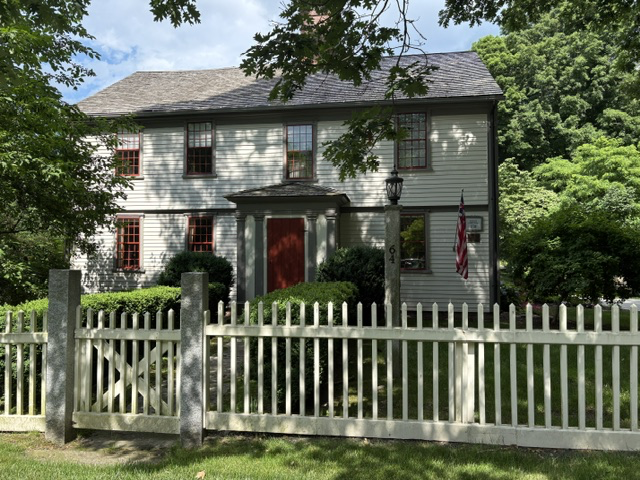
The Jonah and Elizabeth Warren House
Driving along Warren Street in Westborough, this house is easy to admire simply for its age. But its story begins even before Westborough existed as a town and, in an important way, even before European settlement of this area. Jonah Warren and his wife, Elizabeth Seaverns Warren, came from Watertown to the newly developing community […]
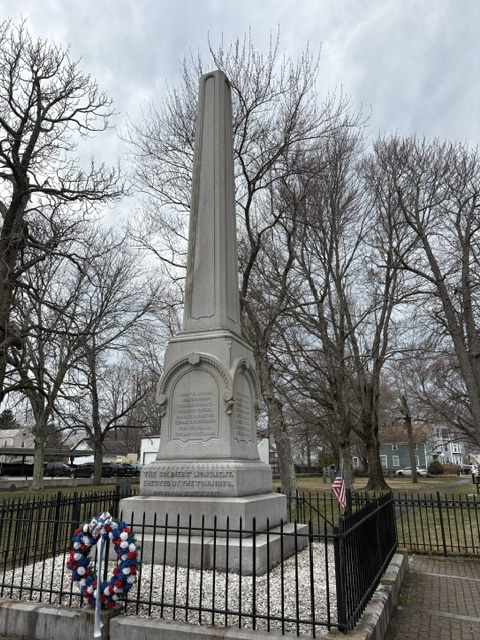
Civil War Memorial
Standing in the center of Westborough is this striking Civil War monument, rising high above the common as a permanent reminder of the town’s sacrifice during one of the most defining periods in American history. Enclosed by a simple iron fence, the monument has the dignified presence so common to nineteenth century memorials built after the […]
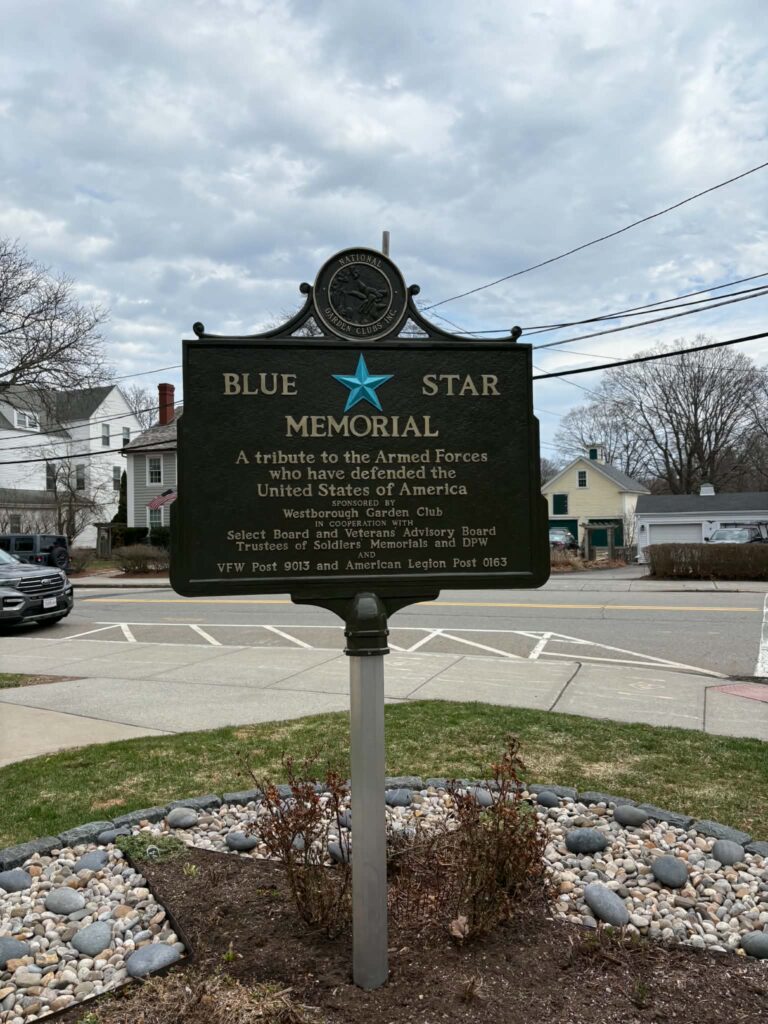
“Blue Star Memorial”
This memorial sign in downtown Westborough is part of the nationwide Blue Star Memorial Highway Program, a tribute created to honor members of the United States Armed Forces. The term “Blue Star” comes from the blue star banners that families displayed in their windows during World War I and World War II when a family member […]

