Museum at Eldridge Street
One of the joys of visiting New York City is discovering places we never knew existed. On one of our trips, we decided to visit the Museum at Eldridge Street, and it became a most memorable stop of our visit.
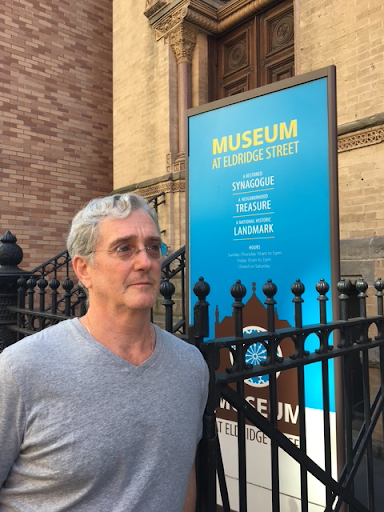
Completed in 1887, the Eldridge Street Synagogue was the first great synagogue built in the United States by Eastern European Jewish immigrants. For thousands of newcomers arriving in America, it became much more than a place of worship. It was a symbol of hope, freedom, and the opportunity to build a new life while preserving their faith and traditions.
The synagogue also tells the larger story of immigration to America. During the late nineteenth and early twentieth centuries, millions of Jewish immigrants fled persecution, poverty, and violent pogroms in Eastern Europe. Many arrived at nearby Castle Garden and later Ellis Island before settling on the Lower East Side of Manhattan. Entire families often lived in crowded tenement apartments, worked long hours in garment factories or small businesses, and struggled to establish themselves in a new country. Despite those hardships, they built schools, charitable organizations, businesses, and houses of worship that helped preserve their traditions while embracing the opportunities of America. The Eldridge Street Synagogue became the spiritual center for many of those families and a reminder that they had found a place where they could worship freely.
One of the stories that stayed with me was learning about the building itself. The synagogue was designed by the architectural firm of Peter and Francis Herter, who were German-born brothers, while many of the craftsmen who created its magnificent interior were European artisans, including Italian woodworkers, plasterers, and decorative artists. Their influence is reflected throughout the building. The soaring arches, richly decorated ceilings, stained-glass windows, and ornate woodwork give the interior an appearance that reminds many visitors of a grand European church. Yet every detail was carefully adapted to create a distinctly Jewish house of worship, blending architectural traditions from different cultures into something entirely unique.
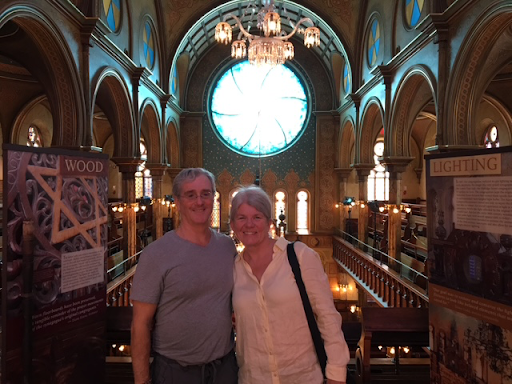
Walking through the sanctuary, I was struck by its beauty. Sunlight pours through the magnificent rose window, illuminating the carved woodwork and decorative details that have been painstakingly restored after decades of neglect. It is difficult to imagine that this extraordinary building once stood abandoned and in danger of being lost. As the neighborhood changed and many Jewish families moved to other parts of New York, the synagogue fell into disrepair. By the 1970s, much of the sanctuary had been closed because of its deteriorating condition. Thanks to an ambitious restoration that began in the 1980s and lasted nearly two decades, it has been preserved as both an active synagogue and a museum dedicated to the history of Jewish immigration in New York.
Like so many places we enjoy visiting, the Museum at Eldridge Street is about far more than architecture. It tells the story of families who arrived in America with little more than hope, built thriving communities on the Lower East Side, and created institutions that reflected both their faith and their dreams for the future.
I always enjoy finding places like this because they remind me that history is often hidden in plain sight. Walking through the doors of this synagogue is like stepping back into the New York of the late nineteenth century, when immigrants from around the world were shaping the city, we know today. The Museum at Eldridge Street preserves not only a magnificent building but also the remarkable story of the people who built it and the generations who have worked to ensure that their story is never forgotten.
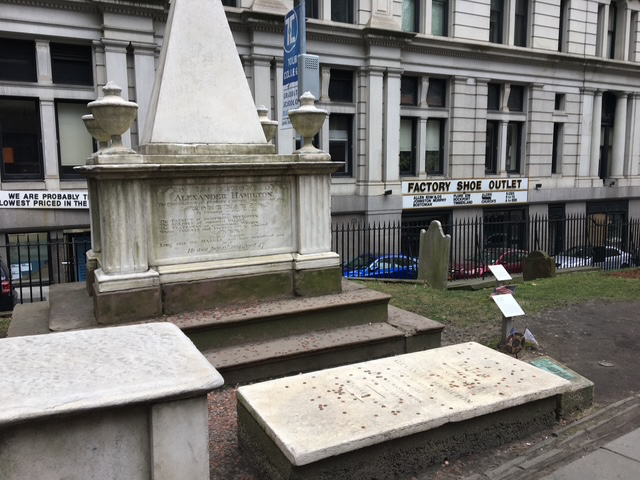
Read More From Nancy
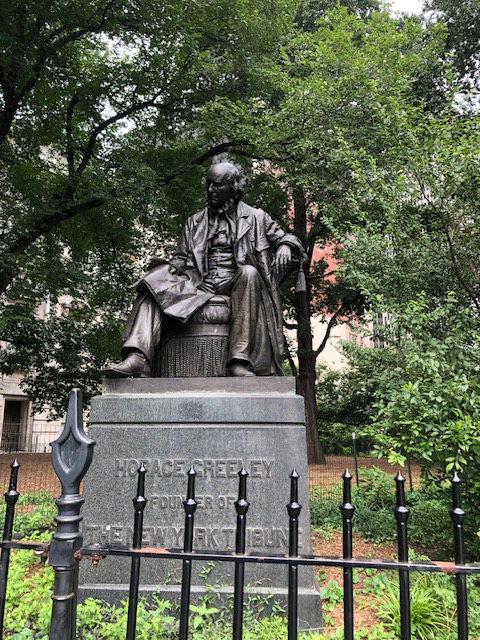
Horace Greeley Stature
Some of the most powerful stories of history are expressed not just in words, but in bronze and stone in the sculptures and monuments that mark the lives of those who have shaped the nation. One such figure commemorated in New York City is Horace Greeley, whose statue stands today in City Hall Park. This is […]
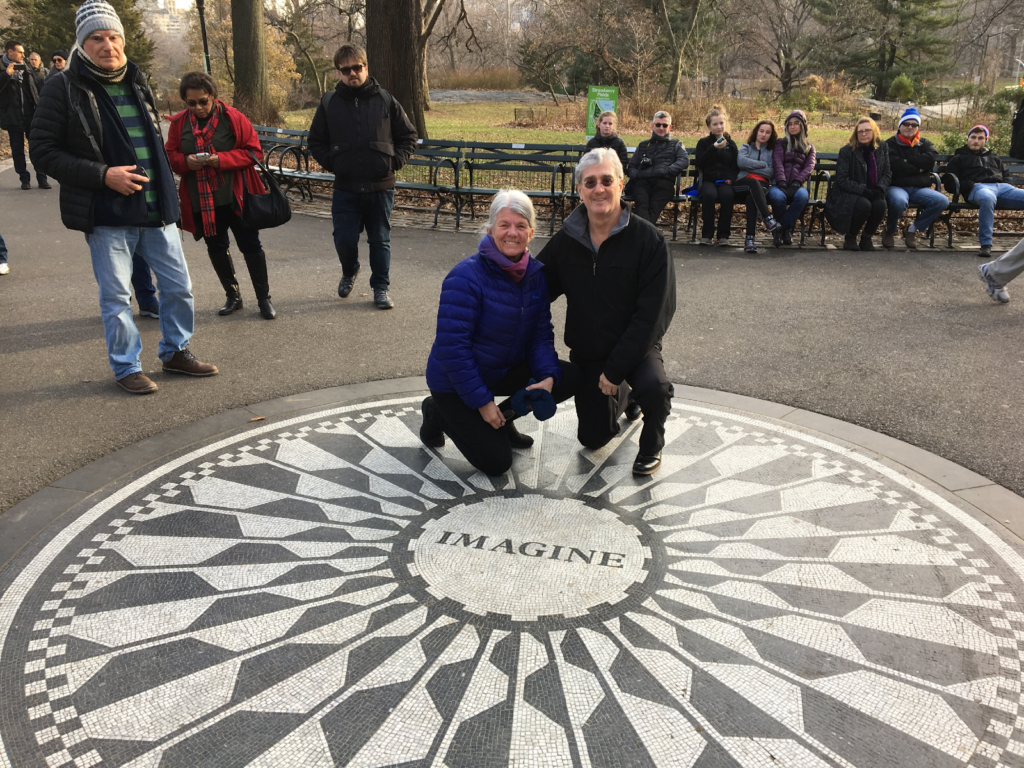
“Imagine” Memorial
In the quiet northwest corner of Central Park, there is a place where visitors from all over the world stop. Set within a grove of elm trees lies Strawberry Fields, created to honor John Lennon. At the center of this memorial is a simple circular black and white stone mosaic. In the middle of the […]
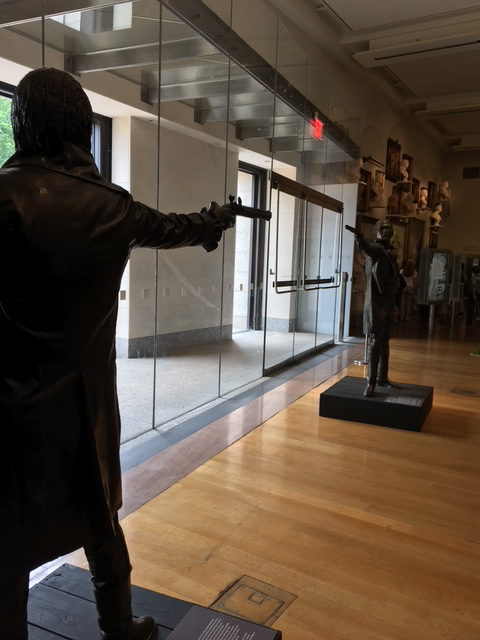
The Hamilton–Burr Duel
At the New-York Historical Society, two life-size bronze figures recreate one of the most famous confrontations in American history. Created by sculptor Kim Crowley, the statues place Alexander Hamilton and Aaron Burr opposite one another with pistols raised, freezing the final seconds of a political rivalry that ended in tragedy. Hamilton and Burr had disagreed […]

