Caleb Harrington’s Tobacco Box
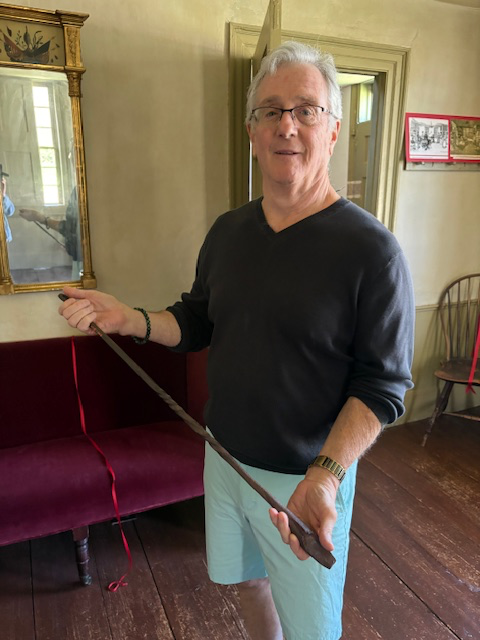
Among the artifacts preserved in Lexington is this small tobacco box, an ordinary object made extraordinary by the events of April 19, 1775. This box belonged to Caleb Harrington, one of the eight militiamen killed by British troops on Lexington Common during the opening moments of the American Revolution. The box was found in his pocket after he fell.

Caleb Harrington was only twenty-four years old. A fifer in the Lexington militia, he had spent the evening of April 18th playing his instrument at a gathering before responding to the alarm that British regulars were marching toward Concord. At dawn, he stood with Captain John Parker and the other Lexington militiamen on the Common. When the shooting began, Harrington became one of the first Americans to lose his life in the struggle for independence.
This tobacco box was not a weapon or a symbol of military service. It was a personal possession, something Harrington carried with him in his daily life. Its survival provides a poignant reminder that those who stood on Lexington Green were ordinary men—farmers, tradesmen, husbands, brothers, and sons—whose lives were suddenly swept into history.
More than 250 years later, Caleb Harrington’s tobacco box serves as a tangible connection to one of the individuals whose sacrifice marked the beginning of the American Revolution.
Read More

Read More From Nancy
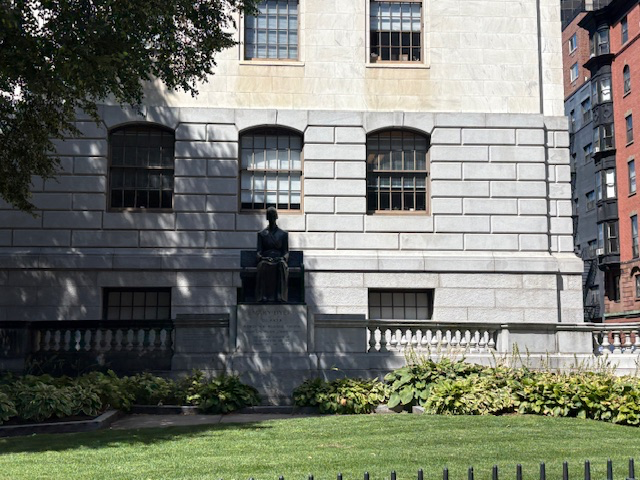
The Courage of Mary Dyer
The ability to sculpt is a remarkable gift. This gift allows an artist to give shape and permanence to something a society deems worth remembering. Our public spaces are filled with statues and memorials, each capturing a story, a value or a life that helped define who we are. The placement of these works also carries meaning for it […]

Armenian Heritage Park
During our walk around Boston, we stopped at Armenian Heritage Park on the Rose Kennedy Greenway. Its angular sculpture offers a different kind of memorial: one whose form changes while its purpose remains rooted in remembrance. The sculpture honors the lives lost during the Armenian Genocide of 1915–1923 and the genocides that followed. The park […]
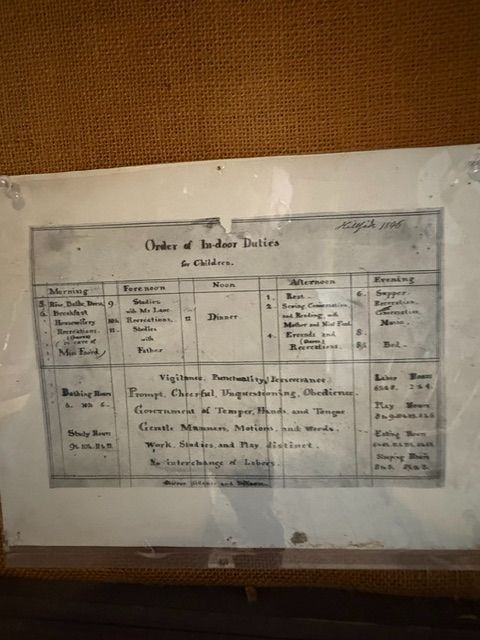
Bronson Alcott’s Daily Duties
A child’s education, in Bronson Alcott’s view, extended throughout the day. Lessons mattered, but so did meals, household responsibilities, recreation, rest, and the ways children treated others. His “Order of In-door Duties for Children,” displayed at Orchard House, offers a glimpse into how he attempted to put those beliefs into practice. The schedule divides the […]

