The Wright Tavern
Standing in the center of Concord, Massachusetts, the Wright Tavern has witnessed some of the most important moments in American history. Built in 1747 by Amos Wright, the tavern quickly became a gathering place where travelers, townspeople, and political leaders exchanged news and ideas. In colonial New England, taverns served not only as inns but also as centers of commerce, community, and debate.
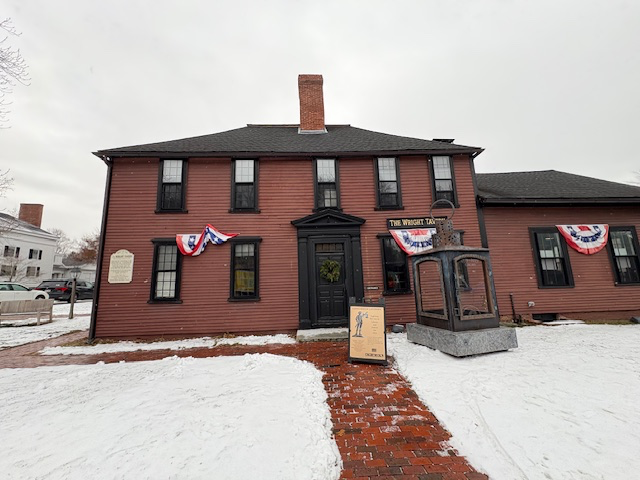
The Wright Tavern played a particularly important role in the events surrounding the American Revolution. On April 20, 1775, the day after the battles of Lexington and Concord, Dr. Joseph Warren and the Massachusetts Committee of Safety met here to organize the colonial response to the outbreak of war. In the years that followed, the tavern welcomed prominent visitors, including George Washington, John Adams, and the Marquis de Lafayette.
One of the more interesting stories associated with the tavern concerns Henry David Thoreau. In 1842, the young Concord native and future author was hired to whitewash the tavern. Ever the independent thinker, Thoreau reportedly refused to use the customary white paint and instead covered the building with a reddish-brown color made from natural pigments. Although the structure has undergone many changes over the years, its distinctive reddish appearance recalls that story and provides a connection to one of Concord’s most famous residents.
The tavern also stood near Concord’s mill pond, where residents once skated in winter and where, during the British retreat on April 19, 1775, captured barrels of flour and cannonballs were thrown into the water. Traces of flour reportedly remained visible in the pond for years afterward, a curious reminder of the events that marked the beginning of the Revolution.
Today, the Wright Tavern has been carefully restored and preserved. Walking past its weathered walls, it is easy to imagine the conversations that once took place inside and the uncertainty that surrounded those first days of the Revolution. More than two centuries later, the tavern remains a quiet but powerful witness to the people and events that shaped a nation.
Read More
Read More From Nancy
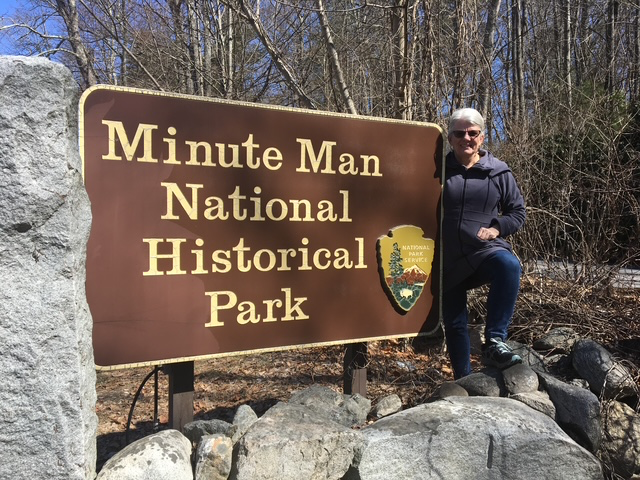
Minute Man National Park
On numerous acres stretches Minute Man National Historical Park. As a Massachusetts resident, we have visited this park several times. The park encompasses approximately 1,000 acres across the towns of Lexington, Lincoln, and Concord, preserving the landscape of April 19, 1775. This date was the opening day of the American Revolution. It was established as a National […]
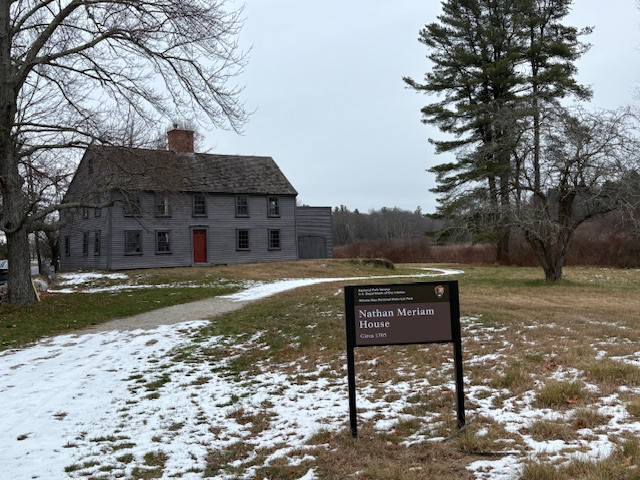
Meriam House
This is the historic Meriam House, part of the Minute Man National Historical Park in Concord. Built around 1705, the house stood directly along the route taken by British troops returning from Concord on April 19, 1775. What makes the site especially important is that the land near the Meriam House marked a turning point in the first day of the […]
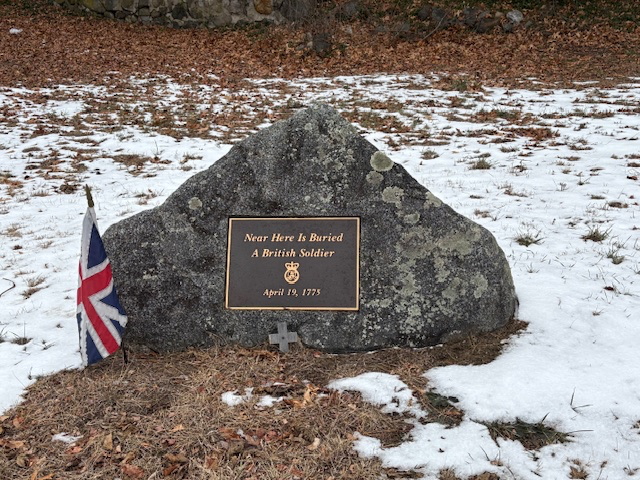
British Soldier Memorial
Among the historic roads of Concord, where so much of the opening day of the American Revolution unfolded, there is this small, easily overlooked stone. It reads: “Near Here is Buried A British Soldier – April 19, 1775” This marker points to one of the most human and often forgotten aspects of the Battles of Lexington […]

