Thayer Library
Another impressive building in the center of Lancaster is the Thayer Memorial Library. During our tour, we learned that the institution’s roots extend far beyond the beautiful structure that stands today. The town’s first library organization, known as the Lancaster Library and later the Lancaster Social Library, was established in 1790. In 1862, residents voted to create a tax-supported free public library, reflecting the growing nineteenth-century belief that education and knowledge should be available to all. A Historical Museum was added the following year to preserve the town’s rich heritage.
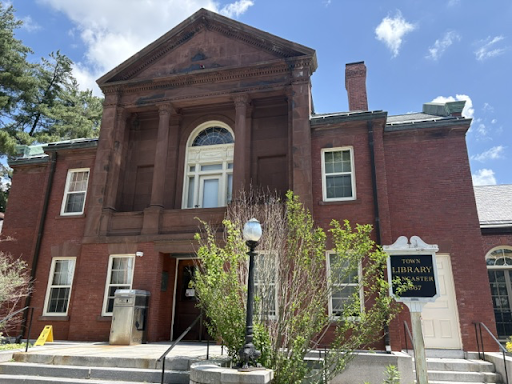
Following the Civil War, the community sought to honor those who had served and sacrificed. In 1868, Memorial Hall was erected to house the growing library while also serving as a memorial to Lancaster’s Civil War dead. During our tour, we learned that the building was intentionally designed to be both a center of learning and a place of remembrance, linking education with civic responsibility and patriotism. That dual purpose remains one of the most distinctive aspects of the library’s history.
Over the years, the building evolved to meet the changing needs of the community. An expansion completed in 1888 greatly increased the library’s capacity, and in 1929 a children’s room was added, reflecting the importance of encouraging young readers. The most recent major renovation, completed in 1999, more than doubled the building’s size and provided expanded collections and meeting spaces. At that time, the Board of Trustees formally rededicated the institution as the Thayer Memorial Library in recognition of the many contributions made by the Thayer family throughout its history.
Standing before this handsome building, I was reminded that libraries were once regarded as monuments to knowledge, memory, and civic virtue. More than a century and a half after Memorial Hall was erected, the Thayer Memorial Library continues to serve the people of Lancaster while preserving both the town’s history and the memory of those who gave their lives to preserve the Union. It stands not only as a repository of books, but also as a living memorial and a testament to the enduring values of learning, service, and remembrance.
Read More From Nancy
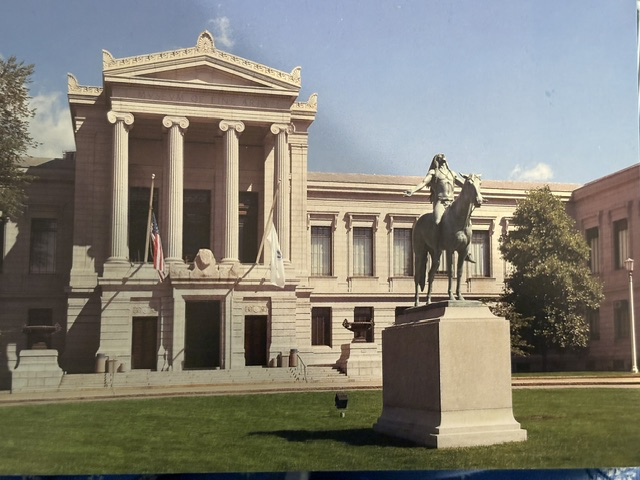
Museum of Fine Arts
The Museum of Fine Arts in Boston has been part of our family story for as long as I can remember. Our oldest daughter, Emily, loved going there from the time she was very young. Even as a toddler, she would climb the great steps of the museum and make her way to the Impressionist […]
Norman Rockwell Museum
I love returning to the Norman Rockwell Museum in Stockbridge. The museum holds the world’s largest collection of Rockwell’s work, along with changing exhibitions that examine American illustration and the artists who used pictures to tell stories. Because the special exhibitions change, each visit offers something different, even when the familiar paintings remain the reason […]
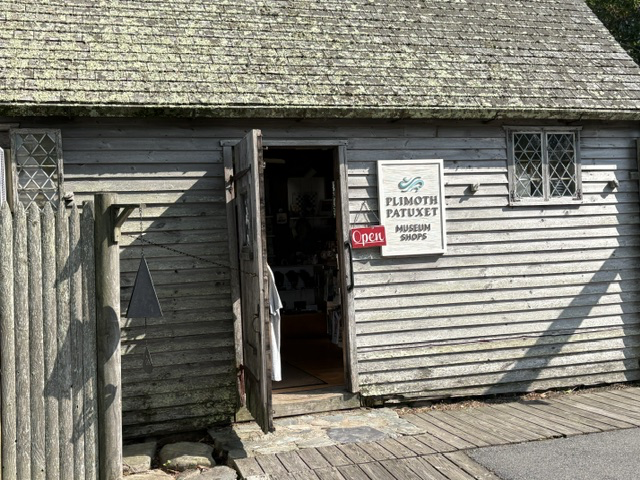
Plimouth Patuxet Museums
During my homeschooling years, we made many trips to what was then called Plimoth Plantation. It was one of those places where history became much more than something we read about in a book. As we walked through the recreated 17th-century English village, the people we met remained in character, speaking and responding as though […]

