Lafayette’s Visit
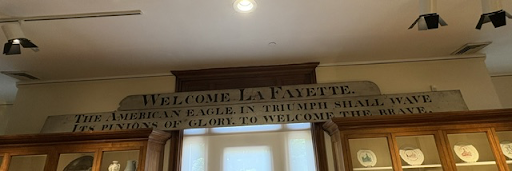
One of the most unexpected stories we uncovered during our visit to Lancaster centered on one of the most beloved figures of the American Revolution. Inside the Historical Museum at the Thayer Memorial Library hangs a large banner proclaiming:
“Welcome La Fayette. The American Eagle in triumph shall wave its pinions of glory to welcome the brave.”
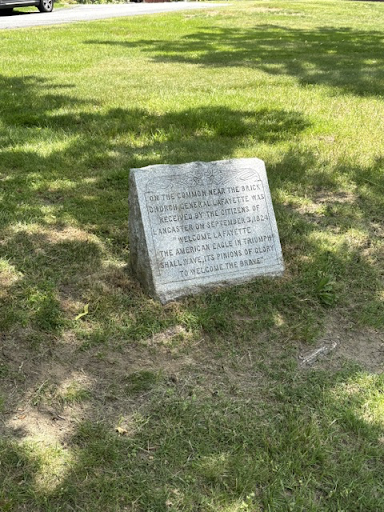
Outside, near the First Church and Town Common, a granite marker commemorates the occasion and records that on September 3, 1824, the Marquis de Lafayette was received by the citizens of Lancaster on that very spot.
Lafayette, the French nobleman who volunteered to fight alongside George Washington, returned to the United States in 1824–1825 as the “Nation’s Guest.” Nearly fifty years after the Revolution, the aging hero embarked on a triumphal tour of all twenty-four states. At sixty-seven years old, he was regarded by Americans as the last surviving major general of the Revolutionary War and a living connection to the nation’s founding.
His visit to Lancaster was not accidental. Traveling from Boston to Worcester and beyond, Lafayette followed one of the principal roads westward, which passed directly through Lancaster. On September 3, 1824, the citizens of the town gathered near the Brick Church to greet their distinguished visitor. Reverend Nathaniel Thayer, the respected pastor of the First Church, delivered the official address of welcome. Special decorations and banners had been prepared, including the stirring words that have been preserved to this day.
Standing between the memorial stone outside and the preserved banner inside the museum, I was struck by how carefully Lancaster has preserved this remarkable connection to the Revolutionary generation. For a brief moment in 1824, this quiet New England town became part of a national celebration honoring a man whose courage and devotion to liberty had helped secure the nation’s independence. More than two centuries later, both the stone and the banner continue to link present-day visitors with that extraordinary day when history passed directly through Lancaster.
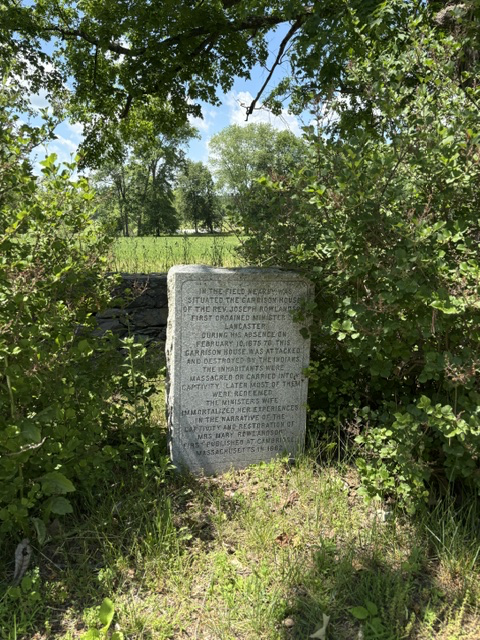
Read More From Nancy
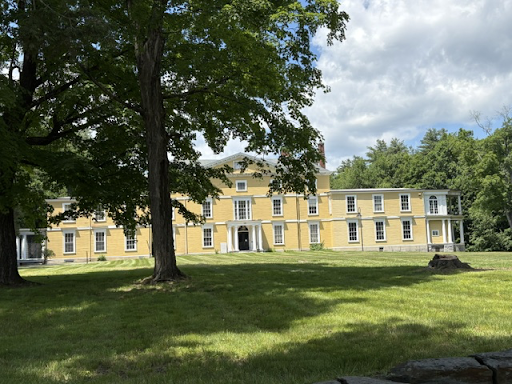
Nathaniel Thayer Estate
Driving through South Lancaster, I was surprised to come upon one of the grandest estates in central Massachusetts: the Nathaniel Thayer Estate, later known as Thayer Hall. Set amid expansive lawns and towering trees, the stately yellow mansion immediately conveyed the elegance and prosperity of nineteenth-century New England. Although many visitors associate South Lancaster with […]
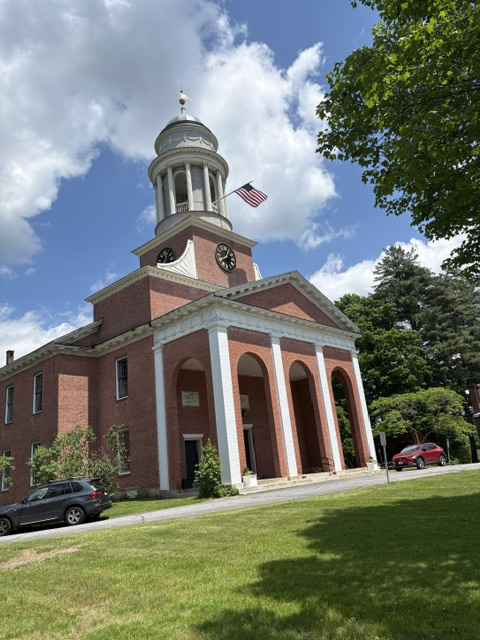
First Church of Christ
Driving to explore Lancaster, it was easy to see where the center of town has been for generations. Anchoring the broad common is the stately First Church of Christ, whose graceful dome rises above the surrounding landscape and serves as one of the town’s most recognizable landmarks. Built in 1816 and designed by renowned architect […]
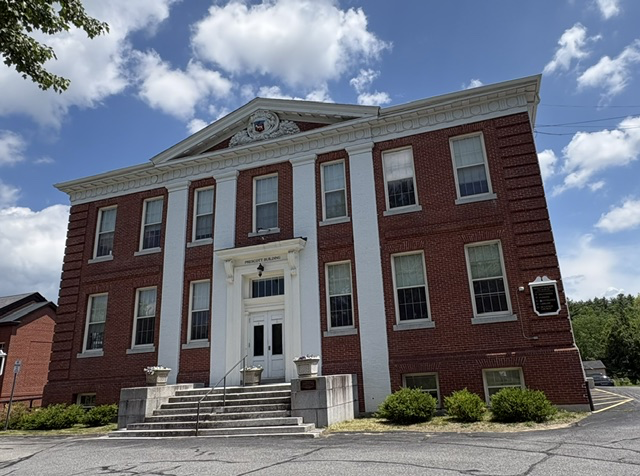
Prescott Building
Exploring Lancaster, I came upon the Prescott Building, one of the town’s most important civic landmarks. Standing prominently near the town center, the stately brick structure reflects the pride and sense of community that characterized early twentieth-century New England. With its classical proportions, white pilasters, and formal entrance, the building conveys a sense of permanence […]

