Site of Rowlandson Garrison
One of the most poignant markers I encountered in Lancaster commemorates the site of the garrison house of Reverend Joseph Rowlandson, where one of the most dramatic episodes of King Philip’s War unfolded. On February 10, 1676, during an attack on the frontier settlement, Native warriors destroyed much of Lancaster. The Rowlandson home was burned, many residents were killed, and Reverend Rowlandson’s wife, Mary, along with three of their children, was taken captive.
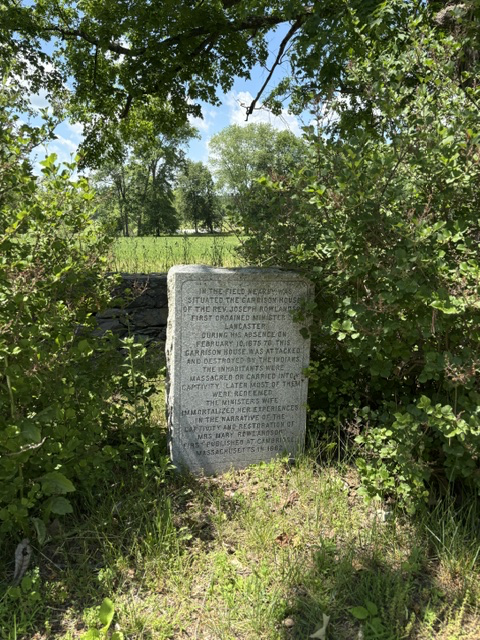
Mary Rowlandson spent nearly three months in captivity before being ransomed and reunited with her family. Her account, The Sovereignty and Goodness of God, published in 1682, became one of the earliest and most influential books written in colonial America. Widely read on both sides of the Atlantic, it shaped perceptions of frontier life and Native Americans for generations and established the literary genre known as the captivity narrative.
Mary Rowlandson spent nearly three months in captivity before being ransomed and reunited with her family. Her account, The Sovereignty and Goodness of God, published in 1682, became one of the earliest and most influential books written in colonial America. Widely read on both sides of the Atlantic, it shaped perceptions of frontier life and Native Americans for generations and established the literary genre known as the captivity narrative.
Today, the marker preserves the memory of an event whose echoes reached far beyond Lancaster and became part of the earliest literature and history of colonial America.
Read More From Nancy
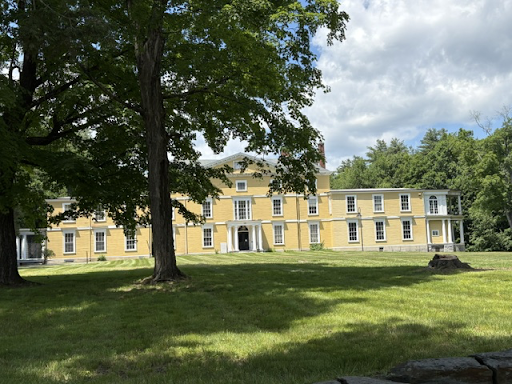
Nathaniel Thayer Estate
Driving through South Lancaster, I was surprised to come upon one of the grandest estates in central Massachusetts: the Nathaniel Thayer Estate, later known as Thayer Hall. Set amid expansive lawns and towering trees, the stately yellow mansion immediately conveyed the elegance and prosperity of nineteenth-century New England. Although many visitors associate South Lancaster with […]
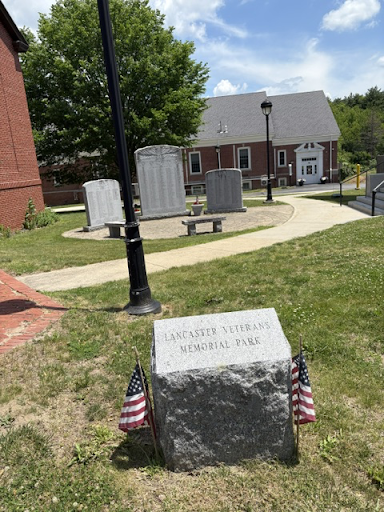
Lancaster Veterans Memorial Park
Located in the center of town, the Lancaster Veterans Memorial Park serves as a quiet and dignified place of remembrance dedicated to the men and women of Lancaster who have served their country. The park reflects the deep respect that this historic Massachusetts community has long held for its veterans. Lancaster itself has a rich military heritage […]
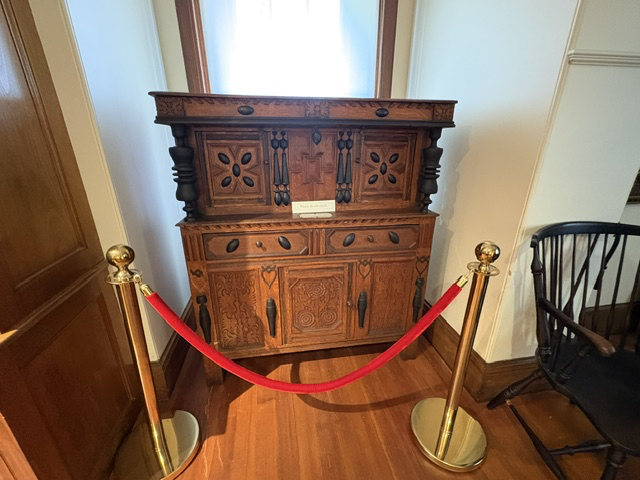
The Rowlandson Cupboard
Displayed in the Historical Museum at Lancaster’s Thayer Memorial Library, the cupboard is believed to have belonged to the family of Reverend Joseph Rowlandson, the first minister of Lancaster, and his wife, Mary Rowlandson. More than three hundred years ago, this piece of furniture stood in one of the earliest homes in the Massachusetts Bay […]

