The Courage of Mary Dyer
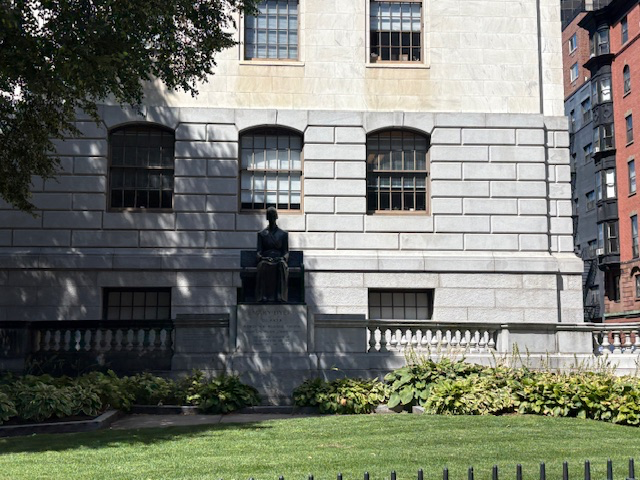
The ability to sculpt is a remarkable gift. This gift allows an artist to give shape and permanence to something a society deems worth remembering. Our public spaces are filled with statues and memorials, each capturing a story, a value or a life that helped define who we are. The placement of these works also carries meaning for it shows the measure of importance we give to memory itself.
On the front lawn of the Massachusetts State House in Boston, beneath the shade of a broad tree, sits a statue of Mary Dyer. Seated in quiet dignity, she might be overlooked, except for where she sits. Her presence before the front of the Capitol building is a deliberate statement of conscience and conviction.
Mary Dyer (1611-1660) was a Quaker martyr, hanged on the Boston Common for defying Puritan laws that forbade her faith. Her death stands as one of the earliest testaments to religious freedom in America. The artist, Sylvia Shaw Judson, captured her not in anguish but in contemplation, a woman that held her beliefs even unto her death.
The statue was dedicated in July 1959, more than three centuries after her execution. Honoring Mary Dyer was a recognition of her sacrifice and a renewed understanding that freedom to believe and speak one’s truth lies at the core of our democracy.
To see Mary Dyer sitting in the heart of the city that condemned her, is quite moving. She represents the cost of her conviction and, how with time, we can transform intolerance into respect.
Read More
Read More From Nancy
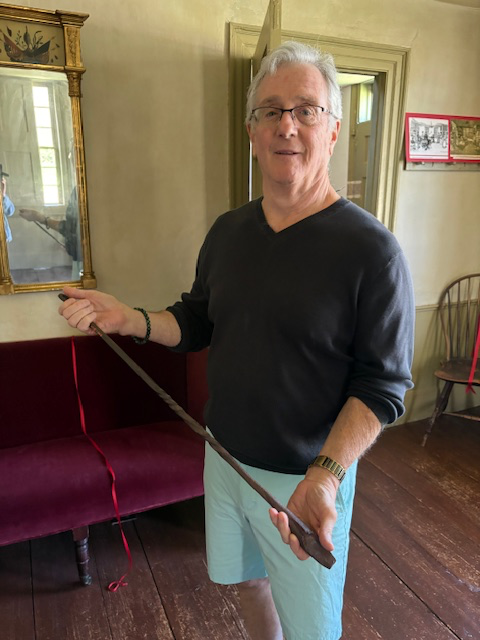
The Flip Dog
When we visited the Golden Ball Tavern in Weston, one of the objects that caught our attention was this long iron implement. At first glance, it doesn’t reveal very much about its purpose. But once we learned how it was used, it provided a wonderful glimpse into everyday tavern life more than two centuries ago. […]
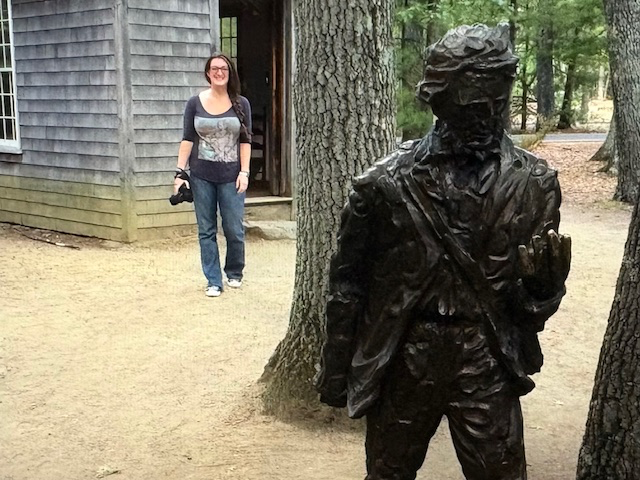
Replica of David Thoreau’s Cabin
Just outside the replica of Henry David Thoreau’s cabin at Walden Pond stands this bronze statue of Thoreau, depicting him much as we might imagine him during his years here. He is simply dressed and seemingly caught in the act of walking through the landscape he observed so carefully. Thoreau came to Walden Pond in […]

USS Cassin Young
The USS Cassin Young, identified by the hull number DD-793, is preserved at the Charlestown Navy Yard as part of Boston National Historical Park. The Fletcher-class destroyer represents both the industrial effort that produced thousands of American warships during the Second World War and the experiences of the sailors who served aboard them. The ship was […]

