“Blindfolded Eros” Sculpture
This striking sculpture is the Eros Bendato by Polish artist Igor Mitoraj, located in Krakow near the historic Market Square and Town Hall Tower. The sculpture was created in 1999 and has become one of the city’s recognizable modern artistic landmarks.
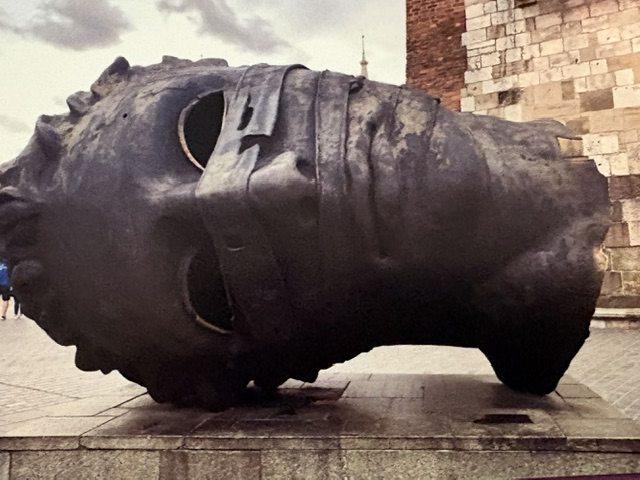
The massive bronze head lies broken and bandaged, with hollow eyes and damaged features. Like much of Mitoraj’s work, it resembles an ancient classical sculpture that has survived ruin, war and time itself.
Mitoraj became internationally known for creating sculptures inspired by classical Greek and Roman art while intentionally presenting them as fractured, incomplete or wounded. His work explores themes of beauty, fragility, suffering and the imperfection of humanity.
The title “Eros Bendato” translates to “Blindfolded Eros”, referring to the Greek god of love. Rather than presenting an idealized figure, the sculpture appears wounded and partially destroyed.
Looking at this photograph now, I am reminded how cities like Krakow constantly surprise us with unexpected encounters between ancient history and modern artistic expression.
Read More From Nancy
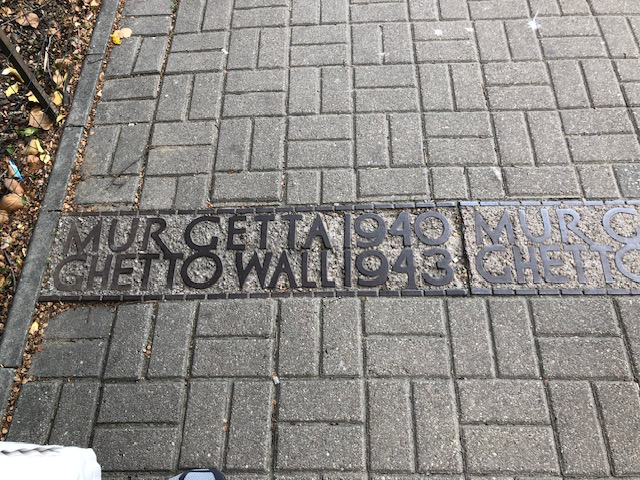
Warsaw Ghetto
Today, Warsaw Poland is a rebuilt and thriving city. Walking around the city, there are powerful reminders of its history. Nowhere is this more evident than along the boundary markers of the former Warsaw Ghetto. These modest markers trace the outline of what was once the largest Jewish ghetto in Nazi-occupied Europe. In November […]
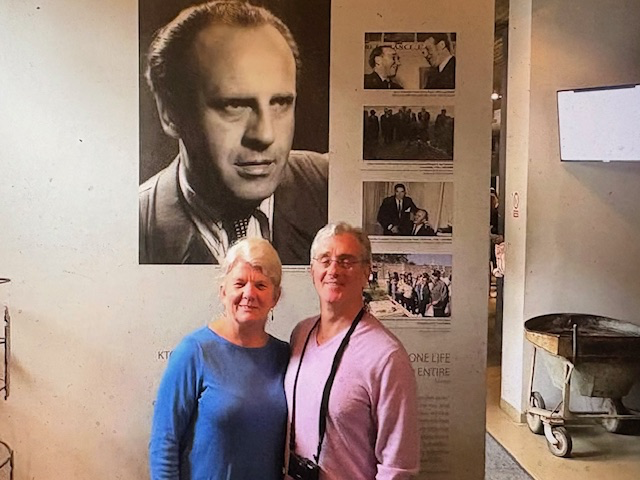
Oskar Schindler’s Museum
While visiting Krakow, we made our way to this powerful museum: Oskar Schindler’s Factory. Of course, his story had already been etched into public memory through the Oscar-winning film Schindler’s List, but standing in the actual factory where so much of that history unfolded brought a different weight to the story. The Oskar Schindler’s Museum […]
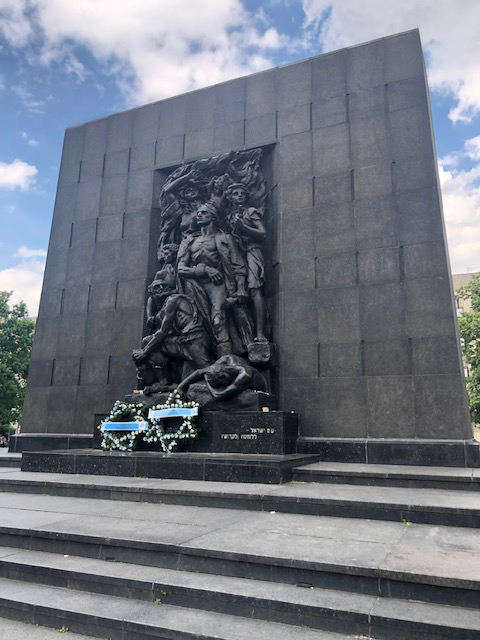
Monument to the Heroes of the Ghetto
The Monument to the Heroes of the Ghetto, confronts history. Standing in the heart of the Warsaw Jewish ghetto, this monument carries a weight that is impossible to ignore. Unveiled in 1948, the monument commemorates the Warsaw Ghetto Uprising, one of the most extraordinary acts of resistance during the Holocaust. In April of 1943, as the remaining […]

