Palace of Culture and Science
Some buildings become symbols of pride. Others become symbols of history itself.
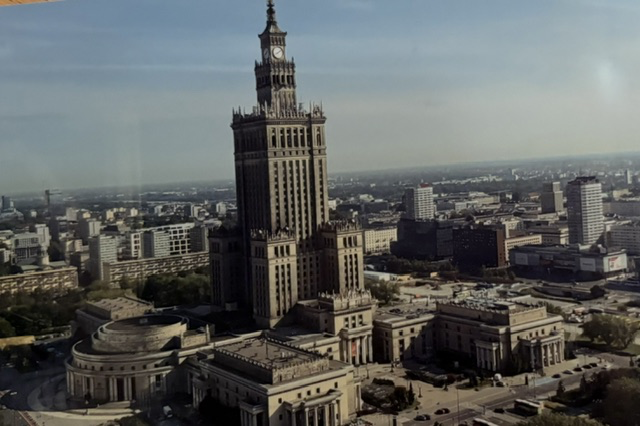
The Palace of Culture and Science dominates the skyline of Warsaw, standing more than 750 feet above the city. It is impossible to ignore. Whether you admire it or dislike it, every road through central Warsaw seems to lead your eyes back to this towering landmark.
Completed in 1955, the building was presented as a gift from the Soviet Union to the people of Poland. Thousands of Soviet workers came to Warsaw to construct it, and it was originally named the Joseph Stalin Palace of Culture and Science. Although promoted as a monument to friendship between the Soviet Union and Poland, many Poles viewed it quite differently. To them, it stood as a daily reminder that their nation was living under Soviet domination rather than enjoying true independence.
What makes the story even more remarkable is its setting. Warsaw had only recently emerged from one of the darkest chapters in its history. Following the Warsaw Uprising of 1944, German forces systematically destroyed much of the city. By the end of the war, nearly 85 percent of Warsaw’s historic center lay in ruins. As the city slowly rebuilt itself from the devastation, this enormous Soviet skyscraper rose above the rubble, permanently altering the skyline.
The construction itself came with an unexpected human story. More than 3,500 Soviet workers lived in a temporary settlement built specifically for the project. They brought their families, established schools and services, and created a small community while the tower was under construction. Tragically, sixteen workers lost their lives during the building process, and a memorial was later erected in their honor
After communism fell in 1989, many people argued that the building should be demolished. It represented decades of foreign control and was seen by some as an unwanted reminder of a painful era. Others believed that, regardless of its origins, it had become woven into the story of Warsaw itself. In the end, the decision was made to leave it standing.
Today, the Palace of Culture and Science has been transformed into something very different from what its builders intended. It houses theaters, museums, concert halls, cinemas, universities, exhibition halls, and one of the city’s most popular observation decks. Rather than serving as a symbol of political authority, it has become a place where people gather to experience culture, education, and community.
Sometimes the most meaningful landmarks are not the ones with uncomplicated histories. They are the ones that remind us that nations, like people, can reclaim difficult chapters of their past and shape them into something entirely new. The Palace of Culture and Science is no longer simply Stalin’s gift. It has become part of Warsaw’s story and a reminder not only of where Poland has been, but of the strength and determination that carried it forward.
Read More From Nancy
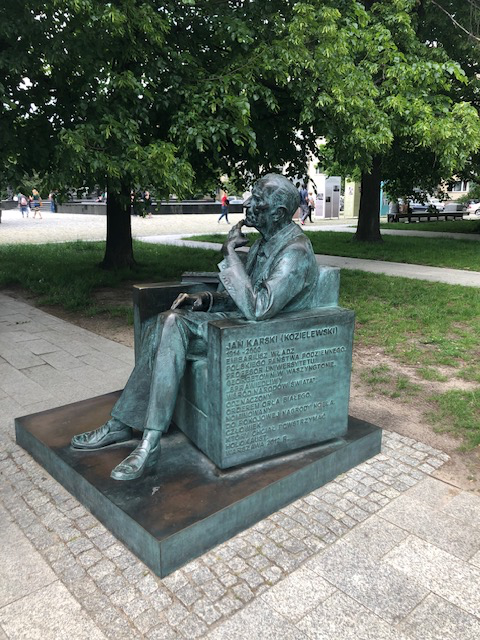
Jan Karski
While walking through Warsaw, I came upon a bronze monument that drew my attention. Unlike many statues where the figure stands high on a pedestal, this one shows a man quietly seated in a chair, holding a document in his hand. The plaque tells the story of Jan Karski, one of the most remarkable witnesses of […]
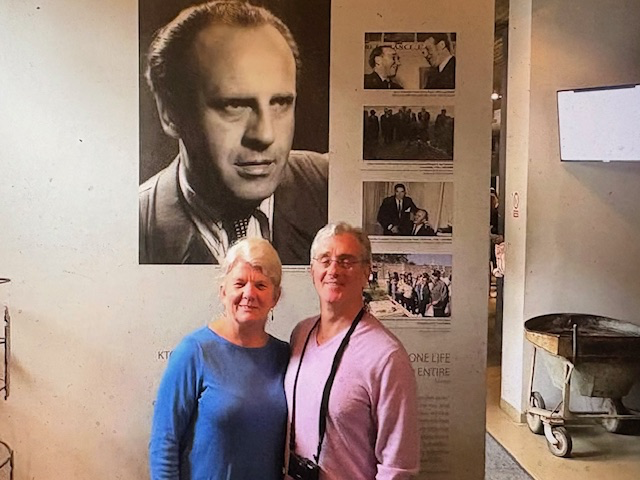
Oskar Schindler’s Museum
While visiting Krakow, we made our way to this powerful museum: Oskar Schindler’s Factory. Of course, his story had already been etched into public memory through the Oscar-winning film Schindler’s List, but standing in the actual factory where so much of that history unfolded brought a different weight to the story. The Oskar Schindler’s Museum […]
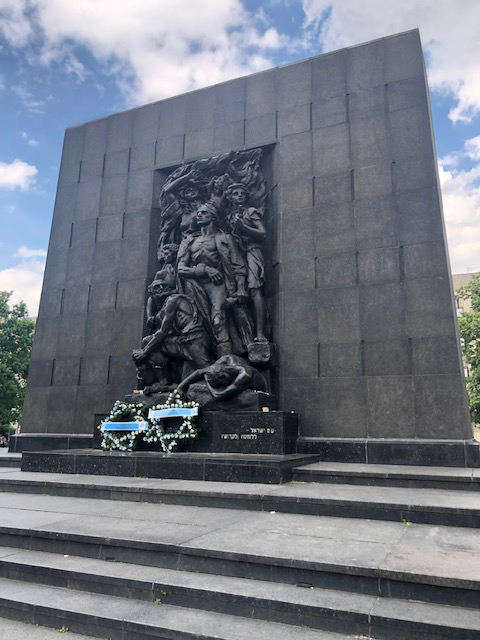
Monument to the Heroes of the Ghetto
The Monument to the Heroes of the Ghetto, confronts history. Standing in the heart of the Warsaw Jewish ghetto, this monument carries a weight that is impossible to ignore. Unveiled in 1948, the monument commemorates the Warsaw Ghetto Uprising, one of the most extraordinary acts of resistance during the Holocaust. In April of 1943, as the remaining […]

