Checkpoint Charlies
The photograph captures one of the most powerful symbols of the Cold War and the division of Berlin during the twentieth century. Standing in the middle of the street is a reconstruction of the famous American checkpoint known as Checkpoint Charlie. This was once the best-known crossing point between East Berlin and West Berlin during the years when the city was divided by the Berlin Wall.
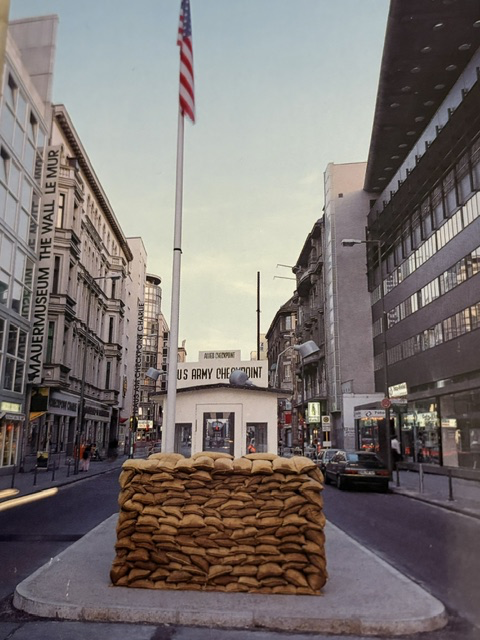
Berlin became a visible symbol of the ideological conflict between democracy and communism, freedom and restriction, East and West. The wall physically divided families, neighborhoods and lives for nearly three decades.
Checkpoint Charlies was established in 1961 after construction of the Berlin Wall by East Germany. It became the primary crossing point for diplomats, military personnel, foreigners, and others authorized to move between the American sector and Soviet-controlled East Berlin.
This checkpoint once stood at the center of one of the most dangerous political confrontations in the world. During the Cold War, this site symbolized tension that at times brought the world close to nuclear conflict.
One of the most dramatic moments occurred in October 1961, when American and Soviet tanks faced each other only yards apart at Checkpoint Charlies during a standoff that threatened to escalate into armed conflict. For sixteen hours, the world watched as two superpowers confronted one another directly in the streets of Berlin
Today, Checkpoint Charlies remains a reminder of division, resilience, political conflict and ultimately the human desire for freedom.
Read More
Read More From Nancy
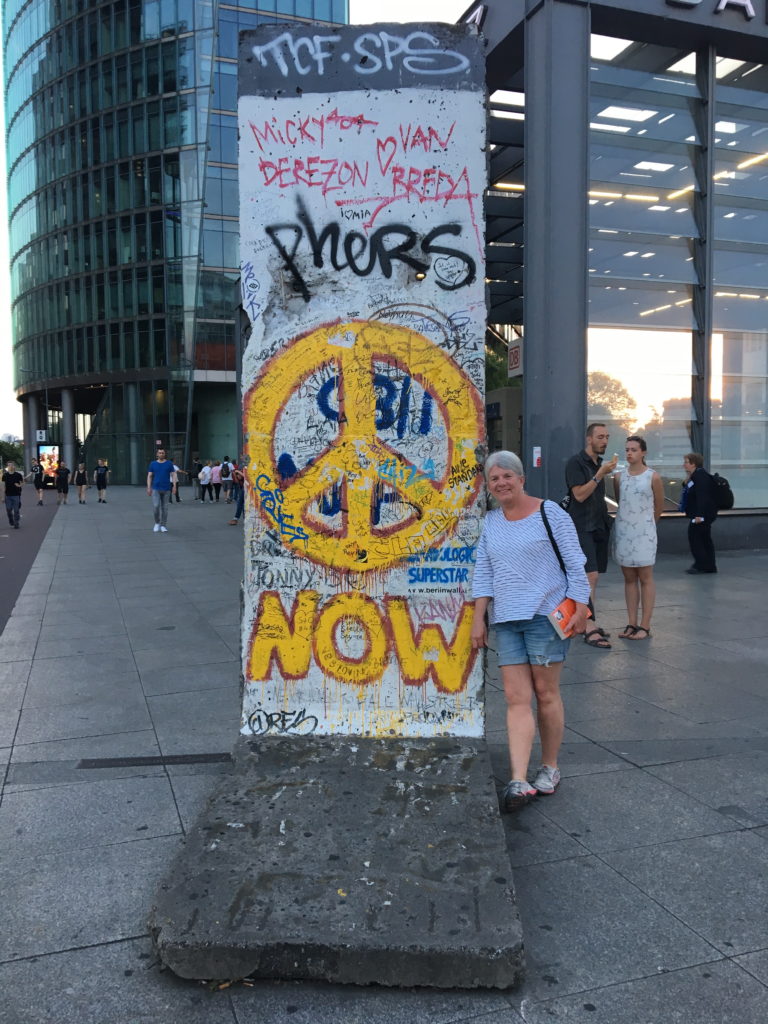
A Piece of the Berlin Wall
During our travels in Germany, I stopped for a photograph beside one of the surviving sections of the Berlin Wall. For nearly twenty-eight years, from 1961 until 1989, the Wall divided East and West Berlin and became one of the most powerful symbols of the Cold War. Families, friends, and neighbors were separated overnight, and […]
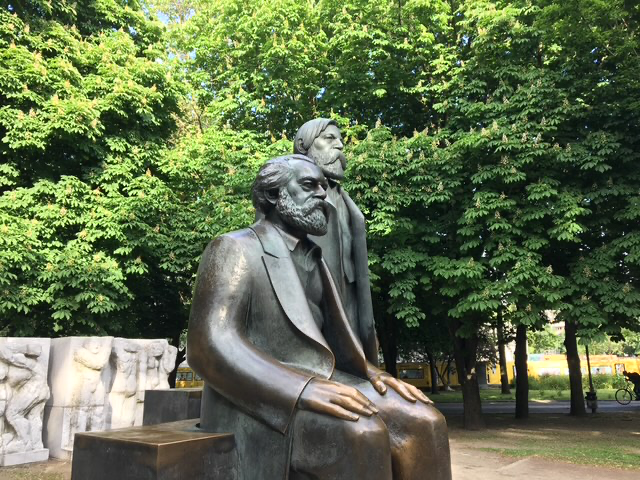
Marx-Engels Forum
In a quiet green space in Berlin, we came upon the Marx-Engels Forum. There is no grand staircase, or towering pedestal. The monument is at ground level, integrated into the park. Karl Max is seated and beside him stands Freidrich Engles. One seated, one standing. One reflective, one present. To understand why they are here, […]
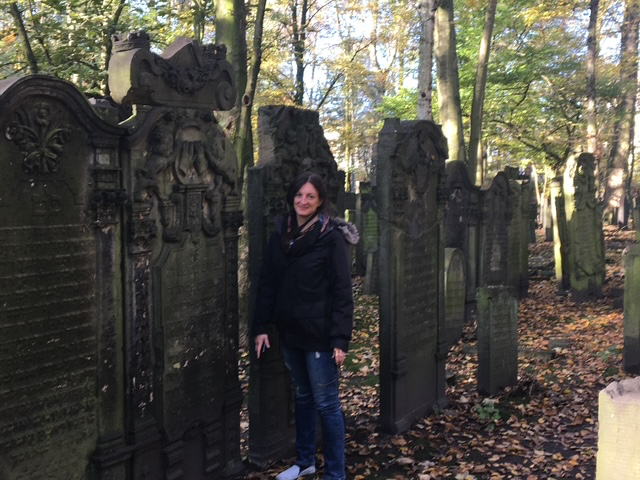
Jewish Cemetery of Altona
One of the most memorable stops on Erin’s and my Jewish heritage tour of Hamburg was a visit to the historic Jewish Cemetery of Altona. It is not a place that most visitors ever see. Access is carefully controlled to protect this remarkable site, and through the special arrangements of our guide, we were able […]

