Reichstag
There may be no more impressive building in Berlin than the Reichstag. Standing before its massive facade, illuminated against the evening sky, it is impossible not to feel the weight of the history that has unfolded here. More than just a government building, the Reichstag has witnessed the rise and fall of empires, the turmoil of war, the division of a nation, and the eventual reunification of Germany.
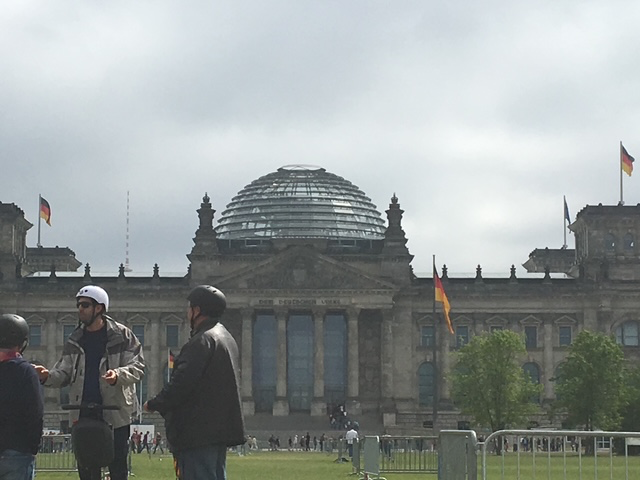
Completed in 1894 as the home of the German Parliament, the Reichstag became a symbol of the newly unified German Empire. Its history has been anything but ordinary. In 1933, a devastating fire swept through the building, an event that the Nazi government used to justify emergency measures that suspended civil liberties and helped pave the way for Adolf Hitler’s consolidation of power. The Reichstag suffered further destruction during World War II, becoming one of the focal points of the Battle of Berlin in 1945. Photographs of Soviet soldiers raising their flag over the Reichstag became some of the most iconic images marking the end of the war in Europe.
For decades after the war, the building stood near the Berlin Wall, a reminder of Germany’s division. Following reunification, the Reichstag underwent restoration and the most striking addition was the glass dome that now crowns the building. The dome was designed as a symbol of transparency allowing visitors to look down into the parliamentary chambers below
The building represents Germany’s remarkable journey through challenging chapters of modern history. The Reichstag illustrates a nation’s ability to confront its past, rebuild and move forward.
Read More From Nancy
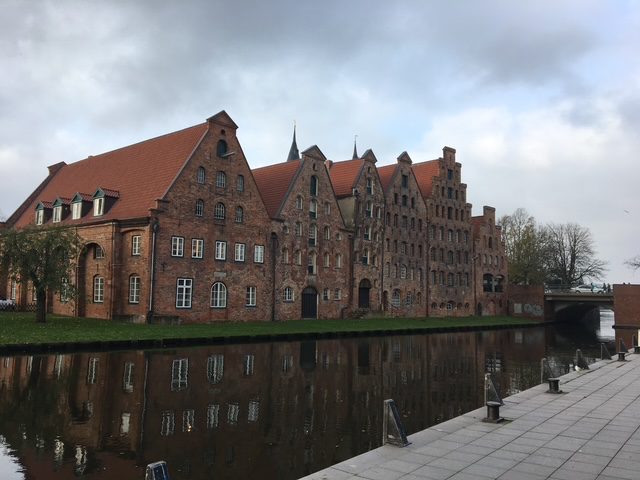
The Salt Storehouses
Standing along the Trave River near Lübeck’s Holsten Gate, the six buildings known as the Salzspeicher, or Salt Storehouses, preserve the story of a commodity that helped make this northern German city wealthy and powerful. Their rows of windows, steep red roofs, and distinctive stepped gables reflect in the water, creating one of Lübeck’s most […]
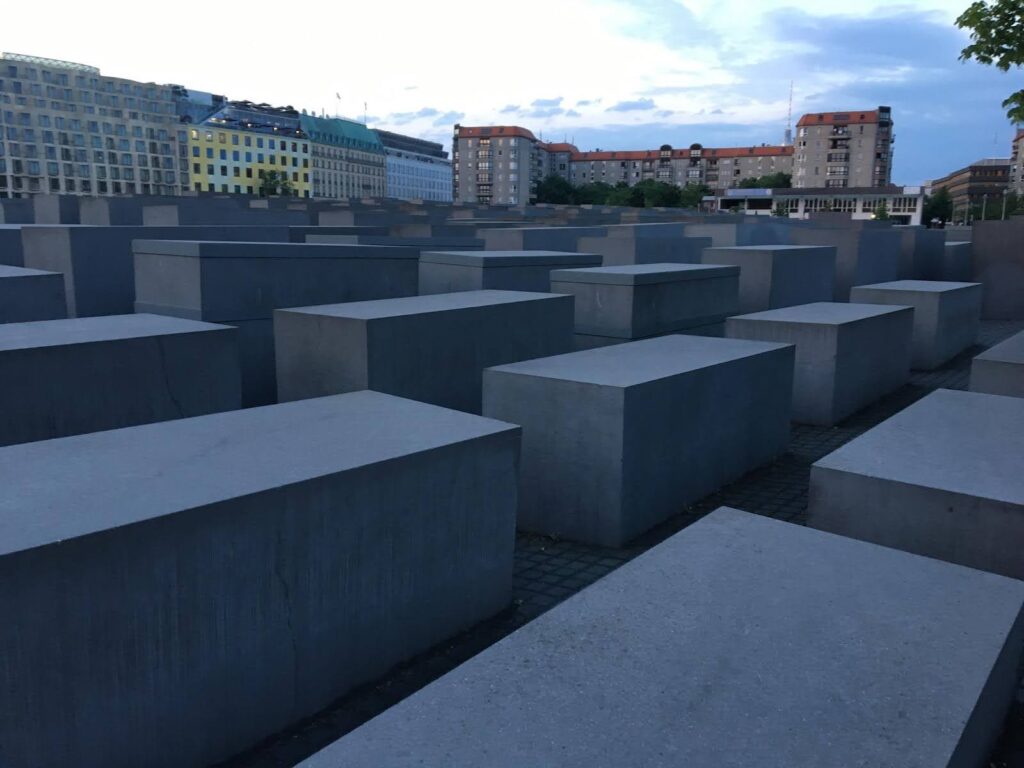
Holocaust Memorial
There are places that we visit, and then there are places we enter. This memorial in Berlin is one of those places. From a distance, the Memorial to the Murdered Jews of Europe, appears like a vast field of concrete blocks stretching across the city near the Brandenburg Gate. But as we walk into it, the […]
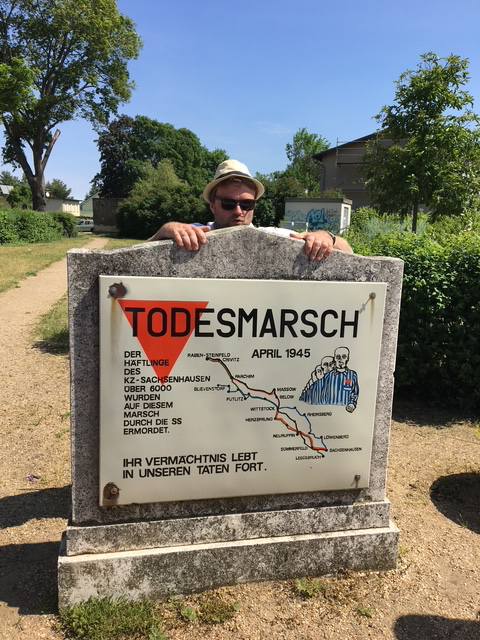
Todesmarsch, April 1945
While visiting Sachsenhausen, Marty and I came upon this memorial marker with one word that required no translation: Todesmarsch — Death March. The map beneath it traces the route taken by prisoners during the final days of the concentration camp in April 1945. It marks a chapter of the Sachsenhausen story that did not take […]

