Hudson Veterans’ Memorial
This memorial is a beautiful example of the many local monuments found throughout New England honoring generations of military service and sacrifice. What makes monuments like this especially meaningful is they are deeply connected to the local community itself, representing neighbors, families, veterans and citizens whose lives were tied directly to the town.
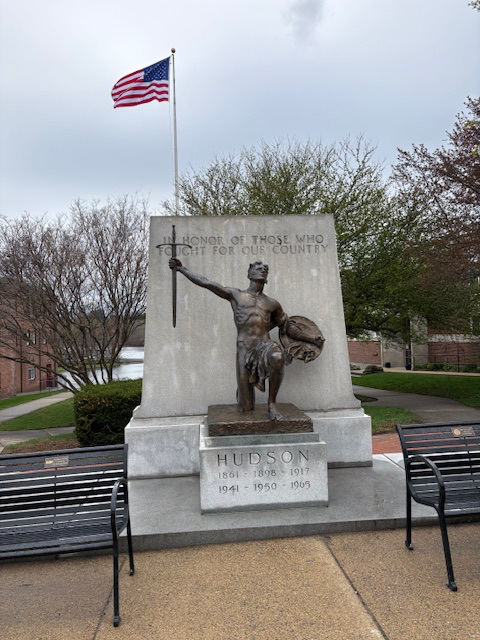
The memorial was originally dedicated on June 17, 1928, to honor Hudson residents who served in the American Civil War, the Spanish-American War and World War I. Additional memorial panels were later added in 1966 to recognize local veterans who served in World War II, the Korean War and the Vietnam War.
In 1927, the citizens of Hudson voted to create a memorial honoring veterans, and a public design competition was held. The final design was chosen by popular vote from eight finalists. The architect selected was John G Hardy.
Rather than portray a soldier in battle, the kneeling figure holding a raised sword and shield was designed to represent sacrifice, service, and idealism. At the dedication ceremony in 1928, the statue was described as “self-sacrifice inspired by lofty idealism. The exposed chest, lowered shield and upward raised sword were meant to express willingness to serve and sacrifice rather than conquest or victory.
Small towns, like Hudson, preserve their history not only in museums but through monuments and memorials and town commons remind people of earlier generations and the sacrifices they made.
Looking at this image, I am reminded how local memorials often tell a broader national story through the lens of one community. They connect major historical events to real people and families, making history feel personal rather than distant.
Read More From Nancy
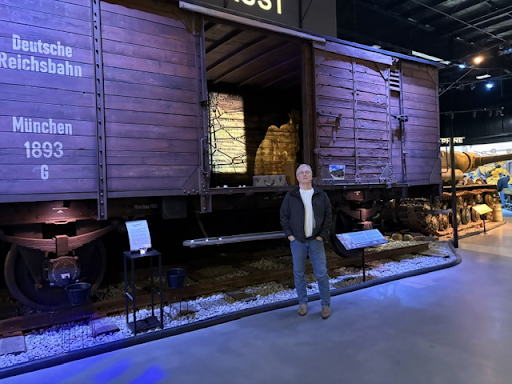
The Deutsche Reichsbahn Car: A Witness to the Holocaust
The American Heritage Museum in Hudson, Massachusetts, is best known for its remarkable collection of tanks and military vehicles, but one exhibit stopped us in our tracks for an entirely different reason. In the World War II gallery stands a restored German Deutsche Reichsbahn freight car—an ordinary-looking rail car that represents one of history’s darkest […]
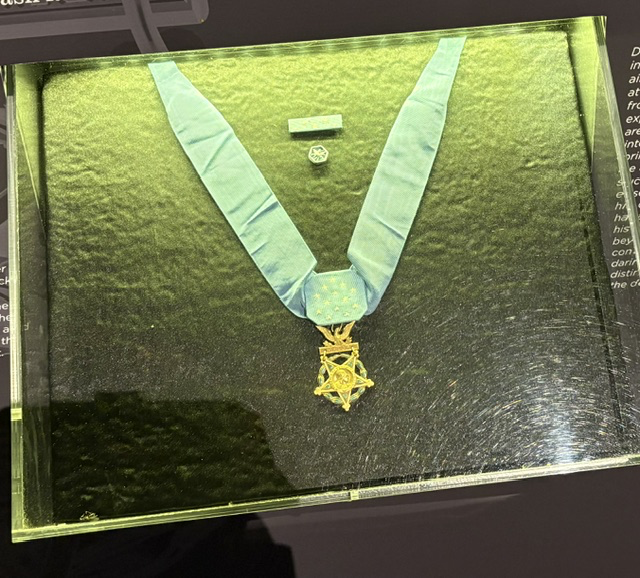
The Medal of Honor
Among all the artifacts displayed at the American Heritage Museum, few carry the emotional weight of the Medal of Honor. Unlike a tank, an aircraft, or a weapon, this small medal represents something that cannot be manufactured or engineered. It symbolizes extraordinary courage in the face of overwhelming danger. Established during the American Civil War […]
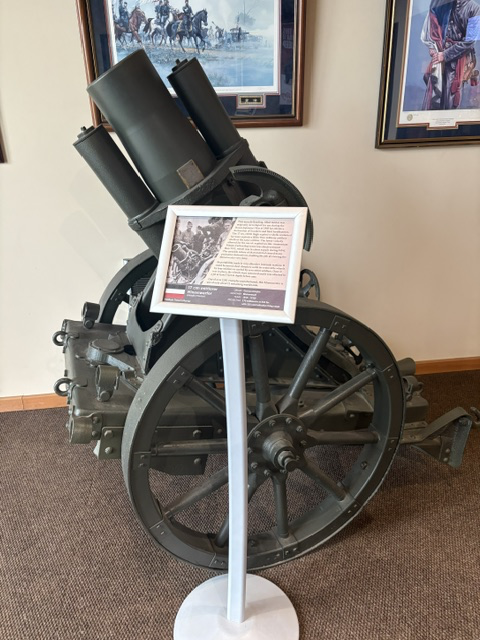
Nebelwerfer Rocket Launcher
Walking through the Heritage Museum, I expected to see familiar artillery pieces and military vehicles. What I did not expect was to encounter one of the most recognizable, and feared, weapons of the Second World War. With its cluster of six launch tubes mounted on a two-wheeled carriage, the German Nebelwerfer looks unlike any conventional […]

