The Deutsche Reichsbahn Car: A Witness to the Holocaust
The American Heritage Museum in Hudson, Massachusetts, is best known for its remarkable collection of tanks and military vehicles, but one exhibit stopped us in our tracks for an entirely different reason. In the World War II gallery stands a restored German Deutsche Reichsbahn freight car—an ordinary-looking rail car that represents one of history’s darkest chapters. Similar cars were used by the Nazi regime to transport millions of Jews and other persecuted people to ghettos, concentration camps, and extermination camps during the Holocaust.
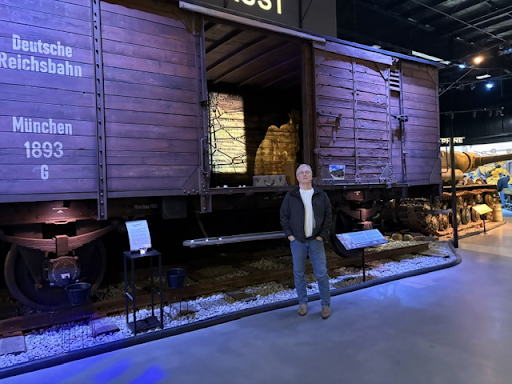
The exhibit traces the long history of antisemitism, described as “history’s oldest hatred,” and explains how prejudice that had existed for centuries reached its most horrific expression under the Nazi regime. Adolf Hitler came to power in 1933, and through measures such as the Nuremberg Laws of 1935 and the violence of Kristallnacht in 1938, German Jews were increasingly stripped of their rights and isolated from society. Following the invasion of Poland in 1939, Jews throughout Europe were forced into ghettos and later deported to concentration camps, identified by the yellow Star of David.
A panel describes how Nazi leaders meeting at the Wannsee Conference in January 1942 formalized what they called the “Final Solution.” Extermination camps were established in occupied Poland, including Auschwitz-Birkenau, Treblinka, Sobibor, Belzec, Chelmno, and Majdanek. The museum notes that approximately six million Jews, nearly two-thirds of Europe’s Jewish population, were murdered during the Holocaust. Many others perished from starvation, disease, forced labor, and brutal treatment in thousands of concentration and labor camps spread throughout Europe.
Standing beside the rail car, I was reminded that technology and transportation, normally symbols of progress, can also be turned toward unimaginable evil when hatred and prejudice prevail. Unlike the tanks and weapons displayed elsewhere in the museum, this artifact was not designed for battle. Instead, it serves as a solemn memorial to the millions of innocent men, women, and children whose lives were destroyed.
Read More From Nancy
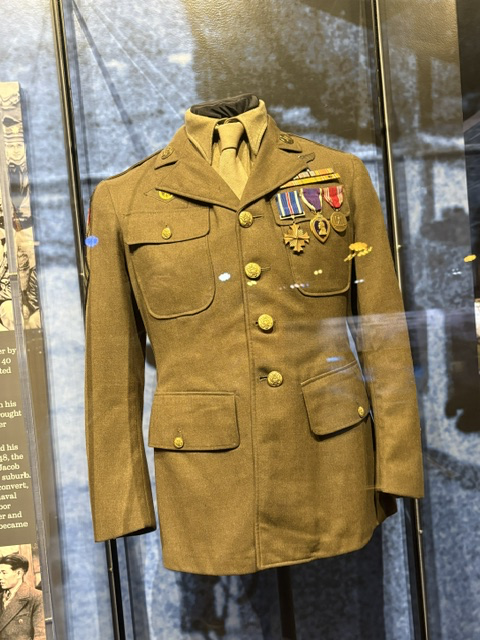
Sargeant Jacob DeShazer’s Uniform
All the exhibits at the Heritage Museum are thoughtful and well-planned. One of the exhibits that caught my attention was the uniform of Staff Sergeant Jacob DeShazer, displayed with the medals he earned during World War II. The story connected to this is one of courage, suffering, survival and ultimately forgiveness. DeShazar volunteered for one of the most daring missions […]
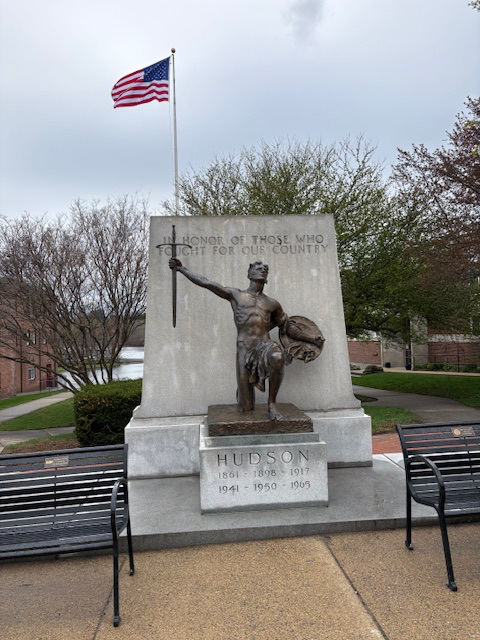
Hudson Veterans’ Memorial
This memorial is a beautiful example of the many local monuments found throughout New England honoring generations of military service and sacrifice. What makes monuments like this especially meaningful is they are deeply connected to the local community itself, representing neighbors, families, veterans and citizens whose lives were tied directly to the town. The memorial was originally dedicated […]
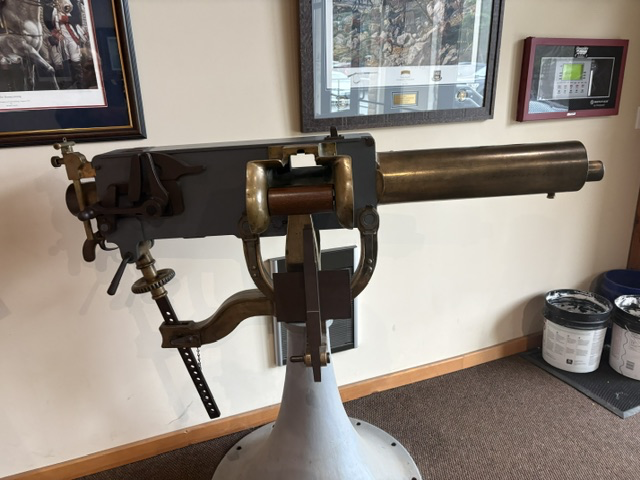
QF 1-Pounder “Pom-Pom” Naval Cannon
Walking through the Heritage Museum in Hudson, one artifact immediately stood out because of both its size and its historical significance. At first glance, it appears to be simply an old naval cannon. It represents one of the most important advances in military technology during the late nineteenth century. The QF 1-Pounder, better known as […]

