George H. Perkins Statue
On the backside of the New Hampshire State House stands this monument to George H. Perkins.
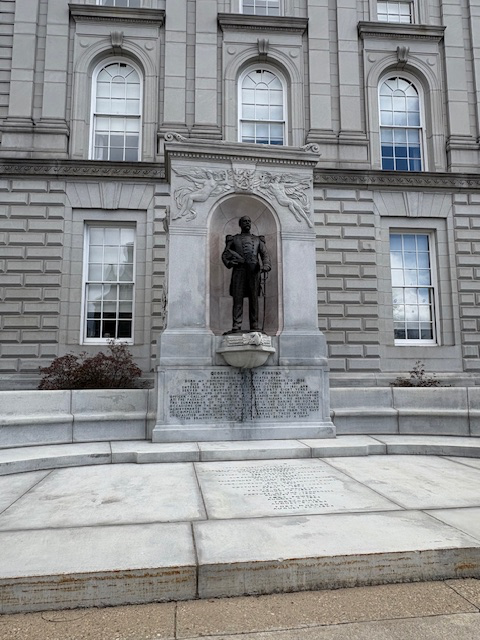
Born in Hopkinton, Perkins rose to become one of the most respected naval officers of the Civil War. He served under Admiral Farragut and played a critical role in the Battle of Mobile Bay, one of the defining naval battles of the war.
It was Farragut himself, one of the most celebrated naval commanders in American history, and the first Admiral of the U.S. Navy, who said that Perkins was “the bravest man that every trod the deck of a ship”. Coming from a man whose leadership defined naval warfare during the Civil War, this was not casual praise.
The monument was commissioned by the State of New Hampshire in the early 20th century and dedicated in 1912, during a period when many Civil War leaders were being formally honored across the country.
This statue is set into the granite at the back of the State House, standing along in a prominent and intentional place. It commands a presence of its own, a quiet presence of its own.
Read More From Nancy
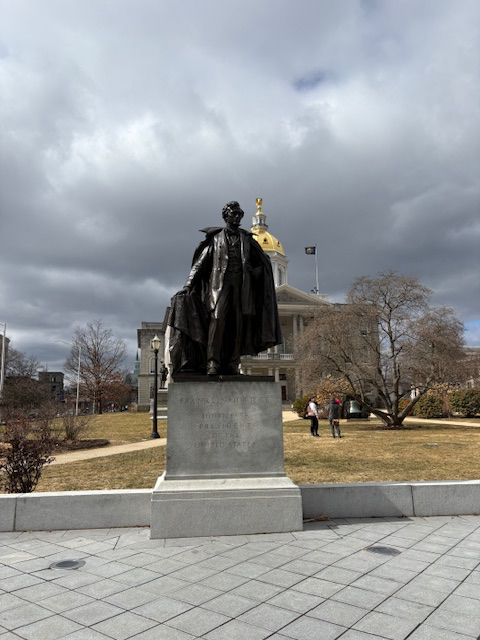
Franklin Pierce Statue
Concord is the capital of the state, so I grew up with the beautiful granite New Hampshire State House as the center of downtown. On the grounds of the State House are a number of sculptures that quietly communicate what and who are valued. These monuments are not just decorative they reflect the history and identity of the state. […]
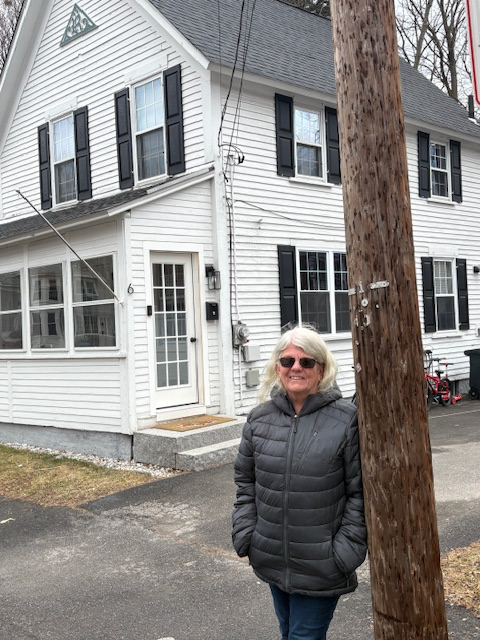
6 Curtice Ave
The North End of Concord is where I was born and raised. It is an area built over time by the people who chose to live there and stay. The Town of Concord was first settled in 1725 and for many years it was a place of farms, open land and scattered homes. When Concord became […]
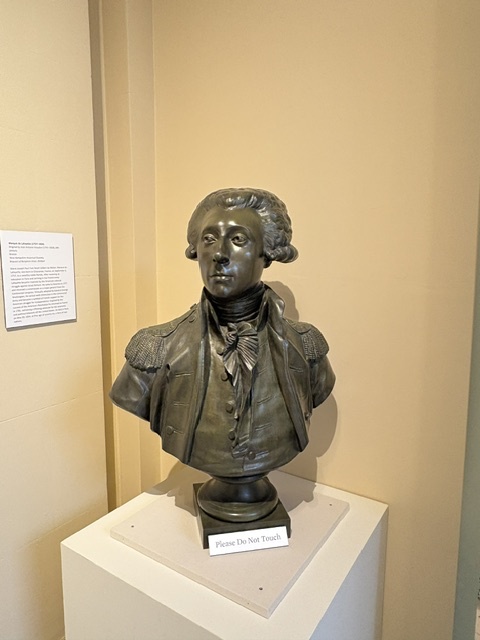
The Marquis de Lafayette
This bronze bust at the New Hampshire Historical Society portrays the Marquis de Lafayette, the young French aristocrat who became one of America’s most enduring allies. Born Gilbert du Motier in 1757, Lafayette was only nineteen when he decided to support the colonies in their struggle for independence. Lafayette traveled to America at his own […]

