“La Verema”
It was great to spend a day in Sitges, exploring a new town after teaching in Barcelona.
The views of the Mediterranean stretched out endlessly shifting in color with the light. Walking along the beach was refreshing and a quiet transition for our time in Barcelona.
Sitges is a town of white buildings against the blue of the sea, and many small details that invite you to pause. As we wandered along the promenade, I found myself drawn not only to the views, but to the monuments placed along the way, each one offering a glimpse into the story of the town.
This one is the statue known as “La Verema”, created by Catalan sculptor Pere Jou. The figure is of a young girl holding a basket full of grapes.
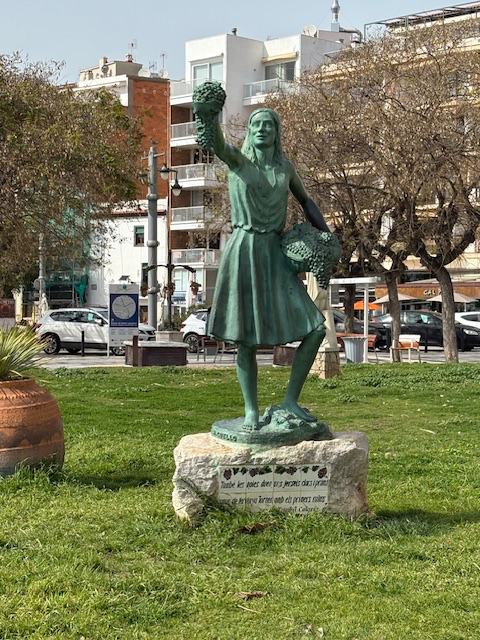
Curious why this statue stands here and I learned the reason.
Just inland from Sitges lies the Penedes, one of Spain’s most important wine-producing regions and the heart of cava production. For generations, the economy of this area was tied not only to the sea, but to the cultivation of grapes. The harvest, or verema, was a defining seasonal event, shaping both daily life and local identity.
Today Sitges is known for its beaches, tourism and vibrant cultural life. Yet here, along the seafront, stands a reminder that the story of the town is also connected to the vineyards, just beyond the horizon.
There were so many of these moments throughout the day in Sitges: the coastline, the architecture, the sculptures, all come together to tell the story of a place that has evolved yet still holds onto its past.
Read More From Nancy
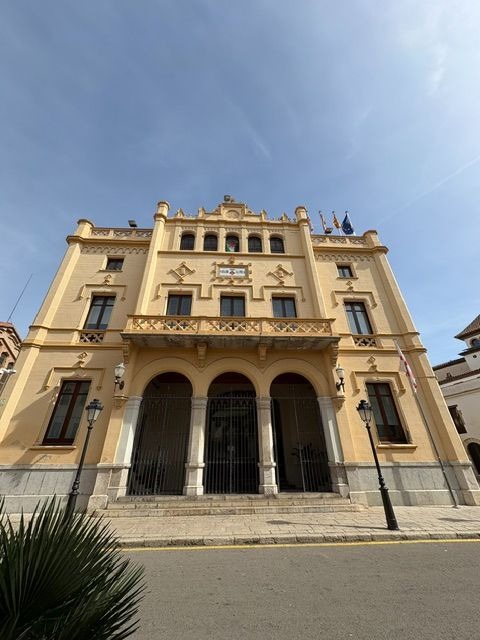
Casa de la Vila
In the historic heart of Sitges, Casa de la Vila stands on ground that once belonged to the town’s medieval castle. Its three arched entrances, stone balcony, decorative shields, and raised central façade give it a commanding presence in the square. Although its architecture recalls an earlier age, the building was created in the late […]
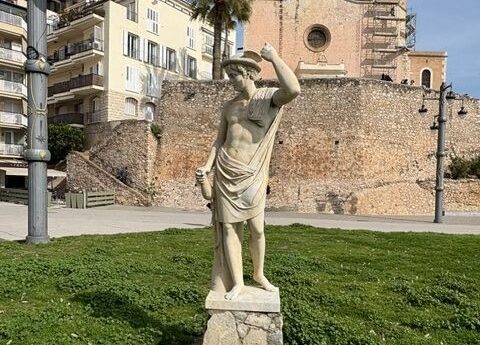
Apollo at La Fragata
Below the Church of Sant Bartomeu i Santa Tecla, a small classical figure stands in the gardens of La Fragata. With one arm raised above his head and drapery falling across his body, Apollo occupies a quiet patch of green between the historic town and its waterfront. His presence adds another layer to Sitges, where […]
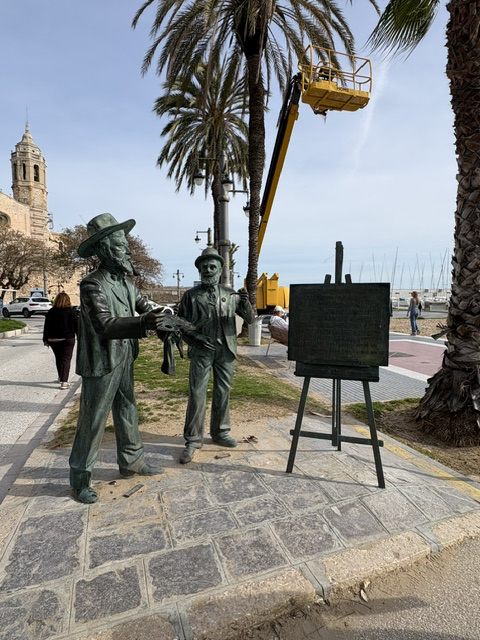
Santiago Rusiñol and Ramon Casas
One of the pleasures of traveling is unexpectedly discovering the people who helped shape a place. Walking along the waterfront in Sitges, I came across this bronze monument honoring two of Catalonia’s most celebrated artists, Santiago Rusiñol and Ramon Casas. Their presence here is no accident. More than a century ago, these two friends helped […]

