The Black Maria Motion Picture Studeo
While exploring the Thomas Edison National Historical Park, one exhibit immediately caught my attention. This unassuming black building is a replica of the Black Maria, the world’s first motion picture production studio. Although simple in appearance, it represents the birthplace of an industry that would forever change entertainment, communication, and popular culture.
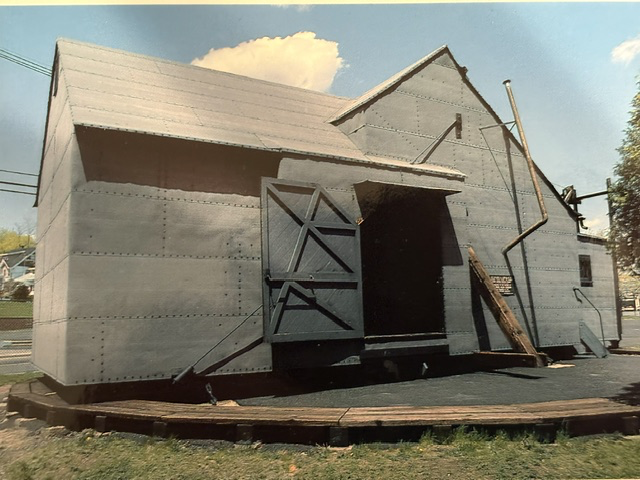
The original Black Maria was built in 1893 on the grounds of Edison’s laboratory in West Orange. Designed specifically for making motion pictures, it was covered with black tar paper, giving it the nickname “Black Maria,” after the black police wagons of the day. Because early film required large amounts of natural sunlight, the entire building was constructed on a circular track so it could rotate throughout the day, allowing the open roof to follow the sun.
Inside this small studio, Edison and his team produced hundreds of short films featuring vaudeville performers, dancers, athletes, magicians, strongmen, and scenes from everyday life. These films were viewed through Edison’s Kinetoscope, one of the earliest motion picture viewing devices. Although audiences could watch only one person at a time, the experience introduced the public to an entirely new form of entertainment.
The Black Maria marked the beginning of the American motion picture industry. While filmmaking would eventually move to larger studios and, ultimately, to Hollywood, many of the techniques first explored here laid the foundation for modern cinema. It is remarkable to think that an industry that now reaches billions of people around the world began in a small rotating building behind Thomas Edison’s laboratory.
Read More From Nancy
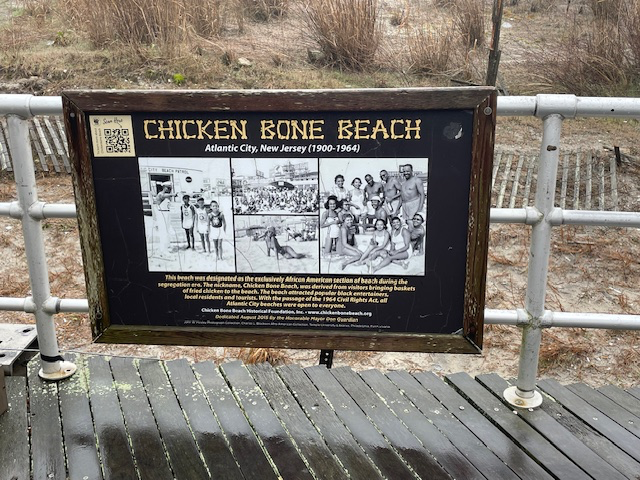
Chicken Bone Beach
There are layers of history in Atlantic City, and one I was not familiar with was Chicken Bone Beach. Located near Missouri Avenue, the stretch of shoreline carries a story that is not immediately visible when you first arrive. In the early 20th century, during a time when segregation shaped daily life, African American visitors were […]
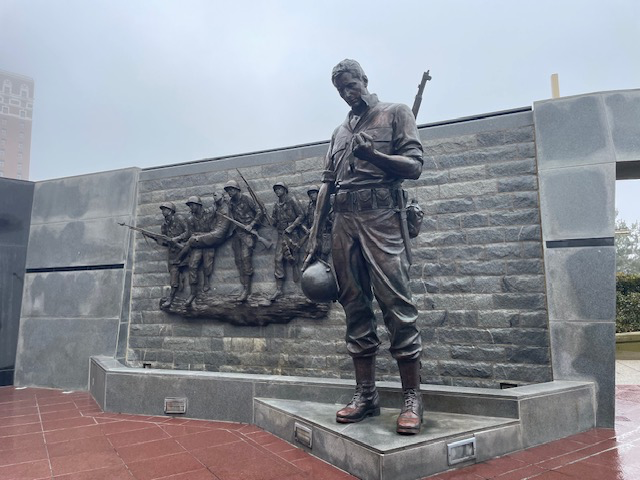
New Jersey Korean War Memorial
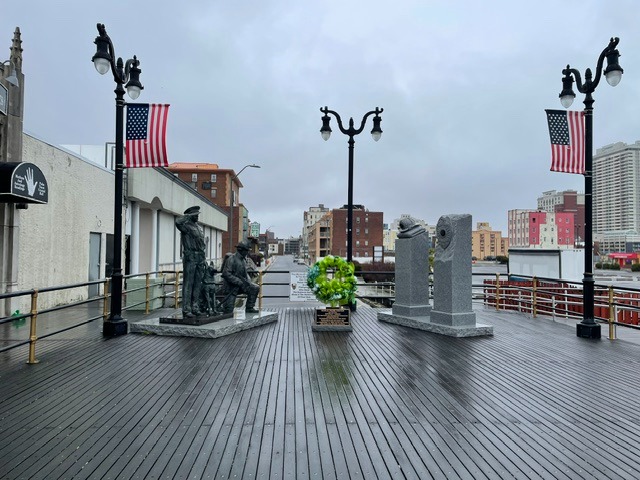
Near the Atlantic City Boardwalk, amid the hotels, casinos and attractions associated with the resort city, stands the New Jersey Korean War Memorial. Its setting creates an unexpected place of reflection within one of the state’s busiest entertainment districts. The Korean War began in June 1950 when North Korean forces invaded South Korea. American troops […]

